Factory Direct Poultry Egg Printing Machine
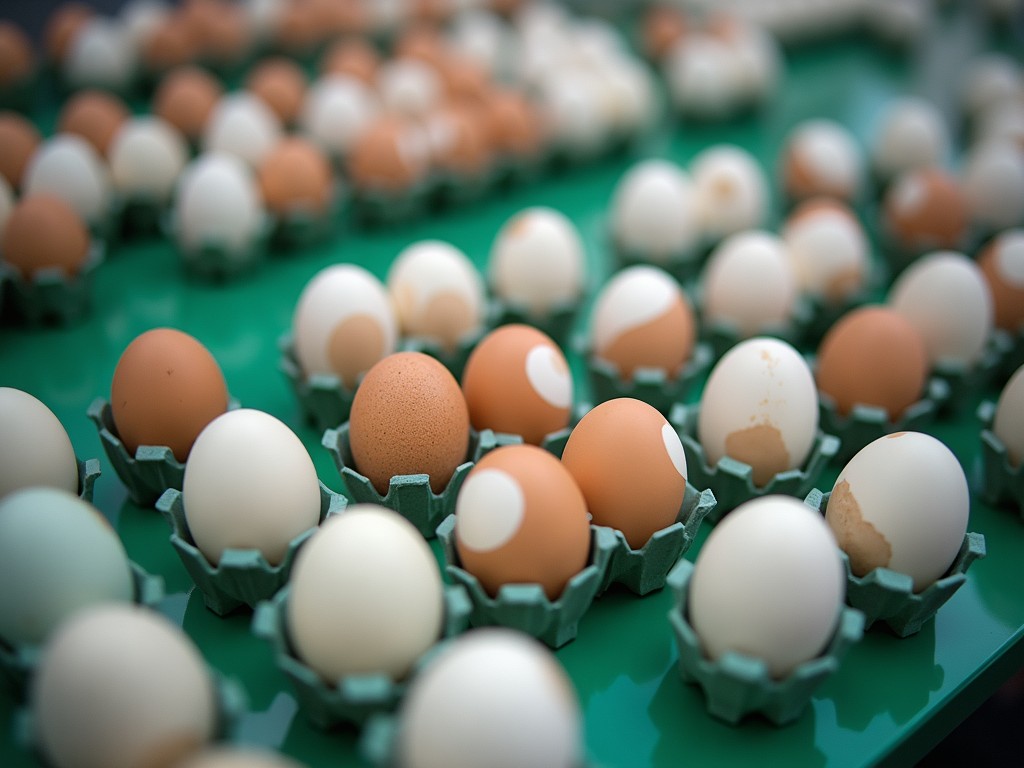
Factory Direct Poultry Egg Printing Machine
A poultry egg printing machine applies food‑safe ink directly onto eggshells to create traceability codes, branding, or date stamps without physical contact. The process replaces manual stamping or labeling, reducing labor and eliminating consumables such as stickers or ink pads.
The system integrates a belt conveyor, piezo‑electric drop‑on‑demand inkjet heads, and a UV or thermal curing unit to achieve continuous operation at line speeds typical of commercial hatcheries. Ink droplets are charged and deflected onto the shell as the egg passes beneath the printhead.
Print resolution is determined by nozzle diameter and drive frequency, allowing alphanumeric characters as small as 2 mm height to be legible after curing. Ink adhesion is evaluated by rub‑test standards to ensure codes remain intact during washing, grading, and transport.
Technical Specifications
| Parameter | Typical Value / Range | Notes |
|---|---|---|
| Printing Technology | Drop‑on‑demand piezo inkjet | Nozzle plate 60 µm, selectable frequency |
| Ink Type | Food‑grade, UV‑curable or water‑based | Compliant with FDA 21 CFR 175.105 |
| Maximum Print Speed | Up to 300 eggs/min | Dependent on egg spacing and cure time |
| Print Area | Up to 45 mm diameter | Covers most egg sizes from small to jumbo |
| Resolution | 600 dpi (equivalent) | Allows 2 mm high characters |
| Power Consumption | 1.5 kW (average) | Includes conveyor drive and cure unit |
| Dimensions (L×W×H) | 1200 × 800 × 1500 mm | Footprint fits standard processing lines |
| Weight | ≈ 250 kg | Frame constructed of powder‑coated steel |
| Operating Temperature | 5 – 40 °C | With relative humidity < 80 % non‑condensing |
| Maintenance Interval | Self‑cleaning cycle every 8 h | Automatic purge and wipe of nozzles |
Applications in the Poultry Industry
Traceability regulations in many markets require each egg to carry a unique identifier linking it to flock, farm, and packing date. Direct printing eliminates label detachment risks and provides a permanent mark that survives washing and grading.
Brand owners use the machine to apply logos or promotional codes directly onto the shell, enhancing shelf‑impact without additional packaging materials. The ink film is thin enough not to affect egg handling or cracking resistance.
In hatcheries, printed codes assist in tracking embryo development stages, improving inventory turnover and reducing mis‑placement during incubation. The non‑contact method avoids shell damage that can occur with mechanical stamping.
Key Features and Engineering Details
- Non‑contact printing eliminates mechanical wear on the shell and reduces contamination risk.
- Conveyor speed is adjustable via frequency drive, allowing synchronization with upstream washing or drying stations.
- Ink cartridges are designed for quick replacement; a typical changeover takes less than 30 seconds without stopping the line.
- An integrated vision sensor detects egg orientation and triggers the printhead only when the printable area is aligned, reducing ink waste.
- Printhead nozzles are equipped with a piezoelectric actuator capable of firing droplets at 15 kHz, enabling high‑resolution marking at speed.
- The curing module uses UV LEDs with a wavelength of 395 nm, providing instant solidification of the ink film within 50 ms.
Customization Options
- Ink color can be selected from black, red, blue, or green to match branding or regulatory requirements.
- Conveyor length can be extended in 200 mm increments to accommodate upstream or downstream equipment spacing.
- Optional integration kit provides Ethernet/IP or Modbus TCP links for communication with manufacturing execution systems.
- An optional hot‑air drying tunnel is available for water‑based inks, extending usable humidity range.
Quality Control and Testing
Before shipment each unit undergoes a functional test cycle using a standardized egg surrogate to verify print speed, resolution, and cure adhesion. Ink adhesion is measured by a 500 g rub test per ASTM D3359, with a pass criterion of ≥ 90 % ink retention.
Electrical safety is validated according to IEC 60204‑1, including insulation resistance and grounding continuity. Mechanical stability is checked by vibration testing across 5 – 200 Hz to ensure no loosening of fasteners during operation.
A documentation package includes calibration certificates for the vision sensor, ink flow rate logs, and a preventive maintenance schedule outlining nozzle wipe and filter replacement intervals.
Frequently Asked Questions
- Can the machine handle different egg sizes? Yes, the adjustable print area accommodates eggs from 40 mm to 55 mm diameter without mechanical changeover.
- What ink types are available? Food‑grade UV‑curable and water‑based inks are stocked; custom formulations can be supplied upon request.
- What is the typical lead time for delivery? Standard configurations ship within 4‑6 weeks after receipt of purchase order; customized builds may require additional time.
- How is the machine protected during export shipment? The unit is crated with shock‑absorbing foam, sealed in a vapor‑barrier bag, and secured to a pallet meeting ISPM‑15 standards.
- Is operator training provided? On‑site or remote training covers startup, ink replacement, routine maintenance, and troubleshooting; a detailed manual is included.
Contact for Inquiry
To discuss your specific line speed, ink preference, or integration requirements, please reach out to our technical sales team.



