Egg Tray Cleaning Machine For Egg Farms
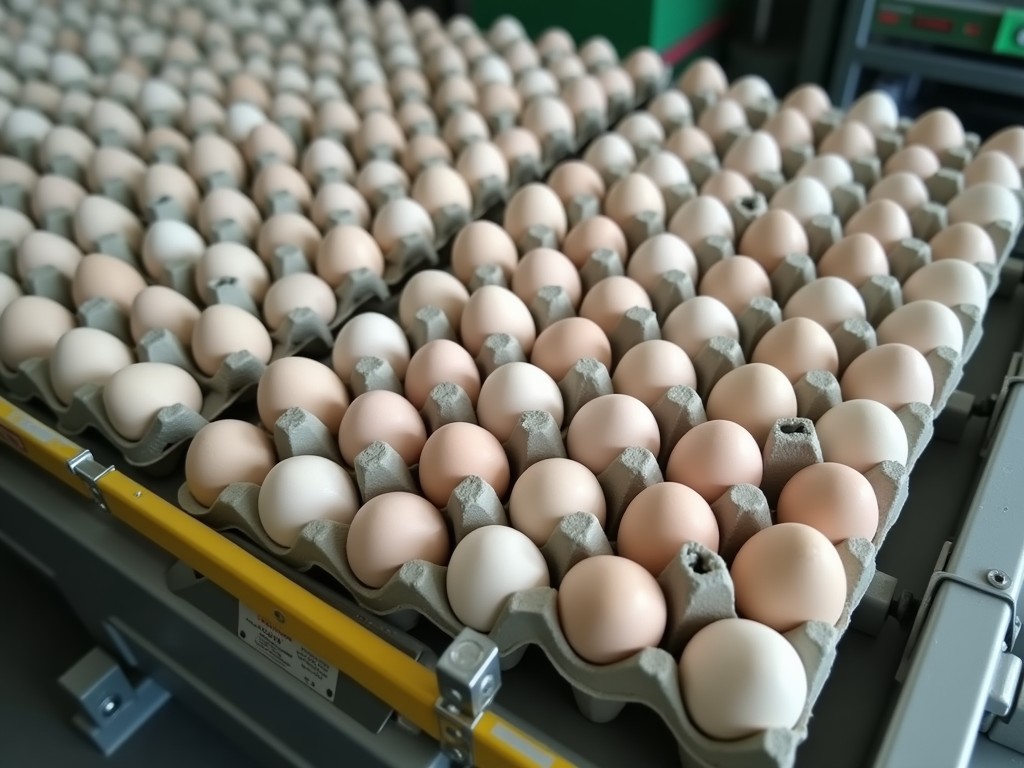
Egg Tray Cleaning Machine for Egg Farms
Egg farms accumulate organic residue on reusable trays after each collection cycle. Manual washing is labor‑intensive, inconsistent, and can leave biofilm that affects hatchability. An automated cleaning system addresses these points by delivering repeatable wash cycles, controlled water temperature, and precise detergent dosing.
Operating Principle
The machine receives stacked trays on an inlet conveyor. A series of spray nozzles apply heated water mixed with food‑grade detergent at a pressure of 2–3 bar. After the wash zone, trays pass through a rinse stage with fresh water at 80 °C, followed by an air‑knife drying section that removes surface moisture to <5 % relative humidity. Sensors monitor temperature, flow rate, and cycle time, and a PLC adjusts parameters in real time.
Cycle duration is adjustable between 45 and 90 seconds depending on soil load, allowing the line to match farm throughput without manual intervention.
Technical Specifications
| Parameter | Typical Value | Adjustable Range |
|---|---|---|
| Throughput (trays/hour) | 1 200 | 800 – 1 500 |
| Wash tank capacity | 150 L | 100 – 250 L |
| Water temperature (wash) | 60 °C | 50 – 70 °C |
| Rinse temperature | 80 °C | 70 – 90 °C |
| Installed power | 4.5 kW | 3.5 – 6.0 kW |
| Construction material | Stainless steel 304 (food grade) | Optional 316L for high chloride |
| Control system | PLC with touch‑screen HMI | Customizable logic |
Typical Applications
In layer farms, reusable plastic or fiber trays accumulate egg white, yolk, and fecal matter after each collection. Residual organic load can promote bacterial growth, affecting embryo viability if trays are reused without adequate sanitation. The cleaning machine provides a validated wash‑rinse‑dry cycle that reduces surface ATP levels by >99 %, meeting biosecurity standards for hatchery supply chains.
- High‑volume laying houses (≥ 100 000 hens) where manual washing creates bottlenecks.
- Organic farms that require chemical‑free rinse options; the machine can operate with hot water only.
- Breeder facilities that need traceable sanitation logs; the HMI records cycle data for each batch.
Customization Options
The base model is designed for standard 600 mm × 400 mm trays, but the inlet conveyor width, spray nozzle layout, and drying air velocity can be altered to accommodate alternative tray dimensions or materials.
- Conveyor speed adjustment (0.1–0.5 m/s) to match line rates.
- Alternative nozzle patterns for trays with deep cavities.
- Add‑on UV‑C module for post‑dry microbial reduction.
- Stainless steel 316L construction for environments with high salinity or chlorine‑based disinfectants.
Quality Assurance
Each unit undergoes hydrostatic testing of the wash and rinse tanks to 1.5 times design pressure, verification of spray nozzle flow uniformity (± 5 %), and functional validation of the PLC safety interlocks. Documentation includes material certificates, electrical schematics, and a factory acceptance test report that can be reviewed prior to shipment.
Frequently Asked Questions
Can the machine be integrated into an existing egg collection conveyor?
Yes. The inlet and outlet sections are equipped with standard 50 mm roller guides that can be bolted to parallel conveyors. Synchronization signals are available via discrete I/O or Modbus TCP.
What water quality is required for optimal performance?
The system tolerates water with up to 150 ppm total dissolved solids. For areas with higher hardness, a softener or scale‑inhibitor dosing pump can be added as an option.
How is detergent consumption measured and controlled?
A peristaltic pump meters detergent based on wash time and water flow, delivering a concentration of 0.5–2 % v/v. The HMI displays real‑time usage and total consumption per shift.
What is the typical lead time for a standard unit?
Standard configurations ship within 6–8 weeks after receipt of purchase order. Custom builds may extend to 10–12 weeks depending on material availability.
Next Steps
To discuss how this cleaning solution can be adapted to your farm’s layout and biosecurity requirements, please contact our technical team.
Request Technical Quote


