Egg Candling Machine For Dirty Egg Removal
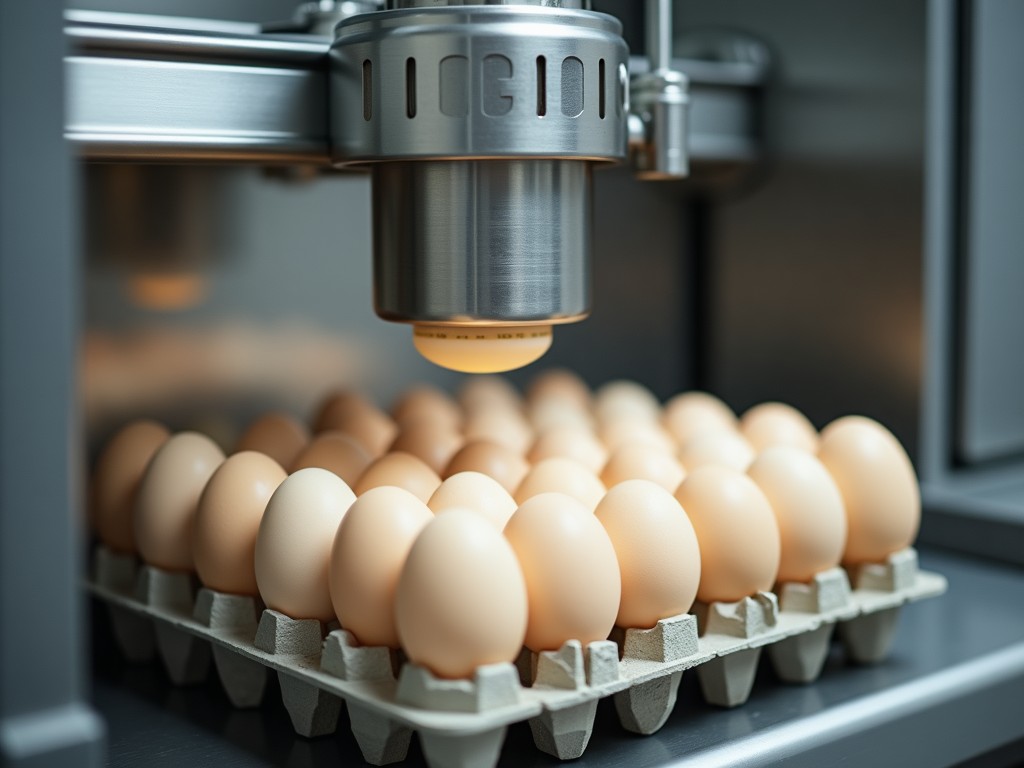
Egg Candling Machine for Dirty Egg Removal
Overview
In modern poultry processing, eggs with surface contamination or internal defects must be identified and removed before further handling to maintain product safety and line efficiency. A candling system uses transmitted light to reveal irregularities such as cracks, blood spots, or foreign material that are not visible under normal illumination. Integrating a removal mechanism directly after inspection allows the line to divert unsuitable eggs without manual intervention, reducing labor costs and cross‑contamination risk.
Working Principle
Eggs are conveyed single‑file past a high‑intensity LED light source positioned beneath a diffusing panel. The light passes through the shell and internal contents, creating a silhouette that is captured by a line‑scan camera. Image processing algorithms analyze brightness patterns to detect deviations associated with dirt, stains, or structural flaws.
When a defect is confirmed, a pneumatic divertor or mechanical pusher actuates within a defined time window, shifting the offending egg into a reject chute while good eggs continue on the main track. The entire detect‑to‑act cycle typically operates under 150 ms to keep pace with line speeds up to 180 eggs per minute.
Key Technical Features
- LED illumination with adjustable intensity (500–2000 lux) to accommodate varying shell thickness and color.
- Line‑scan camera resolution of 2048 pixels across the egg width, providing sub‑millimeter defect sensitivity.
- Real‑time image processing using FPGA‑based architecture, ensuring deterministic latency.
- Pneumatic divertor with 0.2 s actuation time and adjustable force to handle different egg sizes (45–65 mm diameter).
- Stainless‑steel (AISI 304) frame and food‑grade contact surfaces, compliant with EU 1935/2004.
- Modular conveyor sections allowing easy integration into existing processing lines.
Technical Specifications
| Parameter | Typical Value / Range | Notes |
|---|---|---|
| Maximum line speed | 180 eggs/min | Dependent on egg size and defect detection settings. |
| Power supply | 380 V AC, 3‑phase, 50/60 Hz | Optional 220 V AC single‑phase variant available. |
| Air pressure required | 0.5–0.7 MPa (clean, dry air) | For pneumatic divertor operation. |
| Operating temperature | 0 °C to 40 °C | Condensation‑free environment recommended. |
| Overall dimensions (L×W×H) | 2200 mm × 800 mm × 1500 mm | Customizable length to match line layout. |
| Weight | ≈350 kg | Includes frame, electronics, and pneumatic package. |
Typical Applications
The machine is primarily employed in hatcheries and table‑egg grading facilities where early removal of dirty or compromised eggs improves downstream sanitation and reduces waste in incubation or packaging lines. By detecting surface fecal matter, mud, or wash‑water residues that can harbor pathogens, the system helps meet stringent biosecurity standards such as those outlined in the EU Salmonella Control Programme.
In addition, egg product manufacturers (e.g., liquid egg, powdered egg) use the candler as a preventive step before breaking, minimizing the risk of contaminating bulk product with shell‑borne microorganisms. The modular design allows installation either upstream of washing stations or as a final checkpoint prior to packing, depending on the specific hazard analysis of the plant.
Selection Considerations
When evaluating a candling system for dirty egg removal, assess the required throughput relative to your existing line speed; oversizing the machine can lead to unnecessary capital expenditure, while undersizing creates bottlenecks. Consider the typical defect size you aim to capture—machines with higher resolution optics can detect smaller stains but may demand more intensive lighting and cooling.
Evaluate the available utilities: compressed air quality and electrical capacity must match the machine’s specifications to avoid frequent maintenance interruptions. Additionally, verify the ease of cleaning for the conveyor and lighting housing, as frequent wash‑downs are common in egg processing environments; smooth, crevice‑free surfaces reduce biofilm formation risk.
Quality Assurance & Customization
Each unit undergoes functional testing at the factory, including light intensity uniformity checks, camera calibration against known defect samples, and divertor timing validation under simulated line conditions. Documentation of test results is provided with the shipment, supporting traceability for internal audits or customer specifications.
Customization options include alternative reject mechanisms (e.g., electric solenoid pushers for facilities without compressed air), varying conveyor belt materials (polypropylene, modular plastic, or stainless‑steel mesh) to suit specific cleaning regimes, and software interfaces for integration with plant MES or SCADA systems via Ethernet/IP or Modbus TCP.
Frequently Asked Questions
- Can the detection sensitivity be adjusted for different egg shell colors? Yes, the LED intensity and camera gain settings are adjustable via the HMI to compensate for variations in shell pigmentation.
- What information is needed to prepare a quotation? Required details include target line speed, egg size range, available utilities (voltage, air pressure), and any specific rejection method preferences.
- How is the machine protected during transport? The unit is secured on a pallet with corner protectors, wrapped in stretch film, and placed inside a wooden crate with foam padding to prevent shock and vibration damage.
- What is the typical lead time for a standard configuration? Standard builds usually ship within 6–8 weeks after receipt of purchase order, subject to component availability.
- Are spare parts readily available? Critical wear items such as LED modules, camera lenses, and pneumatic seals are stocked locally and can be dispatched within 48 hours upon request.
Contact for Further Information
To discuss how this egg candling solution can be tailored to your processing line, request a detailed quotation, or arrange a virtual demonstration, please reach out to our technical sales team.
Submit an inquiry or call +1‑800‑555‑0199 for immediate assistance.



