B2B Egg Washer Machine For Fresh Eggs
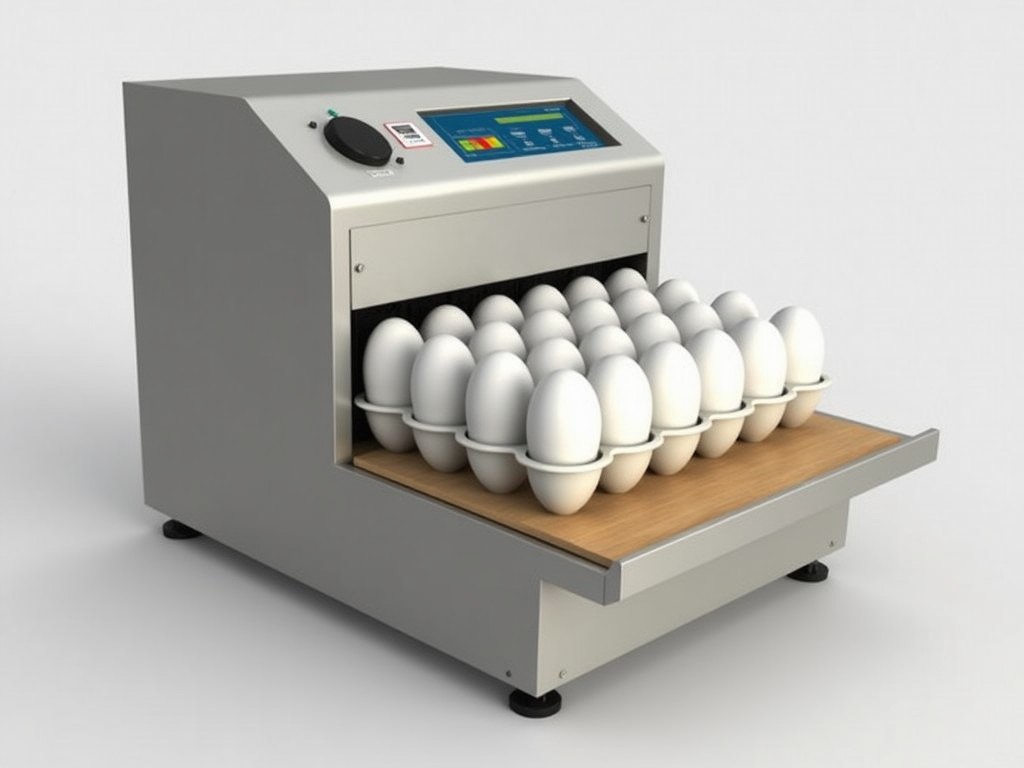
B2B Egg Washer Machine for Fresh Eggs
In commercial egg processing, removing surface contaminants while preserving shell integrity directly impacts product safety and shelf life. The washer described here is engineered for continuous operation in packing houses, delivering a controlled wash cycle that meets USDA AMS standards for shell egg quality.
Working Principle
Eggs enter the machine on a food‑grade stainless‑steel conveyor and pass through a tunnel where low‑pressure nozzles distribute potable water at a controlled flow rate. Simultaneously, soft‑touch rotary brushes made of FDA‑approved nylon gently agitate the shell surface, dislodging particulates without micro‑cracking.
- Pre‑wash spray removes loose dirt and feathers.
- Main wash zone uses 45 °C water with optional food‑grade sanitizer injection.
- Final rinse eliminates residual chemicals and prepares eggs for drying.
- Air‑knife drying system reduces surface moisture to < 0.5 g % before packing.
Technical Specifications
The following table lists typical values; actual configurations can be adjusted to match line speed, egg size, and plant layout.
| Parameter | Typical Value | Unit | Notes |
|---|---|---|---|
| Throughput Capacity | Up to 30,000 | eggs/hr | Based on 55 mm standard eggs |
| Conveyor Width | 600 | mm | Adjustable in 50 mm increments |
| Water Consumption | 120 | L/hr | Recirculation rate 80 % |
| Power Rating | 3.5 | kW | 3‑phase, 380 V, 50 Hz |
| Machine Footprint | 2200 × 900 × 1500 | mm (L×W×H) | Includes control cabinet |
Applications in Poultry Processing
Egg washers are positioned after collection and before grading to reduce aerobic plate counts by up to 2 log CFU/egg, a critical step for meeting export market microbiological limits. The gentle action prevents cuticle damage, preserving the egg’s natural barrier and extending refrigerated shelf life by 3‑5 days compared with dry‑handled product.
- Inline integration with candling and grading stations.
- Compatibility with both inline and offline packing lines.
- Adaptable to free‑range, organic, and conventional egg streams.
- Supports HACCP‑based sanitation programs.
Customization Options
The machine’s modular design allows tailoring of wash parameters, materials, and control interfaces to suit specific plant constraints and product mixes.
- Capacity scaling from 10,000 to 50,000 eggs/hr via conveyor length adjustment.
- Brush material selection: nylon, polypropylene, or stainless‑steel filaments.
- Nozzle configuration: fixed‑angle, oscillating, or pulsed‑jet patterns.
- Control platform: PLC‑based with touchscreen HMI or relay‑logic for simple installations.
- Frame finishes: powder‑coated carbon steel or 304 stainless steel for corrosive environments.
Quality Control and Testing
Each unit undergoes a factory acceptance test that verifies spray coverage, brush rotational speed, and water temperature stability under load. Performance validation includes microbial reduction trials using inoculated eggs and shell integrity assessments via ultraviolet fluorescence imaging.
- Spray uniformity checked with pressure‑sensitive film (± 5 % tolerance).
- Brush torque measured to ensure < 0.2 Nm lateral force on shell.
- Water temperature maintained within ± 1 °C of setpoint via PID‑controlled heat exchanger.
- Final inspection includes visual shell defect scoring and weight loss measurement.
Frequently Asked Questions
Can the conveyor speed be adjusted for different egg sizes?
Yes, the drive motor is equipped with a variable frequency drive allowing speed regulation from 0.2 to 1.2 m/min, accommodating peewee to jumbo grades without changing mechanical components.
What sanitizer concentrations are compatible with the machine?
The system accepts chlorine dioxide, peracetic acid, or electrolyzed water at concentrations up to 80 ppm, with compatible materials of construction to prevent corrosion.
Is the machine suitable for continuous 24‑hour operation?
Designed for duty cycles exceeding 16 hours/day, the motor and bearings are rated for continuous run, with recommended preventive maintenance intervals of 500 operating hours.
Contact for Inquiry
To discuss how this egg washer can be integrated into your processing line, provide your line speed, egg size range, and any specific sanitation requirements.
Request a Quote


