B2B Egg Processing Equipment Company
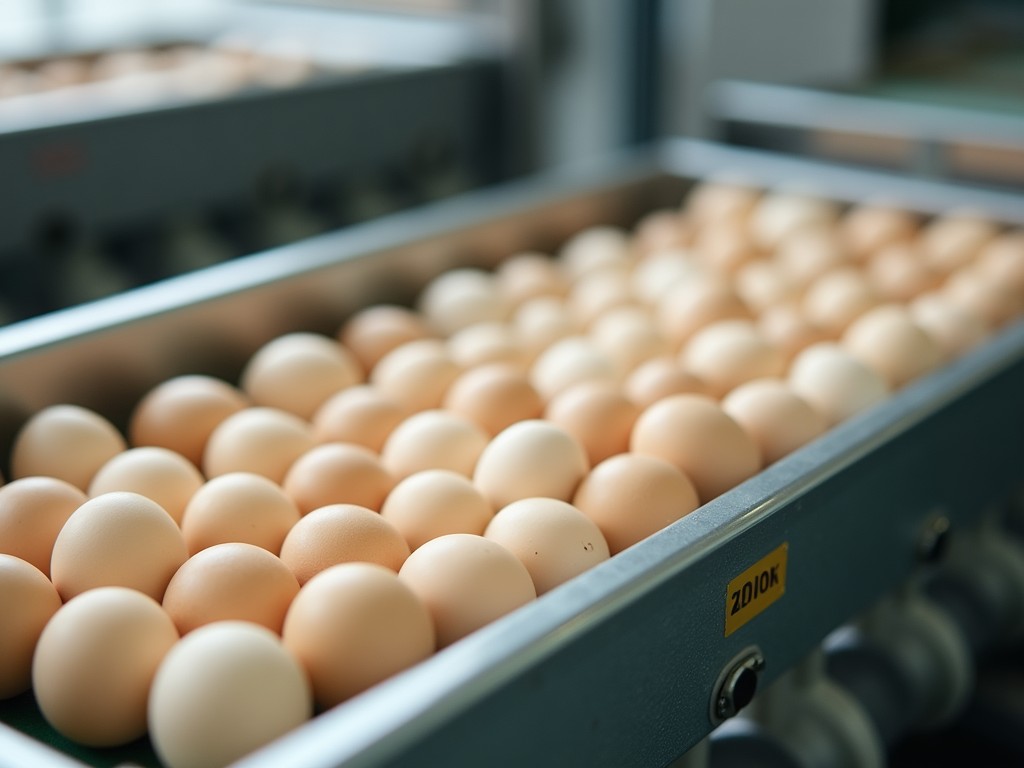
B2B Egg Processing Equipment Company
Our company designs and manufactures equipment that transforms raw eggs into liquid, powder, or specialty ingredients for food processing lines. Each machine is built around precise temperature control, gentle handling, and modular construction to meet varied production volumes.
Core Processing Technologies
The primary unit operations include cracking, separation, pasteurization, homogenization, and drying. Cracking mechanisms use stainless steel blades calibrated to achieve a 99.8% yolk‑white separation efficiency while keeping shell fragments under 0.02 mm.
Pasteurization modules employ plate‑type heat exchangers with a logarithmic reduction target of 5 log for Salmonella, achievable at 62 °C for 3.5 minutes. Homogenization pressures range from 10 to 25 MPa, adjustable via a variable‑frequency drive to control fat globule size below 1 µm.
Spray‑drying chambers operate with inlet air temperatures of 200 °C and outlet temperatures of 80 °C, producing powder moisture content between 3.5% and 4.5% as measured by Karl Fischer titration.
Typical Applications in the Food Industry
Egg liquid is used as a binder in bakery mixes, providing emulsification that improves crumb structure. Powdered egg extends shelf life in dry mixes, reducing water activity to below 0.6 aw.
Specialty fractions such as isolated egg white protein are incorporated into sports nutrition formulations where a protein digestibility‑corrected amino acid score (PDCAAS) of 1.0 is required.
In sauce manufacturing, pre‑pasteurized egg yolk contributes to viscosity stabilization, allowing a reduction of added starches by up to 30% while maintaining identical rheological profiles.
Material Options and Construction
- Product contact surfaces: AISI 316L stainless steel, electropolished to Ra ≤ 0.4 µm.
- Frames and enclosures: AISI 304 stainless steel with powder‑coated corrosion‑resistant finish (optional).
- Seals: FDA‑compliant EPDM or silicone, rated for 150 °C continuous operation.
- Gearboxes: hardened steel, ISO VG 220 lubrication, rated for 20 000 h L10 life.
Customization Capabilities
Equipment length, diameter, and number of stages can be adjusted in increments of 150 mm to fit existing plant layouts. Control systems support Modbus TCP, Profibus, or EtherCAT protocols, with IEC 61131‑3 programmable logic controllers.
Optional integrations include inline viscosity meters, turbidity sensors, and automated CIP (clean‑in‑place) spray balls with programmable flow rates from 5 to 25 L/min.
Quality Assurance and Testing
Each unit undergoes hydrostatic pressure testing at 1.5× design pressure for 30 minutes, followed by helium leak detection with a sensitivity of 1×10⁻⁹ Pa·m³/s.
Functional validation includes a run‑test with simulated egg product, measuring temperature uniformity (±0.5 °C) across the pasteurization zone and verifying microbial kill‑step compliance via post‑process swabs.
Technical Specifications
| Parameter | Typical Value | Adjustable Range |
|---|---|---|
| Capacity (liquid egg) | 500 L/h | 200–2000 L/h |
| Pasteurization temperature | 62 °C | 55–72 °C |
| Homogenization pressure | 15 MPa | 10–25 MPa |
| Spray‑drying inlet air | 200 °C | 180–230 °C |
| Powder moisture content | 4.0 % | 3.5–4.5 % |
| Power consumption | 22 kW | 15–35 kW |
Frequently Asked Questions
Contact Us
For detailed quotations, layout consultations, or to request a factory test run, please reach out to our technical sales team.
Request Technical Proposal


