B2B Candling And Grading Of Eggs
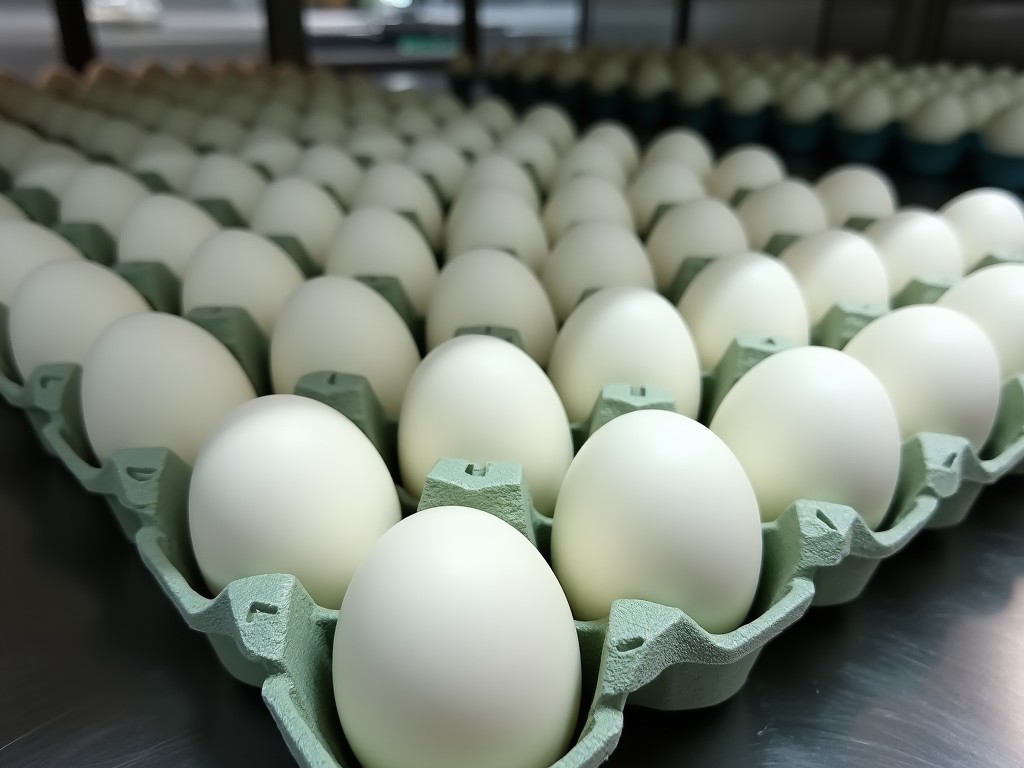
B2B Candling and Grading of Eggs – Technical Overview
The candling and grading process evaluates internal egg quality by transmitting light through the shell and analyzing transmitted intensity patterns. Modern systems combine illumination optics, high‑speed imaging, and image‑processing algorithms to classify eggs according to USDA or EU standards.
Operating Principle
A collimated LED source emits a narrow spectral band (typically 470 nm ± 10 nm) that penetrates the egg shell. A telecentric lens captures the shadowgraph on a CMOS sensor with a pixel pitch of 5.5 µm, yielding a spatial resolution of approximately 0.1 mm at the object plane. The captured frames are processed to detect blood spots, cracks, shell thickness variations, and yolk position.
Grading decisions are based on measurable parameters such as transmitted intensity deviation (>15 % indicates possible defect), aspect ratio of the yolk shadow, and edge gradient magnitude. The system outputs a grade code (e.g., AA, A, B, reject) and logs each event for traceability.
Key Technical Characteristics
| Parameter | Typical Value | Unit | Notes |
|---|---|---|---|
| Illuminance at egg surface | 12000 – 18000 | lx | Adjustable via PWM driver |
| Spectral peak wavelength | 470 | nm | ±10 nm tolerance |
| Frame rate | Up to 180 | fps | Depends on lane speed |
| Throughput | 30000 – 90000 | eggs/hr | Configurable lane count |
| Grade classification accuracy | ≥96 | % | Validated against manual candling |
| Power consumption | 250 – 400 | W | Per lane, includes illumination and electronics |
Typical Applications in Poultry Processing
Integrated candling and grading units are positioned after washing and before packaging. By detecting internal defects early, downstream operations such as break‑away cartons or liquid egg processing experience lower contamination risk and higher yield.
In high‑volume breaker lines, the system enables real‑time segregation of Grade AA eggs for premium shell‑egg markets while diverting lower grades to liquid egg or powder streams. This segregation reduces manual labor and improves traceability for regulatory compliance.
For specialty producers (e.g., organic, omega‑3 enriched), the adjustable illumination spectrum allows fine‑tuning to detect subtle yolk mottling or feed‑induced variations that affect product labeling claims.
Customization Options
- Number of inspection lanes (1 – 6) to match line speed
- Lens focal length adjustable for egg sizes ranging from 40 mm to 65 mm diameter
- Optional UV module (365 nm) for fluorescence‑based detection of certain contaminants
- Software license tiers offering basic grading, advanced defect classification, or AI‑assisted anomaly detection
- Enclosure ratings IP54 or IP65 for humid or wash‑down environments
Quality Assurance and Calibration
Each unit undergoes factory verification using NIST‑traceable light sources and calibrated step‑targets to confirm illuminance uniformity within ±5 % across the field of view. Software includes a built‑in reference egg carousel that runs a self‑test at start‑up, reporting sensor gain, dark current, and lens focus status.
Field calibration is performed quarterly with a set of reference eggs representing each grade class. Adjustments are made to the intensity threshold and gradient coefficients; records are stored in the device log for audit purposes.
Frequently Asked Questions
Contact for Technical Inquiry
To discuss how a candling and grading solution can be integrated into your processing line, please provide your line specifications and required throughput. Our engineering team will return a preliminary layout and performance estimate.
Request Technical Consultation


