Pre Printed Labels For Egg Cartons Source Factory
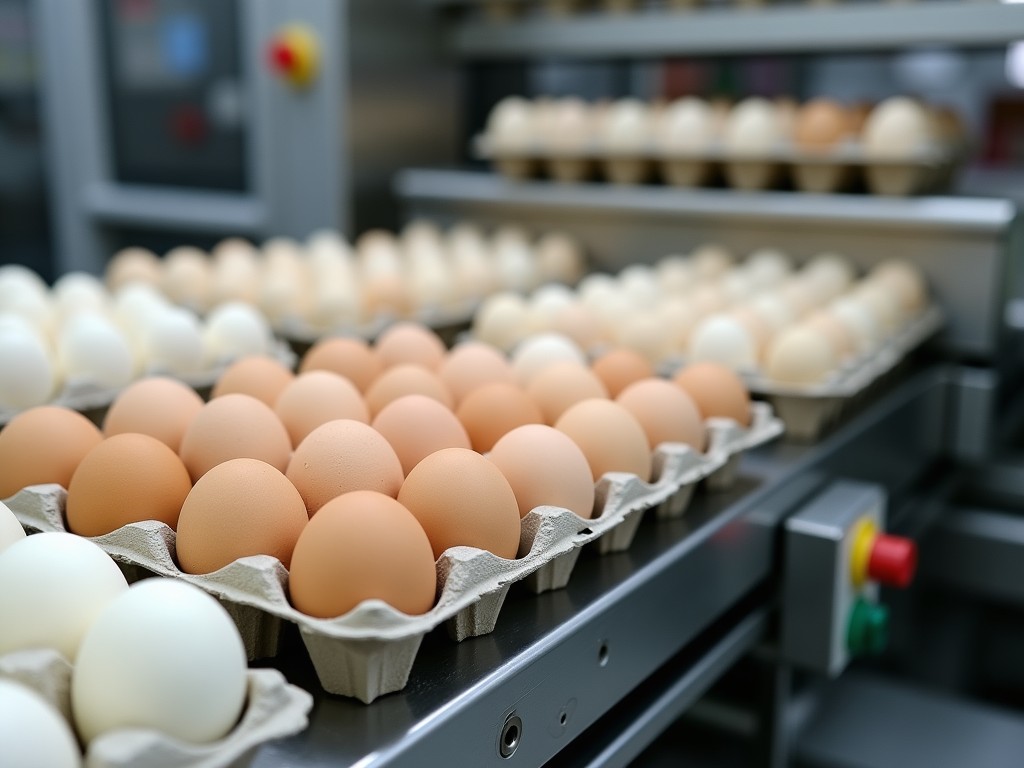
Pre Printed Labels for Egg Cartons – Source Factory
Industrial egg producers require labels that remain legible and adhered throughout refrigeration, transport, and retail display. Pre printed labels for egg cartons are supplied as continuous rolls or die‑cut sheets, printed with variable information such as grade, size, best‑before date, and branding before being applied to the carton.
Material & Construction
The base film is typically a biaxially oriented polypropylene (BOPP) with a thickness of 50 µm to 80 µm, selected for its low moisture vapor transmission rate (<0.5 g/m²·day at 23 °C/50 % RH) and good stiffness for high‑speed labeling equipment. A pressure‑sensitive acrylic adhesive layer of 15–20 µm provides peel adhesion of 4–6 N/25 mm on corrugated paperboard at 5 °C, ensuring the label stays bonded during cold‑chain handling.
Printing Technology & Durability
Labels are printed using UV‑curable flexographic or digital inkjet systems that achieve a resolution of 600 dpi, enabling fine barcodes and micro‑text. The UV‑cured ink film thickness is approximately 12 µm, giving a surface hardness of 2H (pencil scale) and resistance to fading under 80 W/m² UV exposure for 200 hours, equivalent to six months of retail shelf life.
Customization Options
- Roll width: 40 mm to 120 mm, customizable in 5 mm increments.
- Label length: continuous roll or die‑cut to 30 mm–100 mm per piece.
- Adhesive type: standard acrylic, low‑temperature acrylic (‑20 °C), or removable re‑positionable.
- Ink colors: up to 8‑color process plus spot colors for brand matching.
- Finish: matte, gloss, or soft‑touch coating with coefficient of friction 0.2–0.4.
- Perforation or micro‑perforation for easy tear‑off.
Applications in Egg Packaging
Egg cartons made from recycled paperboard or molded pulp have a porous surface that can absorb moisture, which compromises adhesive performance if the label is not engineered for low‑energy substrates. The selected BOPP film provides a high surface energy (>38 mN/m) that promotes wet‑out of the acrylic adhesive, achieving a shear strength of ≥1.2 MPa after 24 h at 5 °C. This prevents label lifting during stacking and reduces the risk of mis‑read barcodes at checkout.
Quality Control & Compliance
Each production lot undergoes inline inspection using machine vision systems that check print registration (±0.1 mm), barcode contrast (minimum PCS 0.7), and adhesive coat weight (1.0–1.5 g/m²). Finished rolls are tested for adhesion retention after 30 days at 4 °C and 85 % relative humidity, with a pass criterion of ≤5 % loss in peel strength. Documentation includes ISO 9001:2015 certification and FDA 21 CFR 175.105 compliance for indirect food contact.
Technical Specifications
| Parameter | Typical Value | Notes |
|---|---|---|
| Film Material | BOPP | Biaxially oriented polypropylene |
| Film Thickness | 50–80 µm | Customizable per project |
| Adhesive Type | Acrylic (pressure‑sensitive) | Low‑temp or removable options |
| Adhesive Weight | 1.2 g/m² | ±0.1 g/m² tolerance |
| Peel Adhesion (5 °C) | 4.5 N/25 mm | On corrugated paperboard |
| Ink System | UV‑curable flexographic / digital | Resolution 600 dpi |
| Ink Film Thickness | ≈12 µm | Surface hardness 2H |
| Temperature Range | ‑20 °C to +80 °C | Storage and application |
| UV Stability | 200 h @ 80 W/m² | Equivalent to 6 months retail |
| Roll Width | 40–120 mm | 5 mm increments |
| Core Diameter | 76 mm (3 in) | Standard |
| Maximum Roll OD | 300 mm | Depending on length |
Frequently Asked Questions
Can the label dimensions be customized?
Yes. Width, length, and die‑cut shape are adjusted according to the carton design and equipment specifications. Tooling costs are amortized over the production volume.
What information is required before quotation?
We need the carton material (e.g., recycled paperboard, molded pulp), surface energy if known, required label size, print content (variable fields, barcodes, colors), expected annual volume, and any special conditions such as freezer storage or UV exposure.
How is quality inspected?
Inline vision systems verify print registration, barcode contrast, and adhesive coat weight. Final inspection includes adhesion testing under simulated cold‑chain conditions and visual defect checks.
What packaging methods are available?
Labels are wound on 3‑inch cores with protective polyethylene film, placed in corrugated cartons, and palletized with stretch wrap. Export shipments include moisture‑barrier liners and corner protectors.
What is the typical production lead time?
For standard configurations, lead time is 2–3 weeks after artwork approval. Custom materials or adhesives may extend lead time to 4–5 weeks.



