Oem Printed Paper Egg Carton Factory
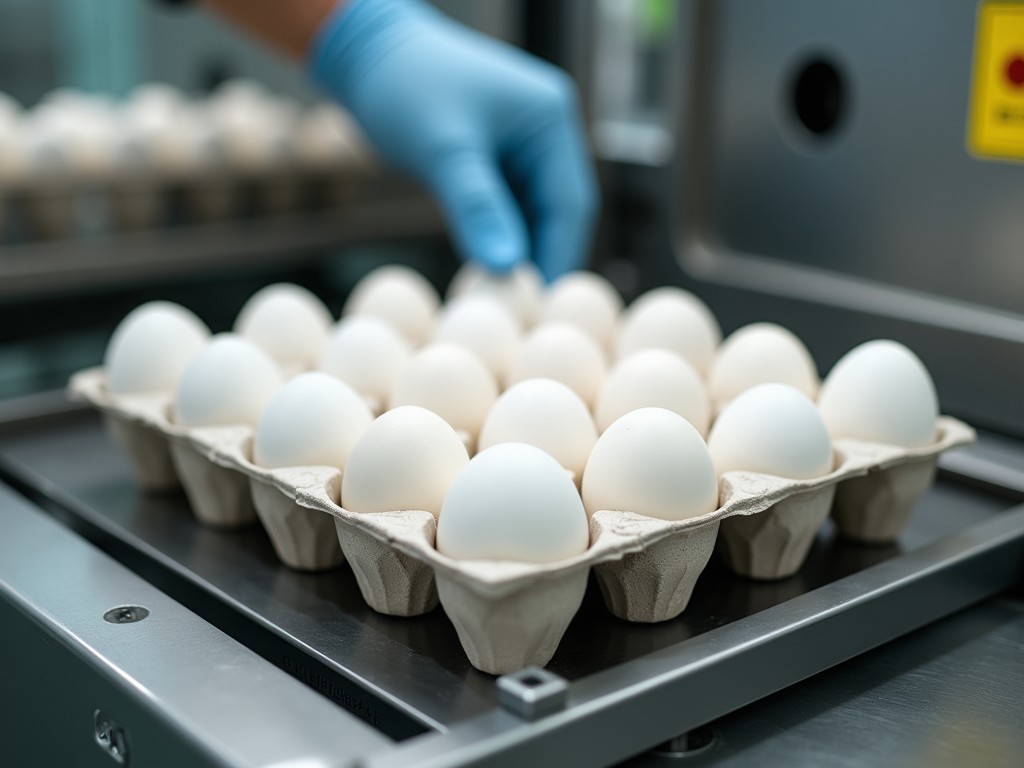
OEM Printed Paper Egg Carton Factory
Product Overview
Paper egg cartons are molded from recycled kraft pulp, formed into cellular trays that protect eggs during transport and storage. The manufacturing process involves pulping, forming, drying, and surface treatment before printing. This method yields a lightweight, biodegradable packaging solution with consistent cushioning properties.
Typical basis weight ranges from 180 to 250 gsm, providing sufficient stiffness while allowing easy nesting. Carton dimensions are defined by the number of cells (commonly 6, 12, 18, 24, or 30 eggs) and the outer footprint, which can be adjusted to match pallet configurations.
Material Composition
The primary raw material is 100 % post‑consumer recycled newspaper and corrugated board, processed into a slurry with water and optional wet‑strength additives. Additives such as polyvinyl alcohol (PVOH) or starch‑based binders improve wet strength without compromising compostability.
- Recycled kraft pulp – 85‑95 % of dry weight
- Wet‑strength agent – 0.5‑2 % (PVOH, starch, or glyoxal)
- Surface sizing – 1‑3 % (styrene‑acrylic or alkyd emulsion) for print receptivity
Moisture content after drying is controlled to 8‑12 % to ensure dimensional stability during printing and stacking.
Printing & Customization Options
Surface pretreatment enables flexographic, offset, or digital printing with water‑based inks. Ink adhesion is tested according to ASTM D3359 (tape test) to achieve a rating of 4B or higher.
Customization variables include:
- Number of cells and cell diameter (typically 44‑48 mm for large eggs, 38‑42 mm for medium)
- Outer dimensions and flange height (0‑10 mm) for lid interlocking
- Print area coverage (spot or full‑surface) and colour count (up to 6 spot colours)
- Branding elements such as logos, QR codes, or regulatory labels
- Optional coating for moisture barrier (e.g., PLA‑based biodegradable film)
Structural Design & Dimensions
Carton geometry is defined by cell pitch, wall thickness, and flange design. Standard cell pitch equals egg diameter plus 2‑4 mm clearance to allow easy insertion without damaging the shell.
Wall thickness typically ranges from 1.8 to 2.5 mm, providing a compressive strength of 0.8‑1.2 kPa when measured per ISO 535 (edgewise compression). This range ensures that stacked cartons withstand typical pallet loads of up to 1.5 t without noticeable deformation.
Manufacturing Process
The production line consists of a pulper, refiner, forming mold, hot‑press dryer, and printing station. Pulp consistency is maintained at 3‑4 % for optimal mold filling. Forming molds are aluminum or stainless steel with vent holes to facilitate water removal.
Drying temperatures are set between 120‑150 °C for 2‑4 minutes, reducing moisture to target levels. After drying, cartons pass through a corona or flame treater to increase surface energy for ink adhesion.
Inline quality sensors monitor basis weight, thickness, and moisture content at a frequency of 10 Hz, triggering automatic adjustments to the refiner or dryer speed.
Quality Assurance & Testing
Each batch undergoes a series of tests to verify functional and safety attributes. Tests are performed according to ISO 18601 (packaging – recycled materials) and relevant food‑contact regulations (FDA 21 CFR 176.170, EU 10/2011).
| Test | Standard | Acceptance Criteria |
|---|---|---|
| Basis weight | ISO 536 | 180‑250 gsm (±5 %) |
| Moisture content | ISO 287 | 8‑12 % |
| Wet strength (after 30 s immersion) | ISO 3781 | ≥1.5 kPa |
| Ink adhesion (tape test) | ASTM D3359 | Rating 4B or higher |
| Compression strength (edgewise) | ISO 535 | 0.8‑1.2 kPa |
Visual inspection is performed on 100 % of output for defects such as missing fibers, surface pits, or misregistration. Statistical process control charts track key parameters, with alerts triggered when a metric exceeds ±2 σ from the mean.
Applications in Poultry & Food Packaging
Paper egg cartons serve as primary containment for shell eggs, providing shock absorption that reduces breakage rates during handling. The cellular design distributes impact forces across multiple points, lowering peak stress on individual eggs by approximately 30‑40 % compared with flat trays.
Beyond eggs, the same forming technology is adapted for packaging of fragile items such as fruit, bakery goods, or electronic components where cushioning and breathability are required. The biodegradable nature allows disposal via composting or recycling streams, supporting sustainability goals in supply chains.
Custom printing enables traceability information, such as farm ID, lay date, or QR‑linked production data, facilitating compliance with regulations like the EU Egg Marketing Standards or USDA AMS grading.
Technical Specifications
| Parameter | Typical Value / Range | Notes |
|---|---|---|
| Basis weight | 180‑250 gsm | Adjustable via pulp consistency |
| Thickness | 1.8‑2.5 mm | Measured after drying |
| Cell diameter (large egg) | 44‑48 mm | Customizable per egg size |
| Flange height | 0‑10 mm | For lid interlock or stacking |
| Moisture content | 8‑12 % | Ensures dimensional stability |
| Print method | Flexo, offset, digital (water‑based) | Ink adhesion ≥4B |
| Compressive strength | 0.8‑1.2 kPa (edgewise) | Supports pallet loads up to 1.5 t |
| Recycled content | ≥85 % post‑consumer | Can reach 100 % with virgin‑free furnish |
Frequently Asked Questions
Can dimensions be customized?
Yes. Cell count, cell diameter, outer length/width, and flange height are adjusted by changing the forming mold and process settings. Provide your egg size and packaging layout for a tailored quote.
What information is required before quotation?
Required details include: egg size (weight or diameter), desired carton capacity (cells per carton), print artwork specifications (number of colours, coverage), order volume, and delivery destination. Optional: any special coating or additive requirements.
What materials are available?
Standard furnish is 100 % recycled newspaper/kraft pulp. Optional wet‑strength agents (PVOH, starch, glyoxal) and surface sizing are available. For moisture‑barrier needs, a PLA‑based biodegradable coating can be applied.
How is quality inspected?
Inline sensors monitor basis weight, thickness, and moisture. Final inspection includes visual defect checks, wet‑strength testing, ink adhesion (ASTM D3359), and compression strength (ISO 535). Statistical process control ensures batch consistency.
What packaging options are available?
Cartons are bundled in shrink‑wrap or placed in corrugated master cartons. Pallet configurations are optimized based on carton footprint and stacking height. Export shipments include moisture‑absorbent desiccants and edge protectors.
What is the typical production lead time?
Lead time ranges from 2‑4 weeks for tooling and first article approval, followed by 1‑2 weeks for production runs depending on order size. Expedited schedules are possible with pre‑approved molds.



