Factory Direct Egg Packaging Machine For Poultry Farms
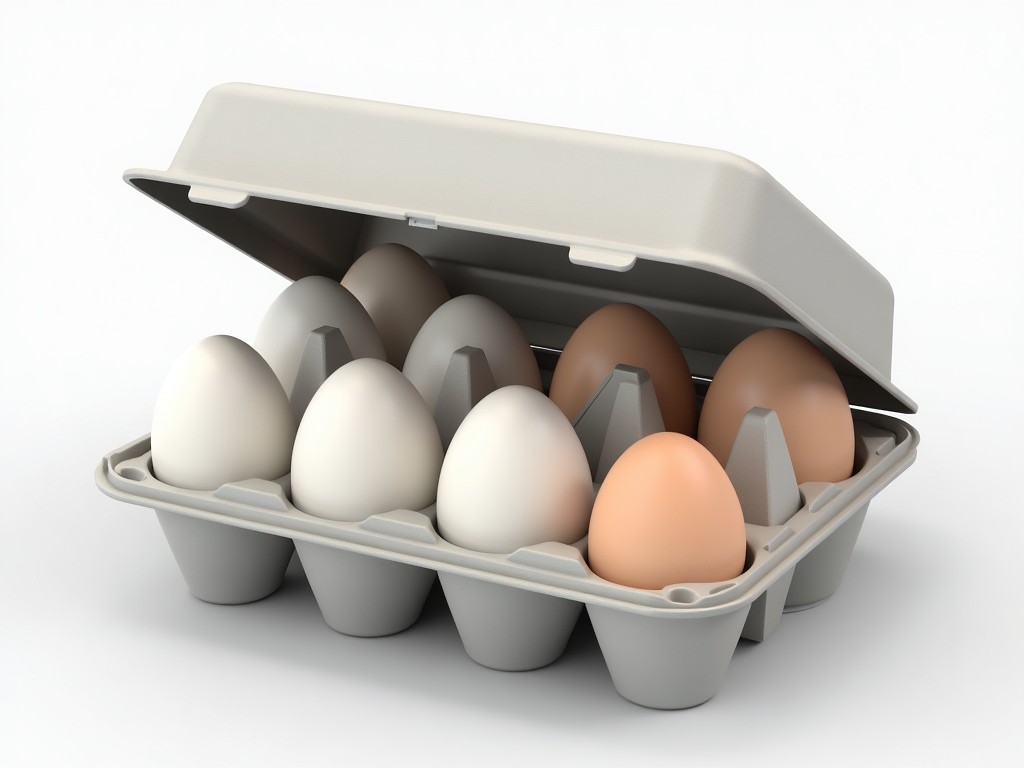
Factory Direct Egg Packaging Machine for Poultry Farms
This equipment places sorted eggs into trays or cartons at rates matched to upstream collection belts, reducing manual handling and minimizing shell damage. The design integrates gentle grip mechanisms with synchronized conveyors to maintain product integrity through each packaging cycle.
Operating Principle
Eggs arrive on a singulation belt where vision sensors orient each egg blunt‑end up. A series of soft‑finger grippers lift the eggs and deposit them into moving pockets that align with a continuously indexed carton or tray.
The pockets are driven by a cam‑linked mechanism that ensures a constant drop height of 12 mm, limiting impact force to under 0.15 N per egg. After placement, a pneumatic pusher advances the filled container to the sealing station.
Technical Specifications
| Parameter | Typical Value |
|---|---|
| Maximum throughput | Up to 180 eggs /min per lane |
| Egg size range | 40 mm – 55 mm length (small to jumbo) |
| Carton formats supported | 6‑, 12‑, 18‑, 24‑egg trays; custom sizes on request |
| Power supply | 380 V / 3‑phase, 50/60 Hz, 2.2 kW |
| Air consumption | 0.4 Nm³/h at 6 bar |
| Machine footprint | 1200 mm (L) × 800 mm (W) × 1500 mm (H) |
Key Engineering Features
- Soft‑finger grippers made of FDA‑grade silicone with a Shore A hardness of 30 ± 2, providing a grip force of 0.8 N to prevent slippage without cracking shells.
- Modular lane design allows addition of up to four parallel lanes; each lane operates independently with its own drive motor for easy scaling.
- Change‑over between carton formats is completed in under 8 minutes using tool‑free latch adjustments and standardized pocket inserts.
- Integrated torque‑limiting clutches protect the drive train from overload, limiting peak torque to 15 Nm.
- Energy‑recovery braking recaptures up to 18 % of kinetic energy during lane stops, reducing overall power draw.
Applications in Poultry Production
In broiler hatcheries, the machine receives eggs directly from incubators after candling, placing them into setter trays for transport to grow‑out houses.
For table‑egg farms, the unit integrates with grading lines, feeding sorted eggs into retail‑ready cartons at speeds that match packaging line demand, thereby eliminating buffer accumulation.
The low‑impact deposit method maintains hatchability above 92 % when used for hatching eggs, meeting industry standards for embryo viability.
Customization Options
- Lane width adjustable from 100 mm to 250 mm to accommodate alternative container geometries such as pulp trays or plastic clamshells.
- Vision system upgrades include UV fluorescence detection for cracked‑shell identification, with reject rates configurable down to 0.2 %.
- Stainless‑steel (AISI 304) or food‑grade powder‑coated frames available for environments with high humidity or frequent wash‑down cycles.
- Optional integrated code‑printer for lot‑number and date‑stamp directly onto cartons, using food‑safe ink with a drying time under 2 seconds.
- Control interface can be supplied as a standalone PLC panel or integrated into existing SCADA via Ethernet/IP or Modbus TCP.
Quality Assurance and Testing
Each unit undergoes a functional test cycle of 30 minutes at full rated speed, during which torque, speed, and positional repeatability are logged and compared against factory tolerances.
Material certifications for all food‑contact components are provided, confirming compliance with FDA 21 CFR 177.2600 and EU Regulation 10/2011.
Final inspection includes a shell‑integrity check using a low‑force compression probe; any unit exceeding a 0.25 mm deformation threshold is reworked before shipment.
Frequently Asked Questions
Yes, the drive controller accepts external encoder signals or discrete start/stop inputs, allowing line speed matching within ±2 %.
What is required to obtain a quotation?Please provide desired throughput, egg size range, carton dimensions, and any environmental constraints such as wash‑down frequency or ambient temperature range.
Are spare parts stocked locally?Critical wear items such as grippers, belts, and sensors are held in regional warehouses; lead times for standard parts are typically 5‑7 business days.
How is the machine protected during overseas shipment?Units are packed in ISO‑certified crates with internal bracing, shock‑absorbing foam, and humidity‑desiccant packs; optional heat‑sealed barrier bags are available for high‑humidity corridors.
Contact for Further Information
To discuss how this egg packaging solution can be adapted to your specific facility layout or to request a detailed layout drawing, please reach out via the contact form.
Request Technical Consultation


