Commercial Egg Packing Machine Manufacturer
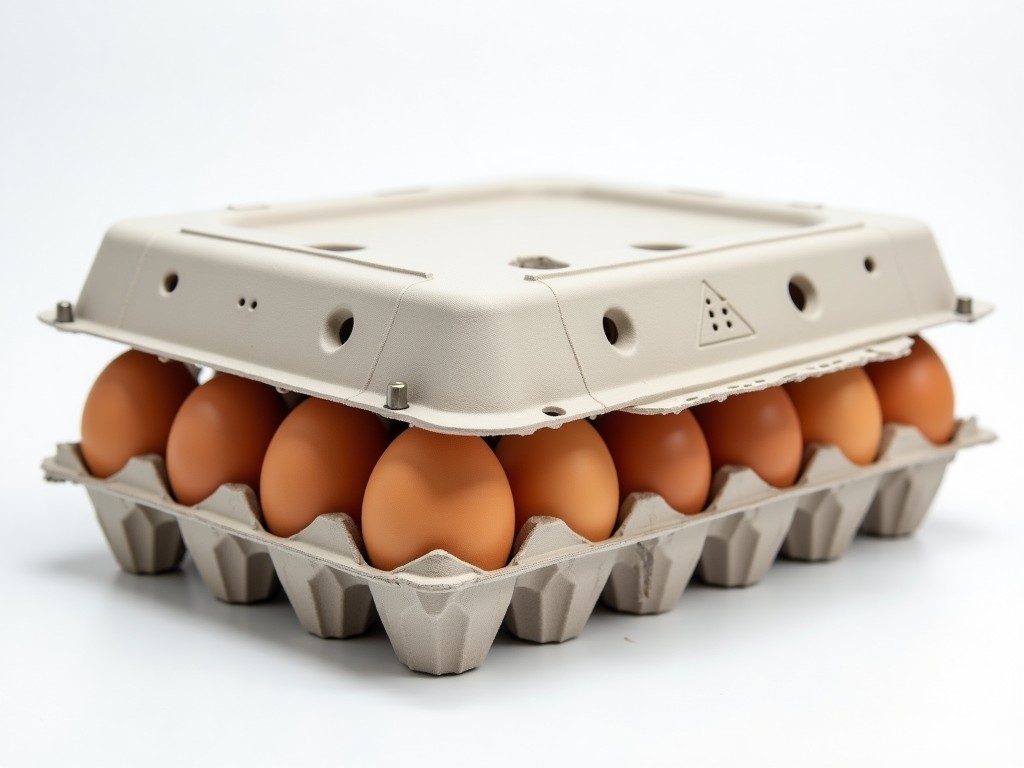
Commercial Egg Packing Machine Manufacturer
Overview
Egg packing machines are designed to orient, count, and place eggs into cartons or trays at high speed while minimizing breakage. The equipment integrates mechanical handling, vision sensing, and pneumatic actuation to achieve consistent throughput for commercial poultry operations.
Manufacturers focus on modular construction that allows easy cleaning, quick changeover between carton sizes, and compatibility with upstream washing and downstream palletizing systems. Material selection emphasizes food‑grade stainless steel and FDA‑approved polymers to meet hygiene standards.
Working Principle
Eggs are fed onto a vibratory conveyor that aligns them point‑down. A rotating drum with pockets captures each egg and transfers it to a pickup arm. The arm places the egg into a moving carton pocket, where a mechanical plunger seats the egg firmly.
Sensors detect missing or mis‑oriented eggs and trigger a reject flap that diverts faulty units to a separate line. Cycle time is governed by the drive motor speed and the number of pockets on the transfer drum, allowing adjustable output rates.
Key Technical Specifications
| Parameter | Typical Value / Range | Notes |
|---|---|---|
| Maximum Capacity | Up to 180 eggs per minute | Dependent on egg size and carton format |
| Egg Size Compatibility | Small (43 g) to Jumbo (68 g) | Adjustable via pocket diameter |
| Drive Motor Power | 1.5 kW servo | Variable speed control |
| Carton Types | 6‑egg, 10‑egg, 12‑egg, 18‑egg, 20‑egg | Quick‑change tooling |
| Power Supply | 380 V / 3‑phase / 50‑60 Hz | Optional 460 V version |
| Machine Footprint | 2.2 m (L) × 1.0 m (W) × 1.8 m (H) | Includes control cabinet |
Applications in Poultry Processing
In integrated processing lines, the packing machine follows grading and washing stations. Proper orientation reduces the likelihood of hairline cracks during subsequent handling, which directly impacts yield and consumer satisfaction.
For facilities that supply retail chains, the ability to switch between different carton configurations on the fly supports mixed‑order fulfillment without stopping the line. This flexibility lowers inventory of pre‑packed cartons and reduces waste.
Customization Options
- Adjustable pocket pitch to accommodate specialty eggs such as omega‑3 enriched or free‑range varieties
- Optional inline UV‑C sterilization module for shell surface treatment
- Choice of touch‑screen HMI with PLC or PC‑based control architecture
- Stainless steel grades 304 or 316L for corrosive environments
- Integration kits for connection to existing conveyor systems or robotic palletizers
Quality Control and Testing
Each unit undergoes a factory acceptance test that measures actual egg placement accuracy, cycle time consistency, and mechanical wear on moving parts. Results are documented in a test report that includes tolerance bands for critical dimensions.
Material traceability is maintained for all food‑contact components, with certificates of conformance supplied upon request. The design follows ISO 14644‑1 cleanliness guidelines for easy cleaning and sanitization.
Frequently Asked Questions
- Can the machine be adapted for different carton sizes? Yes, changeover kits include new pocket guides and plunger adapters; typical changeover time is under 15 minutes.
- What information is needed for a quotation? Required details include target eggs per minute, egg size range, carton types, power supply voltage, and any desired optional modules.
- Which materials are available for food‑contact parts? Standard is AISI 304 stainless steel; AISI 316L is offered for higher corrosion resistance, and all polymers are FDA‑approved.
- How is quality inspected before shipment? Functional testing includes speed verification, miss‑place rate measurement (<0.5 % typical), and a visual inspection of welds and finishes.
- What packaging methods are used for export shipments? Machines are secured on skids with vapor‑corrosion inhibitor wrapping, then placed in wooden crates meeting ISPM‑15 standards.
- What is the typical production lead time? Lead time ranges from 8 to 12 weeks after receipt of formal purchase order and approval of layout drawings.
Contact for Inquiry
To discuss your specific packing requirements, request a detailed quotation, or arrange a virtual factory walkthrough, please use the contact form below. Our engineering team will respond with a technical proposal that includes layout drawings, utility consumption estimates, and a project timeline.



