China Egg Grading And Packaging Machine Market
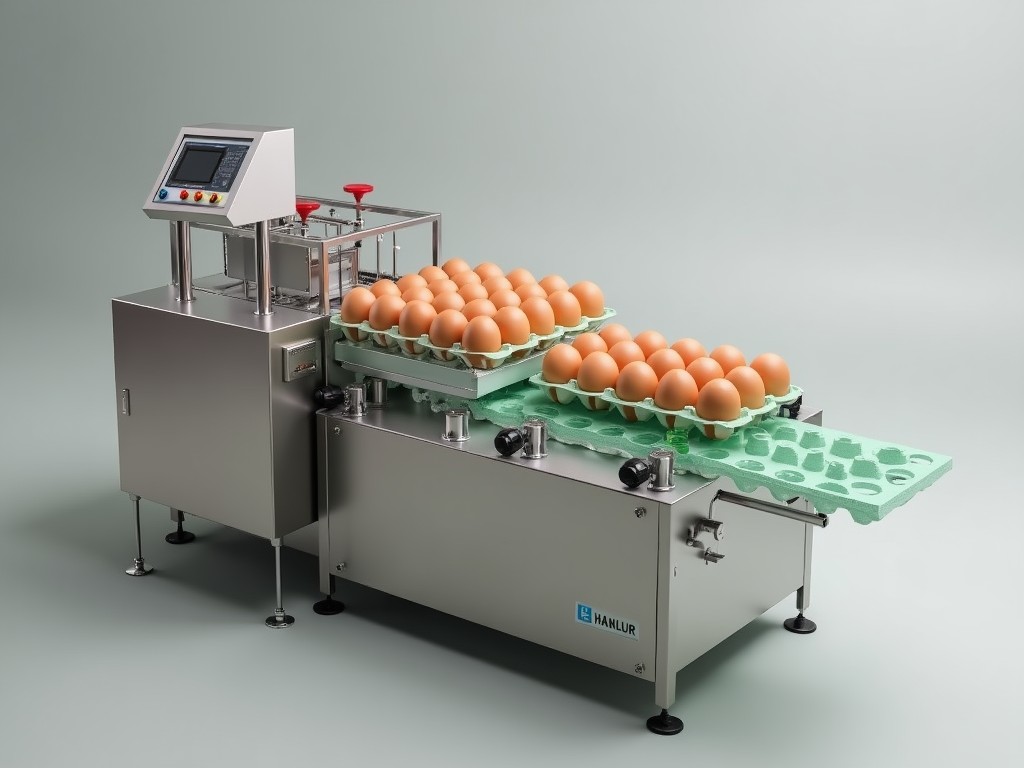
China Egg Grading and Packaging Machine Market Overview
The demand for automated egg grading and packaging equipment in China has risen alongside the expansion of large‑scale poultry farms and processing plants. Producers seek systems that can sort eggs by weight, size, and shell quality while integrating with downstream carton or tray packers.
Market Drivers and Production Trends
Rising labor costs and stricter food‑safety regulations encourage manufacturers to replace manual sorting with machines that offer consistent throughput and traceability. Additionally, export‑oriented processors require uniform egg presentation to meet international grading standards.
Typical Machine Configurations
| Model | Capacity (eggs/hr) | Grading Levels | Packaging Speed (cartons/min) | Power Consumption (kW) |
|---|---|---|---|---|
| EG‑GP‑2000 | 2,000 | 3 (small, medium, large) | 15 | 1.2 |
| EG‑GP‑5000 | 5,000 | 5 (weight‑based) | 30 | 2.8 |
| EG‑GP‑8000 | 8,000 | 7 (size + shell quality) | 45 | 4.5 |
Core Technical Parameters
Grading mechanisms typically employ load‑cell weighing belts or optical sensors that measure egg diameter and detect cracks. The measured data are processed by a PLC that directs each egg to the appropriate chute.
Packaging modules can be configured for tray loading, carton sealing, or shrink‑wrapping, with changeover times ranging from 5 to 15 minutes depending on the format.
Applications in Poultry Processing
In breeder farms, graded eggs are directed to incubation trays, ensuring uniform embryo development. In table‑egg plants, the machines reduce breakage by separating damaged shells before packing, which improves yield and customer satisfaction.
For export‑oriented facilities, the ability to print lot codes and weight labels directly on the packaging line supports compliance with destination‑country regulations.
Customization Options
- Adjustable belt speed to match upstream hatchery output.
- Interchangeable grading cages for different egg sizes (quail, duck, chicken).
- Optional UV sterilization station before packaging.
- Data logging module for traceability and OEE monitoring.
Quality Assurance and Testing
Each unit undergoes factory acceptance testing that includes repeatability checks of weight accuracy (±0.5 g) and speed verification at 100 % rated capacity. Shell‑crack detection is validated using a standardized set of artificially damaged eggs.
Spare parts such as load cells, belts, and sensor lenses are stocked for quick replacement, minimizing downtime during routine maintenance.
Frequently Asked Questions
Can the machine be integrated with existing conveyor lines?
Yes, the inlet and outlet heights are adjustable within a 100 mm range, and the frame includes standard mounting brackets for common conveyor profiles.
What information is required before a quotation?
Required details include daily egg volume, desired grading criteria, packaging format, and any auxiliary functions such as coding or sterilization.
What materials are available for food‑contact surfaces?
Food‑grade stainless steel (AISI 304 or 316L) and FDA‑approved polymers are standard; alternative alloys can be supplied upon request.
How is quality inspected during production?
In‑process checks involve sensor calibration, belt tension measurement, and functional test runs with sample eggs before final packing.
What is the typical production lead time?
Lead time varies from 6 to 10 weeks depending on the selected configuration and current factory load.
Contact for Inquiry
To discuss your specific egg grading and packaging requirements, please provide your production specifications via the inquiry form.
Send Inquiry


