Bulk Egg Carton Machine With Printing Machine
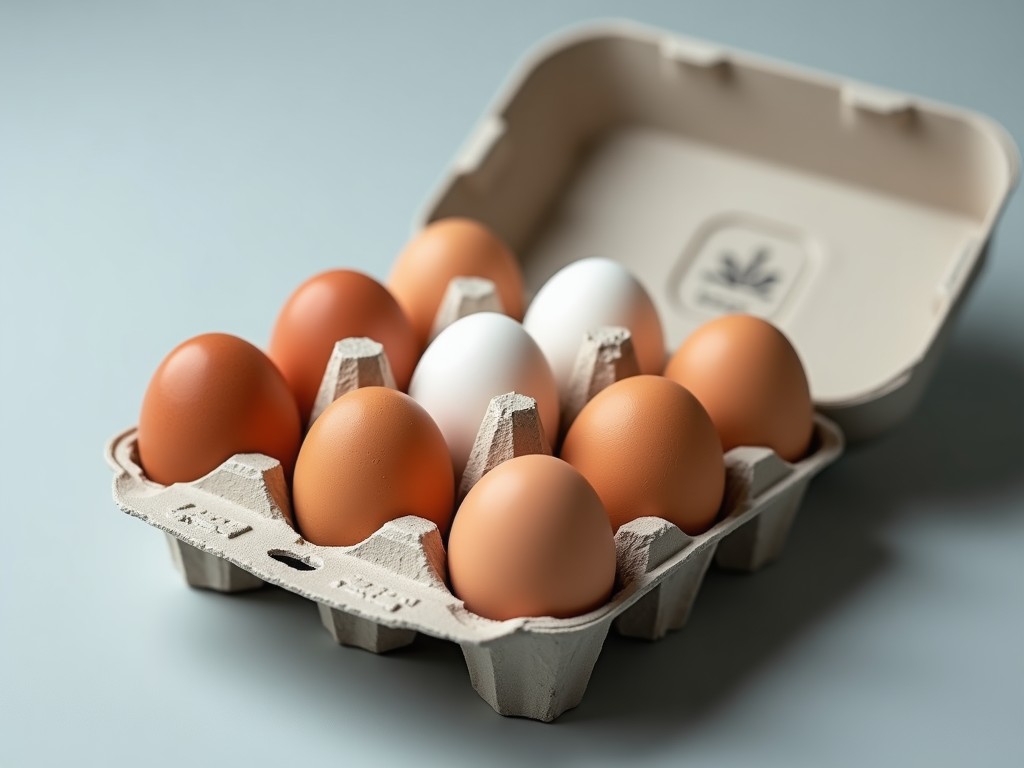
Bulk Egg Carton Machine with Integrated Printing System
This equipment combines high‑speed carton forming with inline inkjet or flexographic printing, enabling producers to print batch codes, logos, or nutritional information directly onto each egg carton during the same cycle that shapes the blank.
Technical Specifications
| Parameter | Typical Value / Range |
|---|---|
| Carton Size (Length × Width × Height) | 100 mm × 100 mm × 30 mm to 150 mm × 150 mm × 45 mm (customizable) |
| Printing Technology | Continuous inkjet (CIJ) or UV flexographic; print resolution 300 dpi |
| Maximum Line Speed | Up to 120 cartons per minute (depends on carton size and print area) |
| Power Supply | 380 V ± 10 %, 3‑phase, 50/60 Hz; total installed power ≈ 7.5 kW |
| Control System | PLC with HMI touchscreen; recipe storage for ≥20 carton formats |
| Machine Footprint (L × W × H) | ≈ 2.2 m × 1.0 m × 1.8 m (including conveyor infeed/outfeed) |
Working Principle
Flat blank sheets are fed from a roll into a forming station where vacuum‑assisted dies shape the carton walls and bottom. Simultaneously, a printing head traverses the moving carton, depositing ink on the outer surface before the carton is sealed and ejected. Synchronization between forming and printing is handled by servo drives, ensuring print registration within ±0.2 mm.
Changeover between carton sizes involves swapping the forming die set and adjusting the print head height; the HMI guides the operator through the steps, typically completing a size change in under 15 minutes.
Applications in the Egg Processing Industry
Inline printing eliminates a separate labeling step, reducing handling time and the risk of mis‑placed labels on fragile cartons. This is especially valuable for high‑volume farms that ship directly to retailers requiring traceability codes on each package.
The ability to print variable data such as lay‑date, farm ID, or promotional messages supports compliance with regional food‑safety regulations and enables differentiated branding without additional packaging materials.
Because the machine handles both forming and printing, floor space is saved compared to two separate lines, and overall equipment effectiveness (OEE) improves by minimizing transfer conveyors and associated downtime.
Customization Options
- Print head configuration: single‑color CIJ, dual‑color CIJ, or UV flexographic with up to four colors.
- Ink types: food‑grade solvent‑based, water‑based, or UV‑curable, selected according to carton substrate and required drying speed.
- Conveyor speed range: adjustable from 30 to 150 cpm via variable‑frequency drive to match upstream egg‑grading output.
- Optional integrated barcode verifier that reads printed codes and rejects non‑conforming cartons automatically.
- Stainless‑steel (AISI 304) food‑contact surfaces for easy cleaning and corrosion resistance.
Quality Control and Testing
Each machine undergoes a factory acceptance test that measures print registration error, carton dimensional tolerance, and sealing strength. Print registration is verified using a vision system that checks ≥100 sample cartons per run, with acceptance criteria of ≤0.2 mm deviation.
Carton compression strength is tested per ASTM D642 to ensure the formed package can withstand typical stacking loads (≥150 N) without deformation. Leak‑proof integrity is confirmed by a water‑spray test on the sealed seam.
Documentation includes a test report, electrical safety certification (CE marked), and a set of spare‑part recommendations based on wear‑item life cycles (e.g., print head nozzles ≈ 8 million cycles).
Frequently Asked Questions
Can the printing system be adapted for different ink types?
Yes. The print head mounting is designed for quick‑change cartridges, allowing a switch between solvent‑based, water‑based, or UV inks with minimal downtime. Adjustments to drying temperature or curing lamp intensity are made via the HMI.
What information is required to prepare a quotation?
Desired carton dimensions, target line speed, printing technology (CIJ or flexographic), number of print colors, and any optional features such as barcode verification or stainless‑steel finish. Providing a sample carton blank helps confirm die compatibility.
How are wear items like print nozzles maintained?
Nozzles are designed for easy removal; a recommended flush cycle after each production shift prevents clogging. Replacement intervals are based on actual usage, typically every 8‑10 million printed cartons, and are tracked by the machine’s built‑in maintenance log.
Next Steps
To discuss how this integrated forming‑printing solution can fit into your egg‑processing line, share your layout constraints and required output volume. Our engineering team will review the details and return a concept layout with cycle‑time estimates.



