Sales Of Automatic Palletizing And Loading Systems
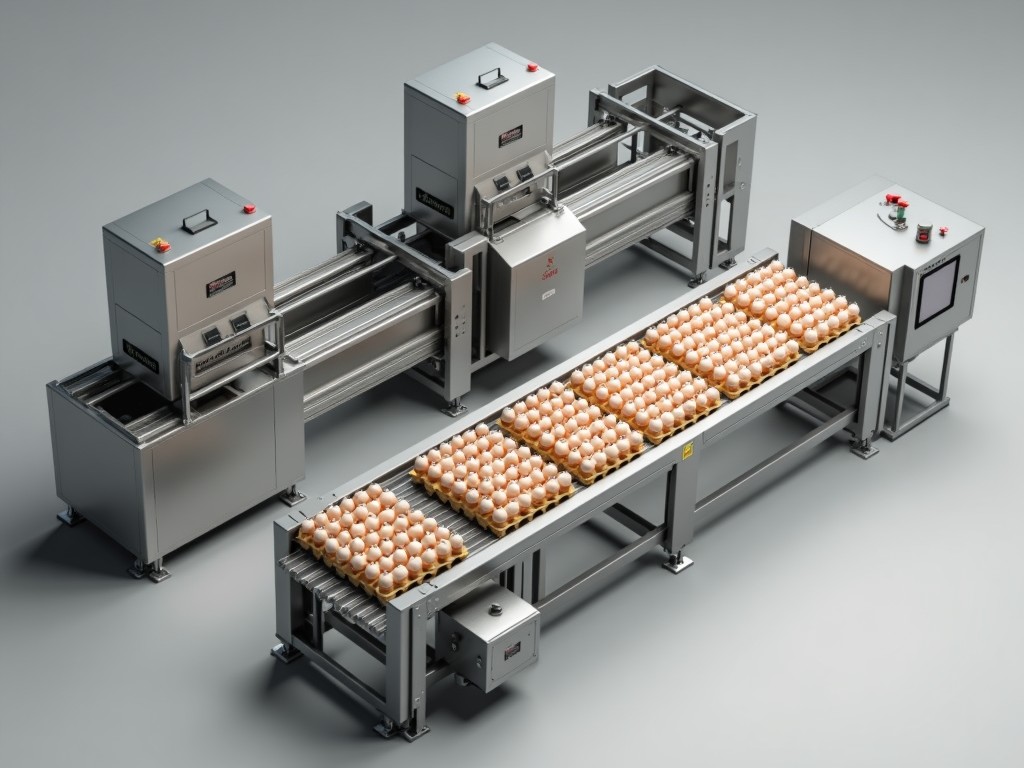
Automatic Palletizing and Loading Systems
An automatic palletizing and loading system integrates robotic handling, conveyor transport, and programmable logic to stack products onto pallets or unload them from pallets without manual intervention. The primary purpose is to increase throughput consistency while reducing labor exposure to repetitive lifting tasks.
These systems are typically deployed at the end of production lines or at warehouse receiving docks where unit loads must be formed for storage or shipment. By automating the pallet formation process, facilities achieve predictable cycle times and can reallocate operators to value‑added activities such as quality inspection or equipment maintenance.
Core Components and Their Functions
The main subsystems include a multi‑axis robotic arm or gantry, an infeed conveyor that presents products at a controlled rate, a pallet dispenser that supplies empty pallets, and a vision system that verifies product orientation and placement accuracy.
Control software coordinates motion trajectories, monitors sensor inputs, and executes layer‑by‑layer pallet patterns defined by the user. Safety devices such as light curtains, safety scanners, and emergency stop circuits are integrated to meet ISO 13849‑1 performance levels.
Performance Characteristics
Typical cycle times range from 4 to 8 seconds per product layer, depending on product weight, gripper type, and pallet pattern complexity. Payload capacities are commonly rated between 5 kg and 25 kg per pick, with heavy‑duty variants available for loads up to 50 kg.
Positional repeatability is usually within ±2 mm for the pick point and ±3 mm for placement on the pallet, enabling tight stacking tolerances that minimize product overhang. The system footprint can be as compact as 2.5 m × 2.0 m for low‑speed models, while high‑speed configurations may require up to 4.0 m × 3.0 m to accommodate faster conveyor speeds and larger safety zones.
Integration Considerations
Successful installation requires an assessment of facility layout to ensure adequate clearance for robot movement, pallet exchange, and maintenance access. Electrical supply typically demands a three‑phase 380‑480 V connection with a dedicated circuit breaker sized for the robot’s peak power draw, often between 5 kW and 15 kW.
Communication with existing line controllers is achieved via industrial Ethernet protocols such as EtherNet/IP, PROFINET, or Modbus TCP, allowing the palletizer to receive start/stop signals and exchange production data. Safety integration follows a risk assessment methodology, resulting in a safety‑rated control system that achieves PL d or higher.
Typical Applications and Rationale
In beverage bottling lines, the system handles cases of bottles or cans, forming stable pallets that withstand the dynamic forces of fork‑lift handling during warehouse storage. The consistent layer patterns reduce case shifting, which in turn lowers product damage rates during transit.
For consumer‑goods manufacturers packaging cartons of snacks or household items, the ability to quickly switch between different carton sizes and pallet configurations supports frequent SKU changes without lengthy downtime. The vision system detects mis‑aligned cartons and triggers a reject mechanism, maintaining pallet integrity.
Pharmaceutical companies benefit from the system’s clean‑room compatible design options, which include stainless‑steel surfaces and sealed joints that facilitate cleaning and reduce particle generation. Precise placement ensures that cartons remain upright, preserving label readability and compliance with packaging regulations.
Customization Options
Gripper technology can be selected based on product characteristics: vacuum cups for porous cardboard, mechanical clamps for rigid containers, or magnetic grippers for ferrous containers. Interchangeable tooling allows a single robot to handle multiple product types with minimal changeover time.
Pallet size accommodation is adjustable from standard 800 mm × 1200 mm Euro pallets to 1000 mm × 1200 mm or custom dimensions up to 1300 mm × 1300 mm. Layer patterns such as interlocking, column‑stack, or pinwheel can be programmed via the HMI, and recipe storage enables rapid recall for different SKUs.
Software features include real‑time performance monitoring, predictive maintenance alerts based on motor current trends, and data logging for OEE calculation. Integration with warehouse management systems (WMS) allows automatic pallet ID generation and dispatch instructions.
Quality Assurance and Testing
Before shipment, each system undergoes a factory acceptance test (FAT) that verifies cycle time, positional accuracy, and safety function response under simulated production loads. Test results are documented and reviewed with the customer.
On‑site, a site acceptance test (SAT) confirms proper integration with the host line, correct communication with PLC/WMS, and adherence to local safety regulations. Material traceability is maintained for structural components, with mill certificates available for aluminum frames and stainless‑steel fasteners.
Lubrication points are fitted with grease nipples and sealed bearings to minimize maintenance frequency. Wear parts such as gripper liners and conveyor belts are designed for quick replacement, typically requiring less than 30 minutes of downtime.
Frequently Asked Questions
Yes. The pallet dispenser and placement routines are adjustable to accommodate non‑standard pallet sizes; detailed dimensions are required during the quotation phase.
Product dimensions, weight, material, required throughput (products per minute), pallet pattern preference, and facility layout constraints (available floor space, ceiling height, power supply).
Food‑grade silicone, FDA‑approved urethane, and stainless‑steel options are offered; selection depends on product surface texture and cleaning regime.
Factory acceptance testing includes cycle‑time measurement, repeatability tests, safety circuit validation, and a visual inspection of welds and finishes per ISO 9001‑based procedures.
Systems are secured on steel skids, wrapped with stretch film, and protected with corner braces; optional wooden crates or climate‑controlled containers are available upon request.
To discuss how an automatic palletizing and loading system can be tailored to your production line, please provide your project specifications using the form below.
Request a Technical Quotation


