Price Of Automatic Palletizing And Loading System
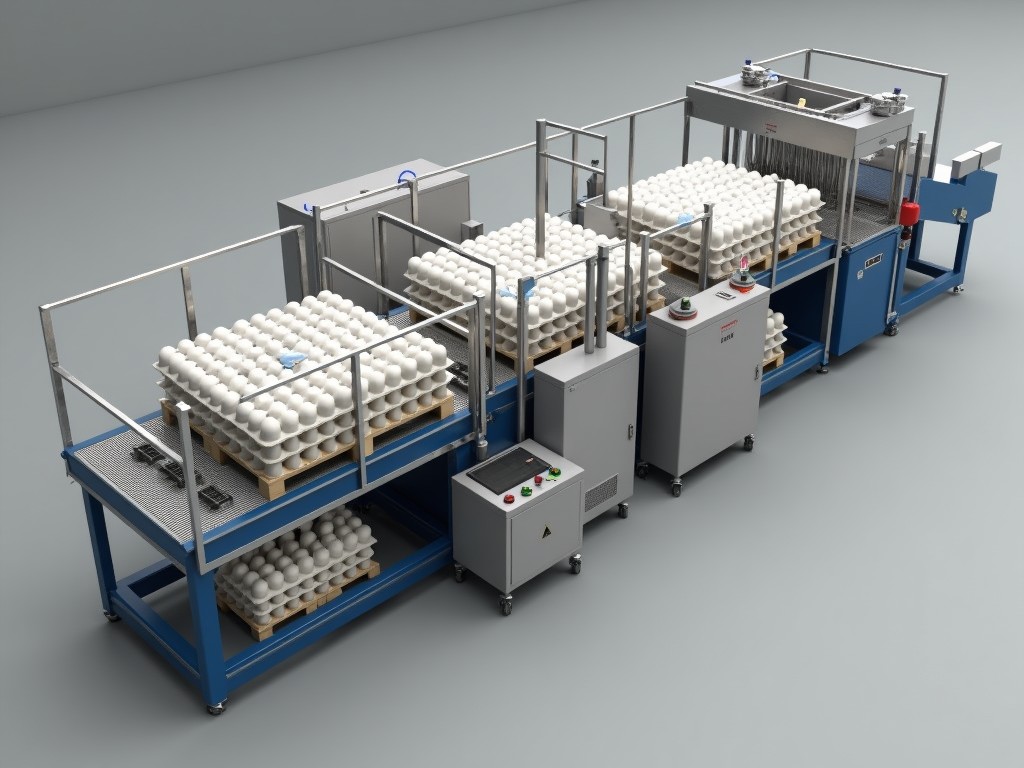
Price of Automatic Palletizing and Loading System
System Overview
An automatic palletizing and loading system integrates robotic arms, conveyors, and control software to stack goods onto pallets and load them onto transport vehicles without manual intervention. The system typically operates at cycle times ranging from 4 to 8 seconds per pallet, depending on product size and weight. Throughput is measured in pallets per hour, with common models achieving 450 to 720 pallets per hour under continuous operation.
Key Technical Specifications
Core specifications that affect pricing include robot payload capacity, reach, number of axes, and conveyor speed. Payload capacities typically range from 10 kg to 150 kg, while reaches vary between 1.2 m and 3.0 m. Most systems use six‑axis articulated robots, though SCARA or gantry configurations are available for specific layouts. Conveyor belt speeds are adjustable from 0.1 m/s to 2.0 m/s, allowing synchronization with upstream production lines.
Factors Influencing Price
Price is not a fixed figure; it results from several engineering and project‑specific variables. Understanding these factors helps buyers evaluate quotations and avoid unexpected costs.
- Robot model and payload capacity – higher payload and longer reach increase actuator and controller costs.
- Number of stations – single‑lane versus multi‑lane configurations affect conveyor length and synchronization hardware.
- End‑effector tooling – custom grippers, vacuum systems, or magnetic lifts add material and design expenses.
- Control software complexity – integration with MES, WMS, or ERP systems requires additional licensing and programming hours.
- Safety systems – safety scanners, light curtains, and emergency stop networks add to hardware and installation effort.
- Installation and commissioning – site preparation, foundation work, and calibration time vary with facility layout.
Indicative Price Ranges
The following table shows typical price brackets for common configurations. Values are approximate and adjustable according to project requirements.
| Configuration | Payload (kg) | Typical Price (USD) |
|---|---|---|
| Single‑lane, 6‑axis robot, standard gripper | 10‑30 | 45,000 – 70,000 |
| Single‑lane, 6‑axis robot, custom vacuum gripper | 30‑60 | 70,000 – 100,000 |
| Dual‑lane, synchronized conveyors, 6‑axis robot | 60‑100 | 100,000 – 150,000 |
| Multi‑lane, gantry system, multiple end‑effectors | 100‑150 | 150,000 – 250,000 |
Additional costs such as freight, installation, operator training, and first‑year maintenance typically add 15 % to 25 % of the base system price.
Typical Applications
Automatic palletizing and loading systems are selected based on the need to reduce manual handling, improve stacking consistency, and meet high‑volume shipping schedules.
- Beverage case packing – stacking 24‑bottle cases onto pallets at rates up to 600 cases/hour.
- Bagged goods handling – managing 25 kg bags of feed, fertilizer, or chemicals with precise layer patterns.
- Carton loading for e‑commerce fulfillment – forming mixed‑SKU pallets for outbound trucks.
- Stacking of molded plastic parts – accommodating irregular shapes with adjustable end‑effector force control.
- Loading of pallets onto trailers – integrating with automated guided vehicles (AGVs) for end‑of‑line transfer.
Customization Options
Systems are engineered to match specific line layouts, product characteristics, and facility constraints. Customization directly influences the final quotation.
- Robot mounting – floor‑mounted, ceiling‑suspended, or rail‑guided configurations.
- Conveyor layout – straight, L‑shaped, U‑shaped, or spiral designs to fit floor space.
- End‑effector tooling – interchangeable grippers, suction cups, clamps, or magnetic heads.
- Vision systems – 2D/3D cameras for product orientation detection and quality inspection.
- Software modules – recipe management, real‑time OEE tracking, and remote diagnostics.
- Safety upgrades – area scanners, safety mats, and collaborative speed‑and‑separation monitoring.
Manufacturing and Quality Assurance
Production follows ISO 9001‑aligned processes, with each robot module undergoing load testing, repeatability verification (±0.05 mm), and cycle‑time validation before shipment. Electrical panels are built to IEC 60204‑1 standards, and safety circuits are validated per ISO 13849‑1. Documentation includes factory acceptance test (FAT) reports, wiring diagrams, and software version logs.
Frequently Asked Questions
Yes. The conveyor length, robot reach, and mounting height are adjusted during the engineering phase based on line layout drawings provided by the customer.
Q: What information is required before a quotation can be issued?Key inputs include product type, weight, dimensions, desired pallet pattern, required throughput (pallets per hour), and facility layout constraints such as ceiling height and floor load capacity.
Q: What materials are available for the robot structure and end‑effectors?Robot arms are typically constructed from aluminum alloy or steel frames; end‑effectors can be made from stainless steel, hardened polymers, or composite materials depending on the product’s surface sensitivity.
Q: How is quality inspected before shipment?Each unit undergoes a factory acceptance test that checks positional accuracy, repeatability, emergency stop response, and communication with the customer’s control system. Test data are recorded and shared with the buyer.
Q: What packaging methods are used for export shipments?Systems are disassembled into transport‑rated crates, with shock‑absorbing foam and bracing to meet ISTA‑3A standards. Electrical components are packed in anti‑static bags.
Q: What is the typical production lead time?Lead times range from 10 to 16 weeks after receipt of technical specifications and deposit, depending on the degree of customization and current factory load.
Request a Quote
To obtain a detailed, project‑specific price estimate, please provide the information listed in the FAQ section. Our engineering team will review your requirements and return a formal quotation within two business days.
Contact Us for Quotation


