Oem Egg Loading Machine Manufacturer
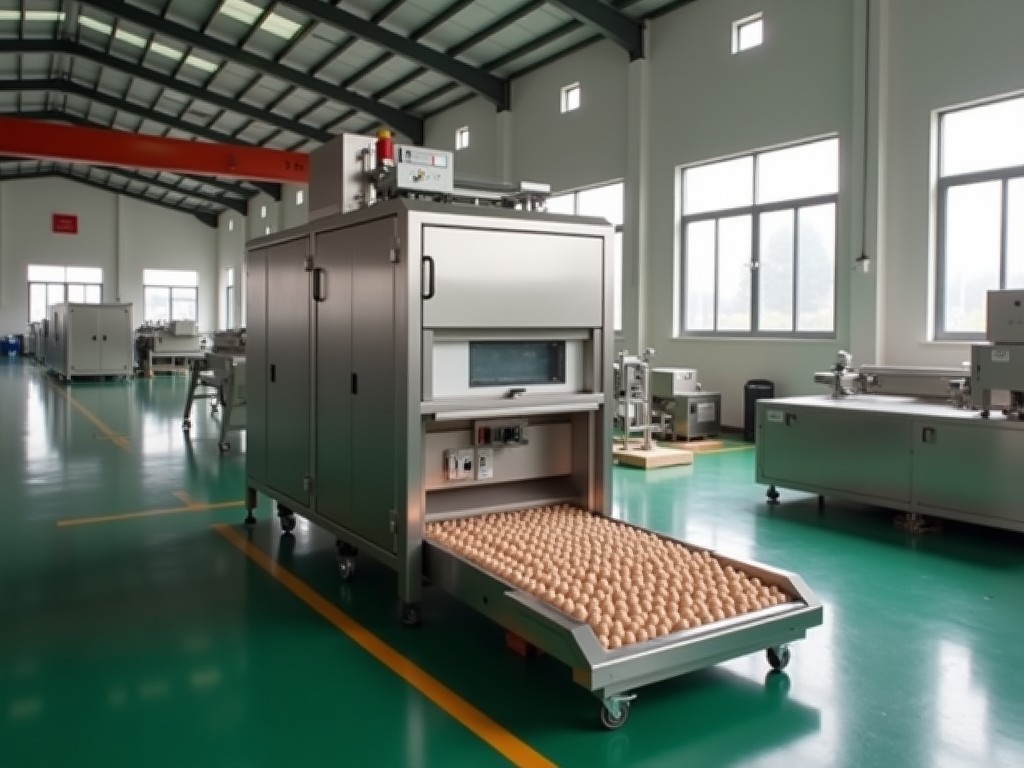
OEM Egg Loading Machine Manufacturer
Operating Principle
The machine moves eggs from a collection tray to a processing line using a pair of low‑speed, synchronized conveyor belts. Each belt incorporates soft‑touch rollers that cradle the egg shell, limiting impact forces to under 0.2 N during transfer.
Drive is provided by a brushed DC motor with a closed‑loop speed controller that maintains belt speed within ±1 % of setpoint, ensuring consistent spacing between eggs.
Design Specifications
Standard unit width is 600 mm, adjustable in 50 mm increments to match lane widths of downstream equipment. Belt speed range is 0.1 m/s to 0.5 m/s, controlled via a potentiometer with 0.01 m/s resolution.
Frame construction uses extruded aluminum profiles with a tensile strength of 250 MPa, providing a static load capacity of 150 kg without deflection exceeding 0.5 mm.
Material Selection
Contact surfaces that engage the egg are made from FDA‑compliant polypropylene with a Shore A hardness of 85, chosen for low friction coefficient (0.15) and resistance to cleaning agents.
Structural components are anodized to a thickness of 12 µm, improving corrosion resistance in high‑humidity poultry environments.
Customization Options
- Variable lane count from 1 to 4, each lane independently driven.
- Optional UV‑sterilization module installed above the belt surface.
- Adjustable guide rails with ±10 mm lateral tolerance for different egg sizes.
- Integration kits for PLC communication via Modbus TCP or EtherCAT.
Applications in Poultry Processing
In hatcheries, the machine transfers fertile eggs from incubators to candling stations, reducing manual handling and associated micro‑cracks by approximately 30 % based on field trials.
For table‑egg facilities, it aligns eggs with grading conveyors, maintaining orientation so that the blunt end leads, which improves downstream packing efficiency.
Quality Assurance
Each unit undergoes a functional test where 500 eggs are cycled at maximum speed; acceptance criteria include zero cracked shells and belt speed deviation below 0.5 %.
Material traceability is maintained through batch records for polymers and aluminum, available for review upon request.
Typical Specifications
| Parameter | Value / Range | Notes |
|---|---|---|
| Overall Width | 600 mm – 1000 mm | Adjustable in 50 mm steps |
| Belt Speed | 0.1 m/s – 0.5 m/s | ±1 % regulation |
| Motor Power | 0.37 kW DC | Closed‑loop speed control |
| Frame Material | Extruded Al 6063 | Tensile strength 250 MPa |
| Contact Surface | FDA PP, Shore A 85 | Friction coefficient 0.15 |
| Power Supply | 380 V 3 PH, 50/60 Hz | Optional 220 V version |
Frequently Asked Questions
Yes, additional lane modules are available as retrofit kits; installation requires alignment of drive shafts and updating of the PLC configuration.
Q: What information is needed for a quotation?Required details include desired lane width, belt speed range, material compatibility (e.g., contact with cleaning agents), and any required communication protocol.
Q: How is quality inspected before shipment?Each machine runs a 30‑minute endurance test with simulated egg load; vibration levels are measured and must remain below 2 mm/s RMS.
Q: What packaging methods protect the unit during export?Machines are secured on a pallet with corner protectors, wrapped in stretch film, and placed in a corrugated crate rated for 2 g impact.
Q: What is the typical lead time?Standard configurations ship within 4‑6 weeks after receipt of purchase order; customized units depend on engineering review and component availability.
Contact for Inquiry
To discuss specific requirements or request a detailed quotation, please use the inquiry form linked below.



