Egg Conveyor Loading Machine Factory Price
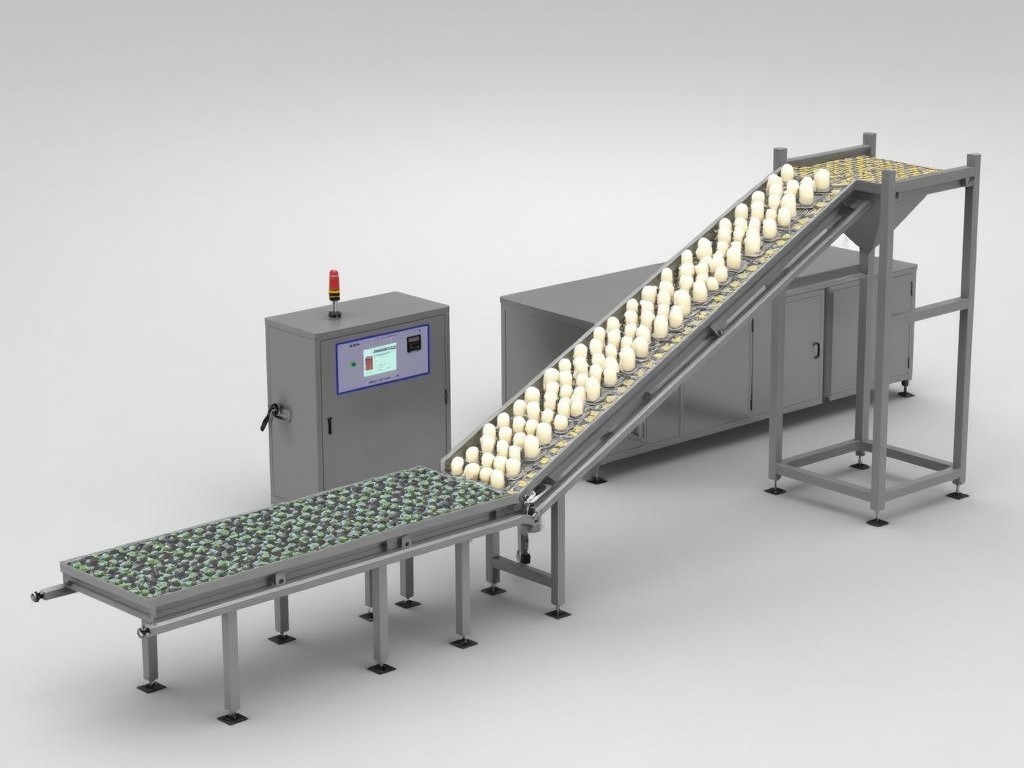
Egg Conveyor Loading Machine Factory Price and Technical Specifications
The transition from egg collection to final packaging represents a critical phase in poultry processing where breakage rates directly impact profit margins. Egg conveyor loading machines serve as the bridge, ensuring that eggs are moved from collection belts into crates or trays without mechanical impact or structural stress. Engineering-grade systems utilize precision-timed synchronization and soft-touch surfaces to maintain shell integrity during high-speed operations.
Engineering Design and Material Selection
Structural integrity and hygiene standards are the primary drivers for material selection. Most industrial-grade loading machines are constructed from Grade 304 stainless steel to resist corrosion from frequent cleaning agents and high humidity in hatchery environments. The contact surfaces typically utilize food-grade silicone or specialized PVC belts, which provide the necessary friction coefficient to prevent slipping while remaining soft enough to prevent fractures.
Drive systems are governed by Variable Frequency Drives (VFDs), allowing operators to calibrate belt speed precisely. This precision is vital for matching the conveyor speed with the upstream grading equipment and downstream packaging lines, preventing bottlenecks or overflows. By minimizing sudden acceleration or deceleration, the machine reduces the kinetic energy transfers that often lead to hairline cracks in the eggs during transport.
Factors Influencing Factory Pricing
Determining the factory price of an egg loading machine requires an analysis of specific operational variables rather than a flat rate. Capacity is the most significant factor, measured in eggs per hour, ranging from small-scale manual-assist- operations to over 20,000 for automated industrial lines. Higher throughput requirements necessitate more robust frames and advanced sensor arrays to manage flow.
- Level of Automation: A manual-loading system offers a lower price point compared to a fully automated robotic loading cell with vision-guided orientation.
- Material Grade: While standard stainless steel is common, opting for 316 stainless steel for highly corrosive environments increases the raw material cost.
- Integration Complexity: A standalone unit is less expensive than a system custom-built to integrate seamlessly into an existing multi-stage conveyor architecture.
- Sensor Technology: Inclusion of photoelectric sensors for egg detection and weight-based quality control adds to the technical complexity and final final investment.
Technical Specification Comparison
| Specification | Standard Model | High-Capacity Model | Automated Cell |
|---|---|---|---|
| Throughput | 2,000 - 5,000 eggs/h | 5,000 - 15,000 eggs/h | 15,000+ eggs/h |
| Belt Material | PVC/Silicone | Reinforced Silicone | Custom-grip Polymer |
| Frame Material | 304 Stainless Steel | 304 Stainless Steel | 316 Stainless Steel |
| Control System | Manual/VFD | PLC with HMI | PLC + Vision Integration |
Industrial Applications
Egg conveyor loading machines are deployed across various stages where egg handling precision is paramount. In commercial grading plants, these machines receive graded eggs from the sorting process and organize them into standardized crates for transport. The gentle nature of the conveyor ensures that the internal quality verified during grading is not compromised by mechanical shock.
In hatchery operations, the equipment is often used to move newly hatched eggs from incubation trays to processing sections. Because these environments require strict biological control, the loading machines are designed with seamless joints and modular components that allow for deep cleaning, preventing the accumulation of organic matter and ensuring compliance with sanitation protocols.
Customization and OEM Integration
Procurement teams often require machines that fit into existing facility layouts without structural modification. We offer customization of conveyor lengths, widths, and heights to accommodate specific clearance requirements in older production plants. Additionally, the loading belt geometry can be adjusted to handle various egg sizes, from standard chicken laying eggs to larger specialty varieties.
Technical teams can also specify the interface protocols, such as Modbus or Profinet, to allow the loading machine to communicate with the broader factory-wide PLC system. This integration ensures that if a downstream packager stops, the loading conveyor automatically slows its speed or halts to prevent egg accumulation.
To obtain a detailed technical proposal and factory price quote based on your production capacity, please contact our engineering department.
Request a Technical Quote


