Bulk Egg Loading Automation System
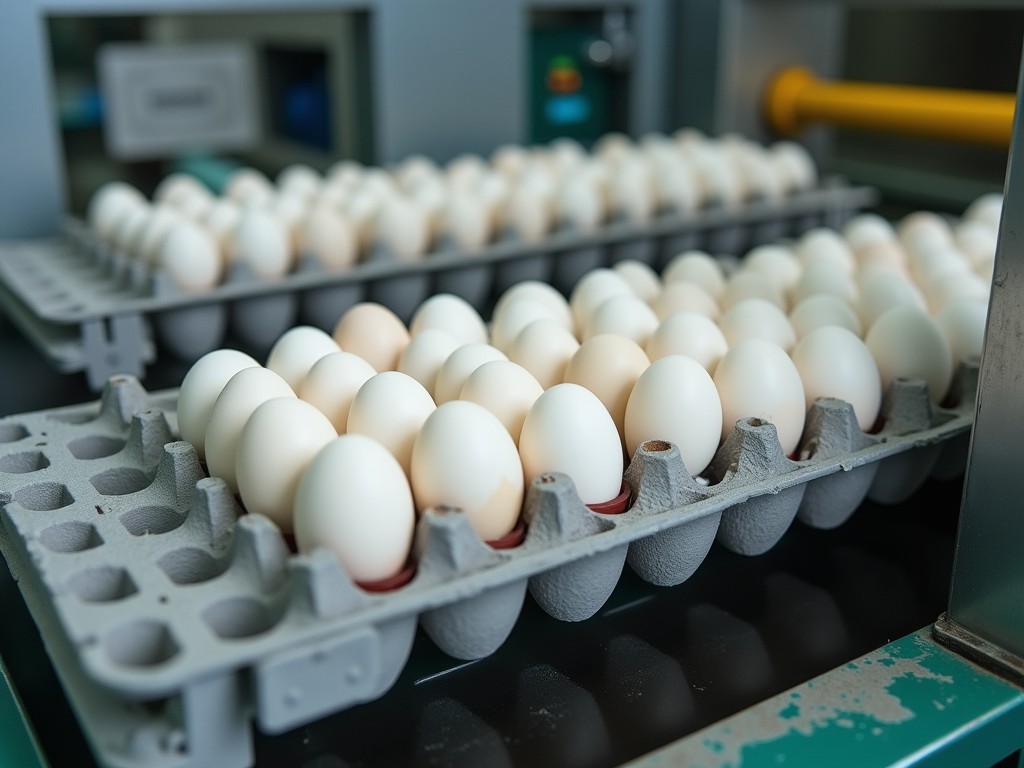
Bulk Egg Loading Automation System
Manual egg handling in high-volume poultry operations often results in significant bottlenecks and elevated rates of shell breakage. An automated bulk egg loading system addresses these challenges by streamlining the transfer of eggs from collection points to crates or shipping containers with minimal impact. By replacing erratic manual labor with precision mechanical transport, facilities can achieve consistent throughput rates while maintaining the structural integrity of the product.
Technical Overview of Operational Mechanics
The core architecture of the bulk loading system relies on vibratory bowl conveyors designed to move eggs using gentle high-frequency oscillations. Unlike belt systems that may cause friction, vibratory systems utilize low-amplitude waves to lift and transport eggs along a contoured spiral path. This method is critical for preventing micro-fractures during the initial loading phase.
Precision optical sensors are integrated at the discharge point to monitor egg density. These sensors detect individual units to prevent double-loading, which is often the primary cause of jams in downstream packaging lines. A programmable logic controller (PLC) manages the motor frequency in real-time, ensuring that the system maintains a steady flow regardless of fluctuations in the supply rate.
Key Engineering Specifications
| Parameter | Typical Values |
|---|---|
| System Capacity | 2,500 - 10,000 eggs/hour (variable) |
| Material Construction | Food-grade SUS304 or SUS316 Stainless Steel |
| Control System | PLC with Touchscreen HMI Interface |
| Detection Technology | Ultrasonic or Infrared Photoelectric sensors |
| Power Requirements | 220V/380V 3-Phase available |
Industrial Applications
Automated bulk loading is essential in environments where speed and hygiene are equally prioritized. Large-scale grading plants utilize these systems to move eggs from collection flats directly into grading lines without human intervention, reducing contamination risks.
- Export-Packing Facilities: Facilitating rapid transfer into standardized crates for international transit.
- Poultry Processing Plants: Integrating with automated sorting belts to handle bulk- units.
- Distribution Centers: Managing high-volume intake and re-sorting for logistics hubs.
Customization and Material Logic
System configuration is dictated by the specific floor layout and throughput requirements of the facility. Conveyor lengths and spiral angles are adjustable to fit around existing machinery. For facilities utilizing high-pressure washdown protocols, SUS316 stainless steel is specified to provide superior resistance against corrosive cleaning agents.
Software integration allows the loading system to communicate with broader SCADA networks. This connectivity enables real-time data collection on production rates and error logs, allowing for predictive maintenance schedules rather than reactive repairs after downtime.
Frequently Asked Questions
Can the system be adapted for different egg sizes?
Yes, the vibratory tracks and sensor heights are adjustable to accommodate various egg weights from small to jumbo sizes.
What is the typical production lead time for a custom setup?
Production typically ranges from 8 to 12 weeks depending on the complexity of the PLC integration and material selection.
How is the quality inspected before shipping?
Each system undergoes a functional stress test to verify vibratory frequency and sensor accuracy against the specified flow rate prior to dispatch.
Require a technical drawing or a quote based on your facility layout?
Request Technical Consultation


