B2B Automatic Egg Crate Loading Machine
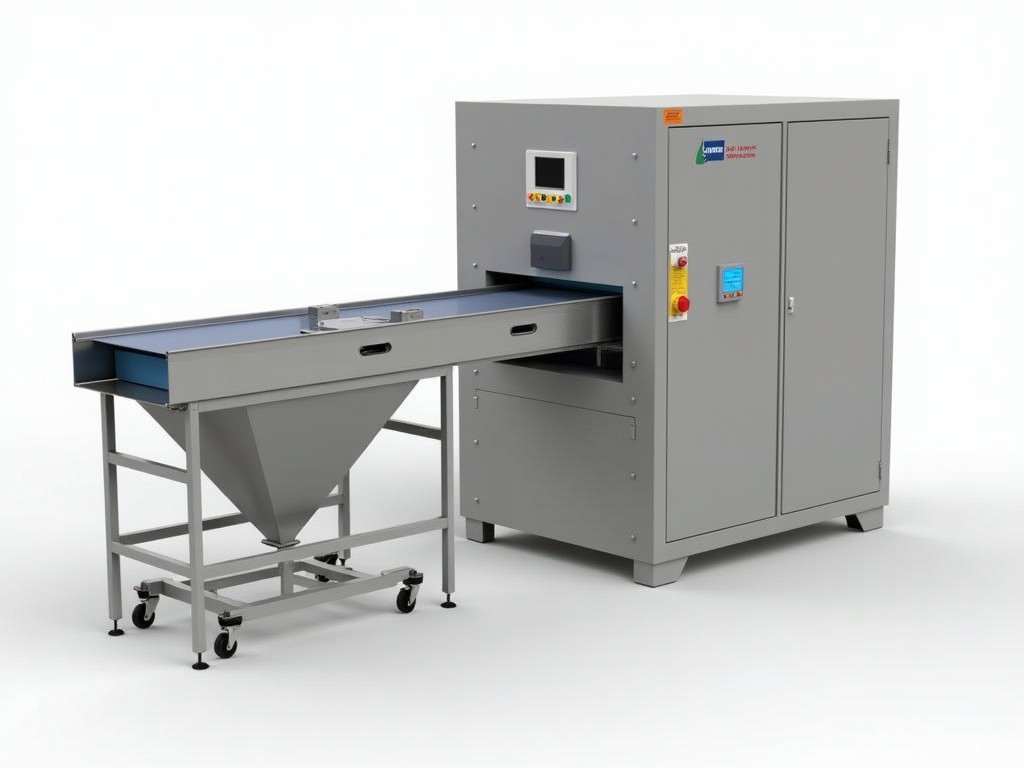
Automatic Egg Crate Loading Machine for B2B Operations
This machine automates the transfer of filled egg crates from packing lines to palletizing stations, reducing manual handling and associated labor costs. By integrating directly with existing conveyor systems, it maintains continuous flow without requiring operator intervention. The design accommodates standard crate dimensions commonly used in poultry processing facilities.
Core motion is provided by a servo-driven lift mechanism that positions crates with repeatable accuracy within ±2 mm. Sensors detect crate presence and orientation, triggering the lift only when a valid load is detected. This closed‑loop control minimizes misfeeds and prevents damage to fragile eggs during transfer.
Technical Specifications
| Parameter | Typical Value | Notes |
|---|---|---|
| Crate size range (L×W×H) | 300 mm × 200 mm × 120 mm | Adjustable guides accommodate ±10 mm variation |
| Maximum load weight | 15 kg per crate | Limited by servo motor torque rating |
| Cycle time | 2.5 s per crate | Includes lift, transfer, and return |
| Power supply | 380 V 3‑phase, 50/60 Hz | Optional 220 V configuration available |
| Control system | PLC with HMI touchscreen | Supports Modbus TCP for line integration |
| Safety features | Light curtains, emergency stop, overload protection | Complies with ISO 13849‑1 PLd |
Key Functional Characteristics
A ball‑screw driven lift mechanism provides precise positional feedback and eliminates backlash common in pneumatic systems, resulting in smooth acceleration and deceleration profiles that reduce mechanical shock on the crates.
An integrated vision sensor verifies crate orientation before lifting; if a crate is rotated beyond 5°, the system pauses and signals the upstream conveyor to adjust spacing. This preventive step decreases the likelihood of crate jams downstream.
Energy consumption averages 1.2 kWh per hour of operation, measured under typical load cycles, which is comparable to similarly sized servo‑driven transfer units.
Typical Applications in Poultry Processing
In high‑volume egg packing lines, crates are filled at rates exceeding 30 units per minute. Manual handling at this speed creates ergonomic strain and increases the risk of dropped crates, leading to product loss and contamination concerns. Automating this transfer step isolates workers from repetitive lifting motions while maintaining line speed.
Serving as a buffer between washing stations and palletizers, the machine allows temporary accumulation when downstream equipment experiences brief stoppages. By holding crates in a controlled position, it prevents line starvation and supports overall equipment effectiveness (OEE) improvements.
Customization Options
- Adjustable crate width guides to handle alternative sizes such as 360 mm × 240 mm × 130 mm.
- Optional rotary turntable for 90° orientation change before palletizing.
- Extended lift stroke up to 1800 mm for multi‑level stacking applications.
- Stainless steel 304 construction for wash‑down environments.
- Integration kits for specific PLC brands (Siemens, Allen‑Bradley, Mitsubishi).
Quality Assurance and Testing
Each unit undergoes a factory acceptance test that includes 500 consecutive crate cycles under maximum load to verify repeatability and thermal performance of the servo drive. Vibration analysis is performed on the lift assembly to ensure natural frequencies remain outside operating ranges.
Documentation provided with shipment contains traceability records for critical components, calibration certificates for sensors, and a detailed electrical schematic compliant with IEC 60204‑1.
Frequently Asked Questions
A: Yes, the adjustable side guides accommodate wall thickness variations from 4 mm to 8 mm without requiring tool changes.
A: Required details include crate dimensions, desired throughput (crates per minute), line voltage, and any environmental constraints such as wash‑down requirements.
A: Units are secured on a steel pallet, covered with vapor‑corrosion inhibitor film, and placed in a wooden crate rated for ISPM‑15 compliance.
Next Steps
To discuss how this equipment can be integrated into your specific packing line, please provide your operational parameters. Our engineering team will respond with a preliminary layout and cost estimate.
Request Technical Consultation


