Automatic Egg Tray Loading Machine Factories
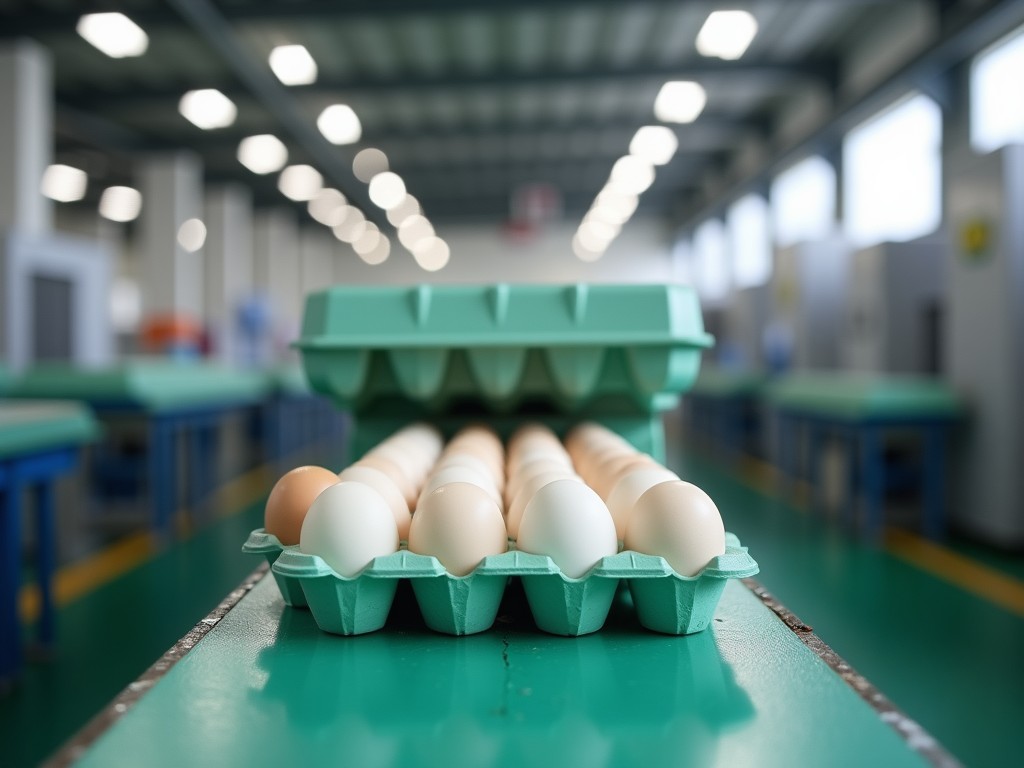
Automatic Egg Tray Loading Machine
An automatic egg tray loading machine transfers formed trays from the molding line to downstream packaging or stacking equipment. By automating this transfer, the system reduces manual handling, minimizes product damage, and increases line throughput.
Working Principle
The loading process begins when trays exit the molding conveyor and enter the machine’s inlet zone. Pneumatic grippers or mechanical arms, synchronized to the line speed via a PLC, grasp each tray and place it onto an outbound conveyor or stacker. Sensors verify correct positioning before release, ensuring gentle handling and consistent spacing.
Key Technical Parameters
| Parameter | Typical Value | Notes |
|---|---|---|
| Tray capacity | 30–120 pcs/min | Dependent on tray size and line speed |
| Tray size range | 100–300 mm length × 80–200 mm width | Adjustable guides accommodate variation |
| Power consumption | 1.5–3.0 kW | Includes drive and control systems |
| Air pressure | 5–7 bar | For pneumatic grippers |
| Control system | PLC with HMI | Recipe management for different tray types |
| Footprint (L×W×H) | 1500 × 800 × 1500 mm | Typical; customizable per layout |
| Machine weight | 350–500 kg | Dependent on options |
Construction Materials
- Frame – welded carbon steel, powder‑coated for corrosion resistance
- Contact surfaces – food‑grade stainless steel 304, easy to clean
- Grippers – polyurethane or silicone, selected for gentle grip and wear resistance
- Electrical components – IP65 rated, suitable for wet environments
Typical Applications
In egg tray production lines, the machine addresses the need for high‑speed, non‑damaging transfer between molding and packing stages. By maintaining tray orientation and preventing collisions, it supports continuous operation and reduces scrap caused by manual handling errors. The modular design allows integration with various conveyor heights and downstream equipment such as shrink wrappers or cartoners.
Customization Options
- Adjustable tray width guides for quick changeover
- Variable frequency drive for speed matching to upstream/downstream lines
- Optional vision system to verify tray orientation before loading
- Alternative discharge configurations: stacking, lane diversion, or direct infeed to packaging
- Tailored control interface: language selection, remote monitoring, data logging
Quality Assurance
Quality verification follows a structured routine: each unit undergoes a functional test at rated speed to confirm cycle time and positioning accuracy; pneumatic circuits are checked for leaks and pressure stability; critical dimensions of grippers and guides are inspected with calibrated gauges; test reports, including electrical safety checks, are provided with shipment. This approach reduces uncertainty about long‑term reliability and maintenance requirements.
Frequently Asked Questions
| Question | Answer |
|---|---|
| Can the machine handle different tray thicknesses? | Yes, the gripper force and guide spacing are adjustable to accommodate thicknesses from 3 mm to 8 mm. |
| What is the lead time for a standard unit? | Standard configurations typically ship within 6–8 weeks after order confirmation, depending on current production load. |
| Is the machine compatible with existing conveyor heights? | The frame includes adjustable legs (±50 mm) and optional riser blocks to match a range of conveyor centerlines. |
| What maintenance is required regularly? | Daily: visual inspection of grippers and cleaning of contact surfaces. Weekly: check pneumatic pressure and lubricate moving parts. Monthly: verify control firmware and inspect electrical connections. |
| Are spare parts readily available? | Critical wear items such as grippers, seals, and drive belts are stocked locally; lead time for most spares is under 5 business days. |



