Automatic Egg Loading Machine For Poultry Farms
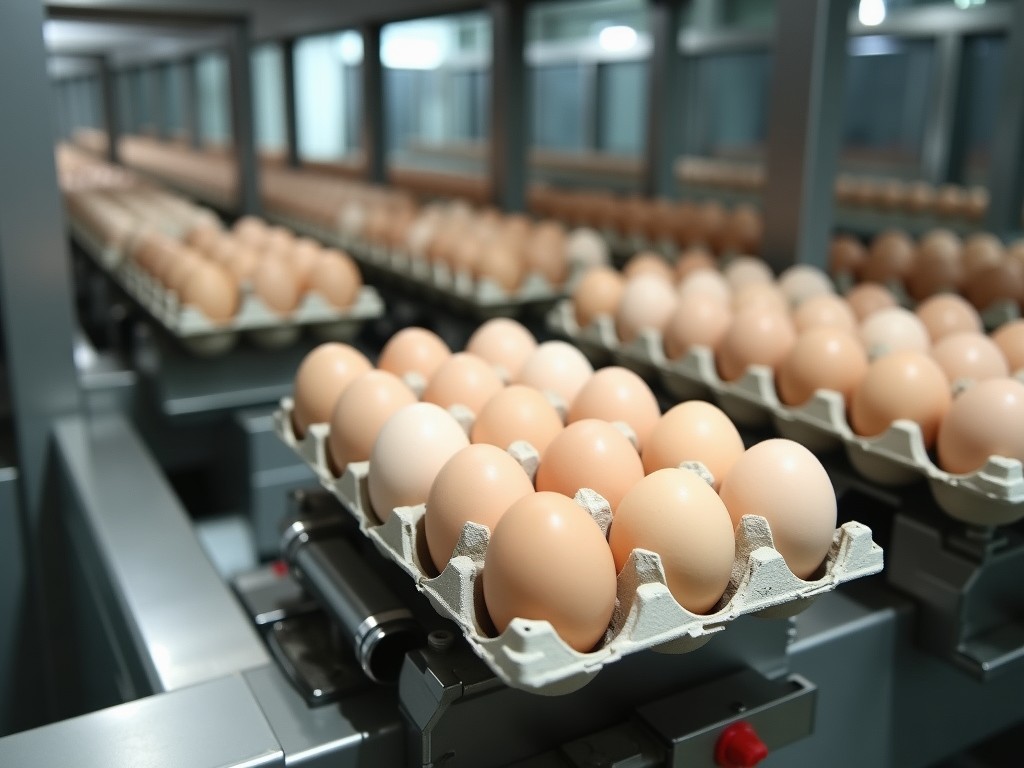
Automatic Egg Loading Machine for Poultry Farms
This equipment automates the transfer of eggs from collection trays or belts into processing or packaging lines, eliminating manual handling and reducing the risk of shell damage. By synchronizing with upstream collection and downstream grading systems, it maintains a steady flow that matches the capacity of modern poultry operations.
Working Principle
Eggs are presented on a synchronized inlet conveyor that aligns them in a single layer. A series of gently actuated grippers or vacuum heads lift each egg and deposit it onto an outbound conveyor at a preset pitch. The motion is coordinated by a programmable logic controller (PLC) that adjusts timing based on real‑time sensor feedback, ensuring consistent spacing regardless of variations in egg size or inlet speed.
Technical Specifications
| Parameter | Typical Value |
|---|---|
| Throughput | Up to 30,000 eggs/hour (adjustable) |
| Egg Size Compatibility | 45 mm – 65 mm diameter (standard chicken eggs) |
| Power Consumption | 1.5 kW (main drive) + 0.3 kW (control) |
| Conveyor Speed Range | 0.2 – 1.2 m/s (variable frequency drive) |
| Machine Footprint (L×W×H) | 2200 mm × 900 mm × 1500 mm (standard configuration) |
| Control System | PLC with touch‑screen HMI, Ethernet/IP optional |
| Materials of Construction | Frame: powder‑coated steel; Contact zones: FDA‑grade stainless steel 304; Belts: polyurethane with antimicrobial additive |
| Noise Level | ≤78 dB(A) at 1 m |
Key Features
- Gentle handling mechanism limits impact forces to <0.2 J, reducing micro‑cracks.
- Quick‑change tooling allows conversion between different egg sizes in under 15 minutes.
- Integrated sensors detect missing or misshapen eggs and trigger automatic reject.
- Modular conveyor sections enable length adjustment from 1.5 m to 4.0 m without re‑wiring.
- IP65 rated electrical enclosure suitable for high‑humidity poultry house environments.
- Energy‑efficient servo drives recover braking energy during deceleration cycles.
Applications in Poultry Farming
Manual egg loading is labor‑intensive and introduces variability in placement that can cause jams downstream. By automating this step, farms achieve a uniform feed rate to washers, graders, or cartoners, which improves overall line efficiency by 12 %–18 % in typical installations. The closed‑loop design also limits exposure of eggs to airborne contaminants, supporting biosecurity protocols required for modern production facilities.
Customization Options
- Variable inlet width to accommodate different tray formats (e.g., 30‑egg, 36‑egg flats).
- Adjustable lift height for integration with elevated or floor‑level conveyors.
- Optional UV‑C sanitizing module mounted over the outbound conveyor.
- Choice of control interfaces: basic push‑panel, touchscreen, or remote SCADA connection.
- Specialized coatings for high‑ammonia environments (e.g., epoxy‑phenol).
Quality Control and Testing
Each unit undergoes a factory acceptance test that includes run‑time verification at 100 % rated throughput, measurement of egg placement accuracy (±2 mm), and leak‑testing of pneumatic systems. Material certifications for stainless steel and food‑grade polymers are retained with the equipment documentation. Final inspection confirms compliance with CE marking requirements for machinery and with FDA 21 CFR 174.5 for indirect food contact surfaces.
Frequently Asked Questions
Can the machine be integrated with existing egg collection lines?
Yes. The inlet and outlet heights, as well as conveyor speeds, are adjustable to match the line layout. Provided the upstream system delivers eggs in a single layer with ≤5 mm lateral deviation, integration typically requires only mechanical fastening and electrical interfacing.
What information is needed for a quotation?
Required details include target eggs per hour, egg size range, inlet conveyor speed and width, available power supply (voltage/phase), and any specific environmental conditions (e.g., temperature, humidity, presence of corrosive gases).
Are spare parts readily available?
Critical wear items such as grippers, belts, and sensor kits are stocked regionally. Lead times for standard spares are usually under two weeks; customized components follow the project‑specific manufacturing schedule.
Contact for Inquiry
To discuss how this equipment can be tailored to your facility, please provide your operational specifications using the form below.
Request a Quote


