Price Of Egg Grading Machine In The Philippines
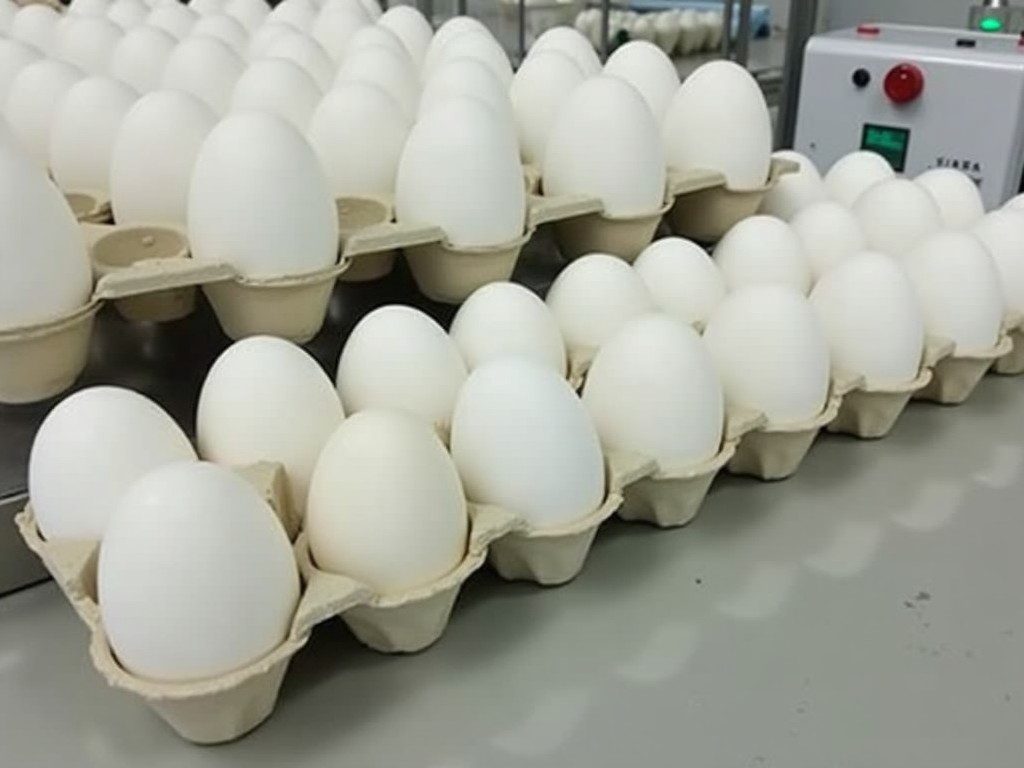
Price of Egg Grading Machine in the Philippines
Industrial buyers evaluating egg grading equipment focus on total cost of ownership rather than headline price alone. The final amount payable depends on technical specifications, logistics, and local market conditions that affect both upfront investment and long‑term operating expenses.
Key Factors Influencing Price
Capacity and throughput are primary cost drivers; machines rated for 1,000 eggs per hour differ significantly in motor size, belt width, and sensor density from units handling 10,000 eggs per hour.
Automation level affects both capital expense and labor savings. Semi‑automatic graders require manual loading and unloading, while fully automatic lines integrate conveyor feeding, weight sensing, color sorting, and programmable reject mechanisms.
Material construction influences durability and hygiene compliance. Food‑grade stainless steel (AISI 304 or 316) for contact surfaces increases cost compared to painted carbon steel, but reduces corrosion risk in humid processing environments.
Brand origin and import status affect pricing due to freight, insurance, and customs duties. Locally assembled units may avoid certain tariffs, whereas fully imported European or Japanese models incorporate higher engineering standards reflected in the price.
After‑sales support packages, including spare parts availability, technician training, and warranty length, are often quoted separately but contribute to the total acquisition cost.
Indicative Price Ranges by Capacity
| Capacity (eggs/hr) | Typical Price Range (PHP) |
|---|---|
| 500 – 1,500 | 600,000 – 1,200,000 |
| 1,500 – 4,000 | 1,200,000 – 2,500,000 |
| 4,000 – 8,000 | 2,500,000 – 4,500,000 |
| 8,000 – 12,000+ | 4,500,000 – 7,000,000+ |
Values are indicative and vary with automation degree, material grade, and included accessories such as cleaning‑in‑place (CIP) systems or data logging modules.
Applications in the Philippine Poultry Sector
- Sorting table eggs for retail markets where weight uniformity and shell integrity affect consumer acceptance.
- Separating fertile from infertile eggs in hatchery supply chains to improve incubation efficiency.
- Grading broken or cracked eggs for processing into liquid egg products, reducing waste.
- Classifying eggs by size for bulk sale to food service operators requiring consistent portion control.
Each application demands specific grading criteria (weight tolerance, shell texture, internal quality) that influence machine configuration and therefore price.
Information Required for a Quotation
- Desired hourly throughput and peak production periods.
- Egg size distribution and weight range to be processed.
- Required grading parameters (weight, shape, shell quality, internal defects).
- Preferred level of automation (manual loading, semi‑automatic, fully automatic).
- Installation site constraints (available floor space, power supply voltage, environmental conditions).
- After‑sales expectations (warranty period, spare parts stock, local service support).
Frequently Asked Questions
Can the machine be adapted for dual‑line operation?
Many models support modular extensions that allow a second grading lane to be added later, subject to mechanical alignment and control system upgrades.
What power consumption should be expected?
Power draw scales with motor size and sensor load; a 2,000‑egg/hr unit typically consumes 1.5‑2.5 kW, while a 10,000‑egg/hr line may require 8‑12 kW.
Is local technical support available?
Manufacturers often partner with Philippine service providers for installation, training, and spare parts logistics; confirmation should be obtained during quotation.
Next Steps
To obtain a detailed proposal tailored to your facility’s specifications, please provide the information listed above.
Request Quotation


