Oem In Line High Capacity Egg Grading Machine
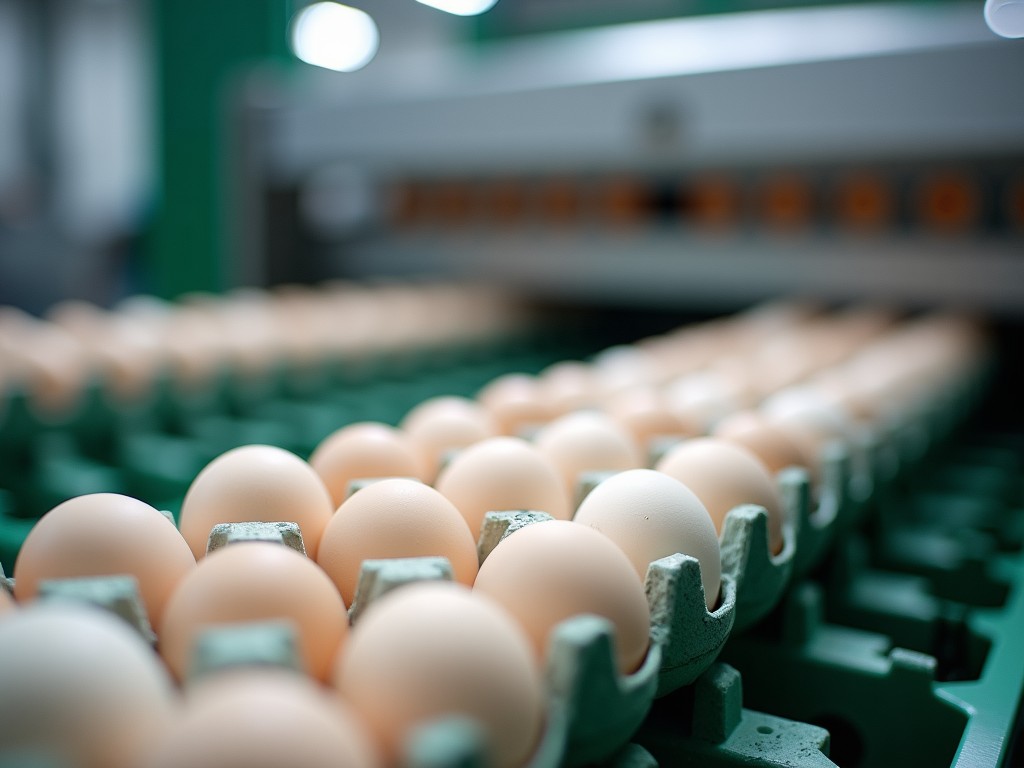
OEM In-Line High Capacity Egg Grading Machine
This machine integrates directly into poultry processing lines to sort eggs by weight, size, and internal quality at rates suitable for high‑volume operations. It replaces manual grading with automated vision‑based and load‑cell sensing, reducing labor variability and increasing traceability.
Technical Specifications
| Parameter | Typical Value / Customizable |
|---|---|
| Capacity (eggs/hr) | 30,000 – 60,000 (depending on model and egg size) |
| Grading Categories | Up to 8 weight/size classes; optional internal defect detection |
| Egg Size Range | 30 mm – 65 mm diameter (adjustable via change‑over kits) |
| Power Consumption | 2.5 kW – 4.0 kW (motor and illumination) |
| Machine Footprint | Length 2.2 m – 3.0 m; Width 0.9 m; Height 1.5 m (customizable) |
| Construction Material | Food‑grade stainless steel 304 (frame); FDA‑approved polymer belts |
| Control System | PLC with HMI touchscreen; Ethernet/IP for line integration |
| Sensor Technology | Combination of load‑cell weighing and high‑speed vision (LED back‑lighting) |
Working Principle
Eggs are introduced onto a stainless‑steel inlet conveyor where gentle side‑guards align them in a single lane. A motor‑driven belt transports the eggs at a controlled speed, typically 0.2 m/s to 0.4 m/s, ensuring stable presentation to the inspection station.
At the inspection station each egg passes over a pair of load‑cells that measure its weight with ±0.5 g accuracy while a line‑scan camera captures silhouette data for size and shape analysis. Based on the combined data, the controller activates pneumatic diverters that route the egg into the appropriate collection chute.
Typical Applications
- Large‑scale table‑egg producers requiring offline grading before packaging.
- Breeder farms that sort eggs for incubation based on weight and shell integrity.
- Egg processing plants that separate cracked or misshapen eggs for liquid egg production.
- Operations integrating grading with downstream packing or carton‑forming lines.
Customization Options
- Adjustable lane width to accommodate different egg sizes or specialty products (e.g., duck, quail).
- Add‑on modules for UV‑crack detection or internal blood‑spot sensing.
- Alternative belt materials (e.g., anti‑static polyurethane) for specific hygiene requirements.
- Custom discharge chutes configured to match existing packing equipment.
- Software upgrades for data logging, traceability, and remote diagnostics.
Quality Assurance & Testing
Each unit undergoes factory acceptance testing that includes weight accuracy verification across the full operating range, repeatability checks on the vision system, and functional validation of all diverters under simulated line speed. Material certificates for stainless steel 304 and food‑grade belts are provided with the shipment.
Frequently Asked Questions
Can the machine be integrated into an existing processing line?
Yes. The unit is designed with standard flange mounts and optional height‑adjustable legs to match line conveyor centers. Electrical interfaces use common industrial protocols (Ethernet/IP, Modbus TCP) for PLC communication.
What information is required before a quotation?
Typical inputs include target capacity (eggs/hr), egg size range, desired number of grading classes, any special detection needs (e.g., crack, internal defects), and site constraints such as available floor space and power supply voltage.
Which materials are available for food‑contact surfaces?
Food‑contact parts are supplied in stainless steel 304 as standard. Optional upgrades to 316L or FDA‑approved polymeric belts are available upon request.
How is quality inspected during manufacturing?
In‑process inspections include weld penetration checks, belt tension verification, and sensor calibration. Final testing uses traceable weight standards and calibrated vision targets to confirm grading accuracy.
What packaging methods are used for shipment?
The machine is secured on a steel pallet, wrapped in stretch film, and protected with corner guards. For overseas shipments, a fumigated wooden crate or ISPM‑15 compliant case is provided.
What is the typical production lead time?
Lead times vary with configuration but generally range from 8 to 12 weeks after receipt of technical details and advance payment.
Contact for OEM Inquiry
To discuss custom specifications, request a detailed quotation, or arrange a technical consultation, please reach out to our engineering team.
Contact Us


