Oem Egg Washing And Grading Line In Colombia
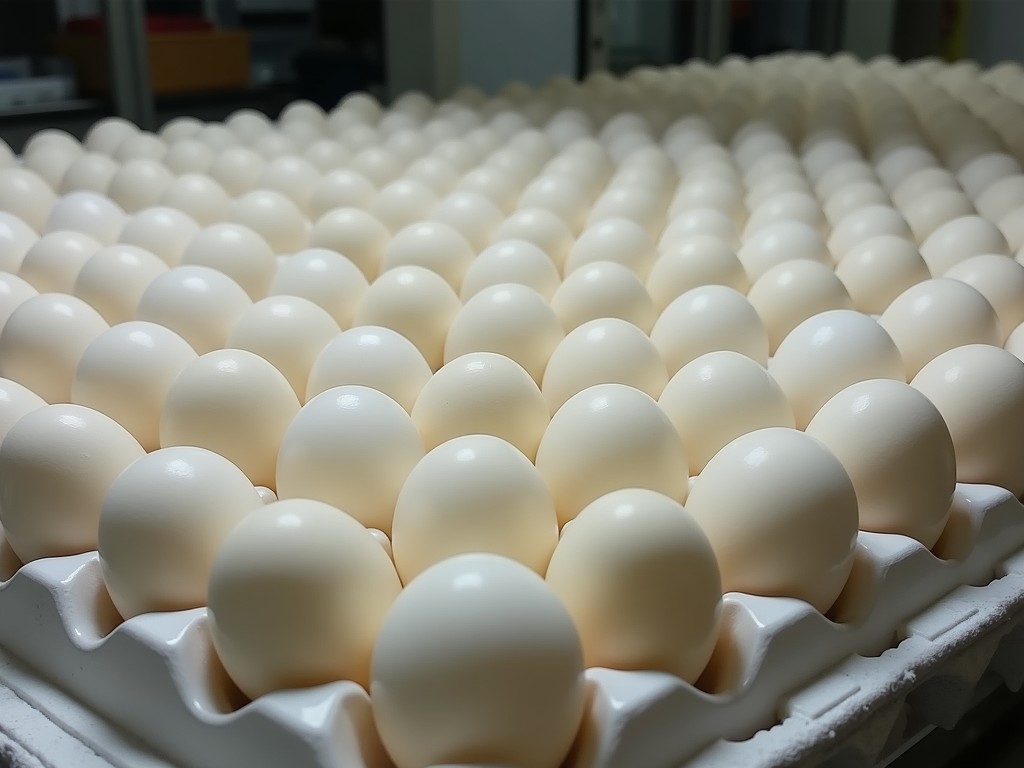
OEM Egg Washing and Grading Line for Colombia
This equipment line is engineered for egg producers in Colombia who require a fully automated solution that combines washing, sanitizing, and weight‑based grading in a single continuous flow. The design accommodates the typical egg size distribution found in the Andean region and can be adjusted for altitude‑related variations in shell porosity.
Process Overview
Eggs enter the line via a gentle inlet conveyor that minimizes shell impact. A three‑stage wash system first removes loose debris with a low‑pressure spray, then applies a food‑grade alkaline detergent at controlled temperature, and finally rinses with potable water to eliminate residues. Air knives and heated drying tunnels reduce surface moisture to below 0.5 % before grading.
The grading module uses load‑cell weight sensors spaced at 100 mm intervals, coupled with optical size detection, to sort eggs into up to six weight classes. Divergent gates actuated by pneumatic cylinders route each class to its respective packing lane, while a variable‑frequency drive maintains line speed between 0.5 and 2.0 m/s based on upstream throughput.
Key Technical Specifications
| Parameter | Typical Value | Customizable Options |
|---|---|---|
| Maximum capacity | 30,000 eggs/hour | Up to 50,000 eggs/hour with additional lanes |
| Wash tank volume | 150 L per stage | Stainless steel 304 or 316L, optional insulation |
| Drying air temperature | 45 °C ± 5 °C | Adjustable 30‑60 °C, heat‑recovery unit |
| Weight resolution | ±0.5 g | ±0.2 g with high‑precision load cells |
| Power supply | 380 V 3‑phase, 50 Hz | 220 V or 440 V options, optional UPS |
Materials and Construction
All product contact surfaces are fabricated from AISI 304 stainless steel with a No. 4 finish, providing resistance to corrosion from acidic wash solutions and frequent CIP cycles. Non‑contact frames use powder‑coated carbon steel for structural rigidity, while conveyor belts are made of FDA‑approved polyurethane with antimicrobial additives.
Sealing components employ EPDM gaskets certified for food contact, and all fasteners are stainless steel to prevent galvanic corrosion. The line is designed for easy disassembly; major modules can be removed within 30 minutes for deep cleaning or maintenance without specialized tools.
Applications in Colombian Poultry Industry
Colombia’s egg production varies across regions, with average egg weights ranging from 50 g to 68 g and shell thickness influenced by feed composition and altitude. The line’s adjustable wash parameters and flexible grading thresholds allow a single installation to serve both high‑volume commercial farms and smaller specialty producers without retooling.
Additionally, the low‑water‑consumption recycle option reduces operational costs in areas where water tariffs are high, while the enclosed design minimizes airborne contamination—a critical factor for farms located near urban centers or processing plants.
Customization and Integration
- Variable lane width from 100 mm to 150 mm to accommodate different packaging formats.
- Optional UV‑C disinfection module post‑drying for extended shelf life.
- Integration with existing MES via Ethernet/IP or Modbus TCP for real‑time data logging.
- Adjustable incline conveyors for facility layouts with limited floor space.
- Choice of pneumatic or electric diverters based on plant air supply availability.
Quality Assurance and Testing
Prior to shipment, each line undergoes a factory acceptance test (FAT) that verifies wash efficacy using standardized soil loads, confirms weight grading accuracy across the full capacity range, and checks emergency stop response times under simulated load loss. Test reports are provided with traceable serial numbers for each major sub‑assembly.
Sanitation validation follows ISO 22000 guidelines, with swab tests conducted on contact surfaces after a CIP cycle to confirm absence of residual detergents and microbial counts below 10 CFU/cm². All electrical components are CE marked and conform to IEC 60204‑1 safety standards for machinery.
FAQ
- Can the line be adapted for different egg sizes? Yes, the grading software allows redefinition of weight classes and diverter timing without mechanical changes.
- What information is required for a quotation? Required inputs include desired hourly capacity, average egg weight range, available utilities (voltage, water pressure, air supply), and any space constraints.
- Which materials are available for the wash tanks? Standard is AISI 304 stainless steel; AISI 316L is offered for higher chloride environments.
- How is quality inspected during production? In‑process monitoring includes flow meters, temperature sensors, and load‑cell calibration checks; final inspection includes a performance test report.
- What packaging options are available for shipment? The line is disassembled into skid‑mounted modules, wrapped in VCI film, and secured in ISO‑standard containers.
- What is the typical production lead time? Lead time ranges from 10 to 14 weeks after approval of final layout drawings, depending on module complexity.



