Oem Automatic Egg Grading And Sorting Machine
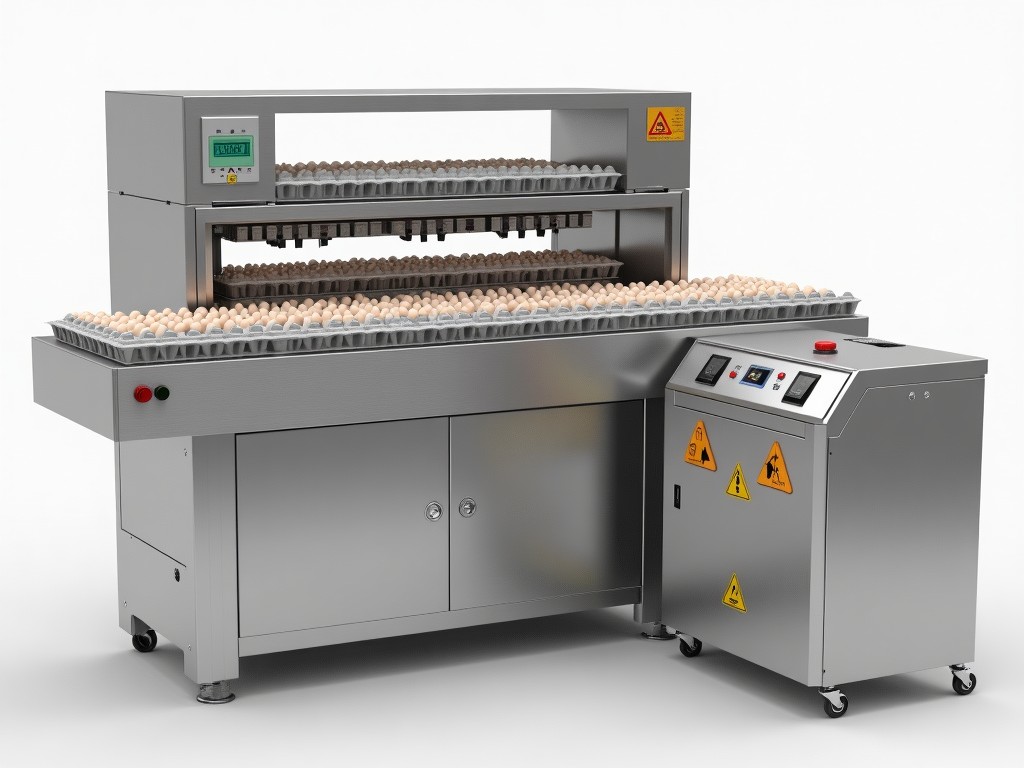
OEM Automatic Egg Grading and Sorting Machine
The system classifies eggs by weight, size, shell integrity, and internal quality using calibrated sensors and vision technology. It is designed for continuous operation in high‑volume packing lines where consistent product uniformity reduces downstream waste and improves market acceptance.
Technical Overview
Eggs are conveyed on a gently vibrating belt that presents each item individually to a weighing station. Load cells with a resolution of 0.1 g record mass, while a dual‑camera setup captures top‑ and side‑view images to detect cracks, stains, and shape deviations. Data from both sources are processed in real time by a programmable logic controller that directs each egg to the appropriate outlet chute.
Typical throughput ranges from 30 000 to 60 000 eggs per hour depending on belt speed and lane configuration. The machine accommodates egg diameters from 42 mm to 58 mm and can be adjusted for different breeds or market specifications without mechanical retooling.
Key Specifications
| Parameter | Typical Value / Option |
|---|---|
| Grading Criteria | Weight, size, shell integrity, internal quality (via candling) |
| Throughput | 30 000–60 000 eggs/hour (configurable) |
| Weight Resolution | 0.1 g |
| Power Supply | 380 V / 3‑phase, 50/60 Hz, 5 kW |
| Control System | PLC with HMI touchscreen, Ethernet/IP optional |
| Frame Material | Powder‑coated carbon steel; stainless steel available on request |
| Dimensions (L×W×H) | 2 200 mm × 900 mm × 1 500 mm (base model) |
Applications in the Egg Processing Industry
Grading and sorting directly influence the price premium achievable for premium‑grade eggs. By removing off‑spec items early, processors reduce the risk of customer complaints, minimize manual rework, and maintain consistent carton weights that meet retail specifications. The machine’s ability to detect subtle shell defects also supports compliance with food‑safety standards that prohibit the sale of cracked or contaminated eggs.
Facilities that produce specialty products such as omega‑3 enriched or free‑range eggs benefit from the machine’s flexibility to adjust weight thresholds without stopping the line. This adaptability helps preserve product identity while maintaining high line efficiency.
Customization Options
- Number of grading lanes (2 to 8) based on required throughput
- Choice of discharge mechanisms: gravity chutes, pneumatic diverters, or robotic arms
- Integration with existing conveyor systems via modular mounting brackets
- Software packages for data logging, traceability, and remote diagnostics
- Optional UV sterilization module for surface decontamination
Manufacturing and Quality Assurance
Each unit is fabricated in a controlled environment where welding procedures follow ISO 3834 standards. Critical components such as load cells and vision sensors receive traceable calibration certificates before assembly. Final validation includes a run‑test with a known mix of egg grades to verify sorting accuracy within ±2 % of target classifications.
Documentation provided with every shipment comprises electrical schematics, pneumatic diagrams, and a preventive maintenance schedule. Spare parts are stocked for wear items such as belts, rollers, and sensor housings to minimize downtime during service interventions.
Frequently Asked Questions
A: Yes, the belt speed and lane width are adjustable via the HMI, allowing accommodation of sizes from small quail eggs to large jumbo chicken eggs without changing hardware.
A: Required details include desired throughput (eggs/hour), number of grading lanes, preferred discharge method, any special shell‑quality criteria, and installation site constraints such as ceiling height and power availability.
A: Calibration uses standardized reference plates with known reflectance values; the system stores baseline thresholds that can be fine‑tuned during commissioning to match specific lighting conditions.
Next Steps
To discuss how this grading solution can be integrated into your production line, please contact our technical sales team. Provide your line layout and performance targets, and we will prepare a feasibility assessment that includes layout drawings, utility requirements, and an estimated implementation timeline.
Request a Technical Consultation


