Odm Egg Grading Machine In Pakistan Suppliers
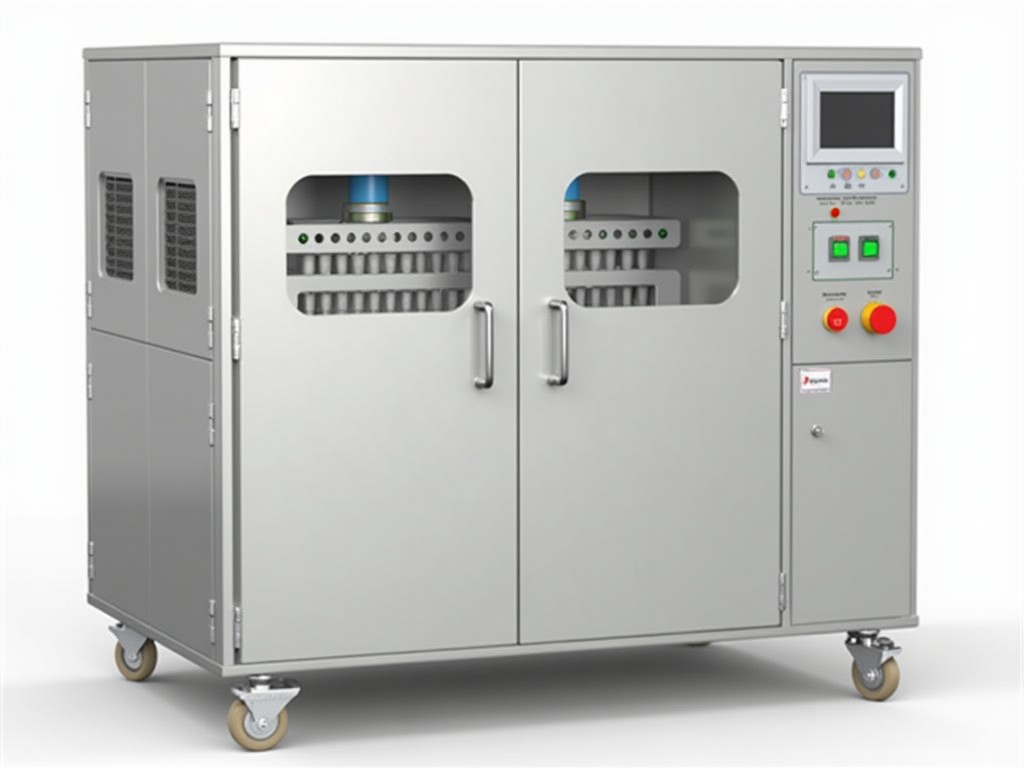
ODM Egg Grading Machine for Pakistan Suppliers
Overview
An ODM (Original Design Manufacturer) egg grading machine is built to the buyer’s specifications, allowing adjustments to throughput, grading criteria, and physical dimensions. This approach reduces integration risk for Pakistani poultry processors who must align equipment with existing barn layouts, power supplies, and product flow requirements.
Technical Specifications
| Parameter | Typical Value / Customizable |
|---|---|
| Capacity (eggs/hour) | 3,000 – 12,000 (adjustable via lane count) |
| Grading Criteria | Weight (±1 g), length, width, shell crack detection (vision or acoustic) |
| Power Supply | 220 V / 380 V, 50 Hz, 3‑phase; total power 1.5 kW – 4.5 kW depending on configuration |
| Frame Material | Stainless steel 304 (food‑grade) for all contact surfaces |
| Control System | PLC with HMI touchscreen; recipe storage for multiple egg types |
| Overall Dimensions (L×W×H) | 2,200 mm × 900 mm × 1,500 mm (modular; can be shortened/lengthened) |
| Noise Level | ≤78 dB(A) at 1 m distance |
Key Features
- Modular lane design allows capacity scaling without replacing the entire unit.
- Integrated weight sensors calibrated to ±0.5 g accuracy, traceable to national standards.
- Quick‑change tooling for different egg sizes (e.g., table‑egg, breeding‑egg, quail).
- Self‑diagnostic firmware logs sensor drift and alerts via HMI.
- Tool‑free access to conveyor belts for cleaning, reducing downtime to <15 minutes per shift.
Applications in Pakistan’s Poultry Industry
Pakistani egg producers face variable egg sizes due to breed mix and feed fluctuations. A grading machine that can be re‑programmed for weight bands (e.g., 45‑50 g, 50‑55 g, 55‑60 g) enables direct pricing tiers and reduces manual sorting labor. The stainless‑steel construction withstands high humidity and frequent wash‑downs common in semi‑open poultry houses.
For exporters targeting GCC or EU markets, compliance with weight‑based grading regulations is mandatory. The machine’s data‑logging function produces batch reports that can be attached to shipping documents, simplifying customs clearance.
Customization Options (ODM)
As an ODM supplier, we adjust the following parameters based on client requirements:
- Number of grading lanes (2 to 8) to match barn throughput.
- Sensor type: load‑cell weight sensors, optical size sensors, or combined vision systems.
- Exit chute configuration: single‑stream, multi‑stream, or bulk‑collector.
- Control language: English, Urdu, or bilingual HMI menus.
- Optional integrations: barcode printer for packing labels, data export to ERP via Modbus TCP.
All customizations are documented in a design review sheet before fabrication, ensuring the final machine matches the quoted specifications.
Quality Assurance & Testing
Each unit undergoes a three‑stage validation:
- Material inspection: mill certificates for stainless steel, verification of food‑grade coating.
- Functional test: run‑in with graded egg samples; accuracy checks against calibrated reference scales.
- Safety test: emergency stop response, grounding continuity, IP‑rating verification for wash‑down zones.
Test reports are available upon request; no unit ships without a signed factory acceptance test (FAT) document.
Frequently Asked Questions
Can the machine be adapted to limited floor space in existing barns?
Yes. The modular frame can be reconfigured to a linear or L‑layout, and lane count can be reduced to fit a footprint as small as 1.8 m × 0.9 m.
What information is needed to prepare a quotation?
Required inputs include target eggs per hour, desired weight bands, available voltage and phase, and any integration needs (e.g., connection to existing conveyor).
Which materials are available for the frame and contact parts?
Standard is stainless steel 304; optional upgrades to 316L for higher corrosion resistance or food‑grade aluminum alloys for non‑contact covers.
How is quality inspected before shipment?
Each machine passes a functional accuracy test (±1 g weight tolerance) and a safety check (emergency stop <0.2 s). Documentation includes test logs and a certificate of conformity.
What is the typical production lead time?
Lead time ranges from 6 to 8 weeks after design approval, depending on customization complexity and current schedule.
Ready to Discuss Your Requirements?
Share your production targets, site constraints, and any specific grading criteria. Our engineering team will return a detailed proposal, including layout drawings, power calculations, and a firm delivery schedule.
Request a Technical Proposal


