Inline Egg Washing Grading Machine From Farm To Cooler
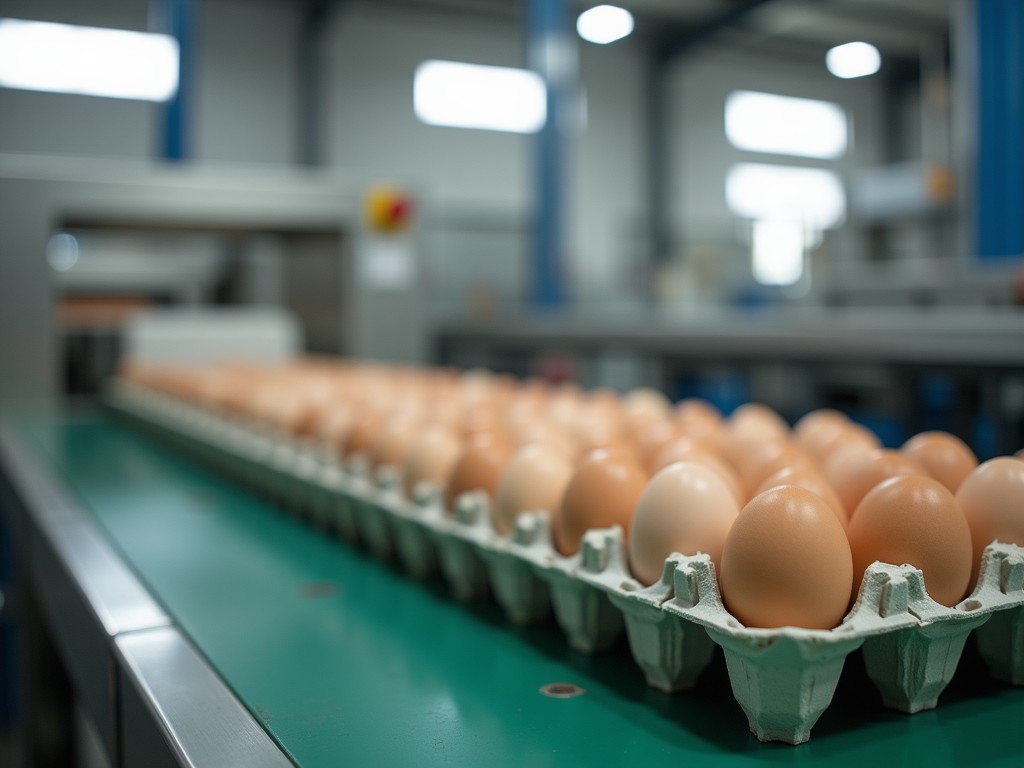
Inline Egg Washing and Grading Machine – Farm‑to‑Cooler Integration
This system combines washing, sanitizing, and size‑based grading in a single continuous line, delivering clean, sorted eggs directly from the collection point to the refrigerated storage area. By integrating the two operations, handling steps are reduced, minimizing microbial transfer and preserving shell integrity.
Working Principle
Eggs enter the machine on a food‑grade stainless‑steel belt that transports them through a series of spray nozzles delivering potable water at controlled pressure and temperature. A mild, FDA‑approved sanitizing agent is injected into the wash stream to achieve a 5‑log reduction of common pathogens. After washing, eggs pass over a series of rotating rollers equipped with adjustable gaps; the gaps are set to divert eggs into separate lanes based on diameter, enabling precise grading into predefined size classes.
The belt speed, spray pressure, and roller gap are all programmable via a touchscreen HMI, allowing changeover between different egg sizes or production rates without mechanical adjustments.
Key Technical Parameters
| Parameter | Typical Value | Adjustable Range |
|---|---|---|
| Throughput (eggs/hour) | 12,000 | 8,000 – 18,000 |
| Wash water temperature (°C) | 45 | 30 – 60 |
| Conveyor belt speed (m/min) | 15 | 5 – 25 |
| Grading accuracy (±mm) | 0.5 | 0.3 – 0.8 |
| Power consumption (kW) | 4.2 | 3.5 – 5.0 |
| Water usage (L/h) | 180 | 120 – 250 |
Design Features
- All product contact surfaces are 304 stainless steel with a No. 4 finish, resisting corrosion and facilitating CIP cleaning.
- Spray nozzles are replaceable ceramic tips that maintain consistent spray angle and resist clogging from particulate matter.
- Roller gaps are actuated by precision stepper motors, providing repeatable grading within ±0.2 mm.
- Integrated UV‑C module downstream of the wash zone offers an optional secondary disinfection step for high‑risk facilities.
- Frame is constructed from powder‑coated carbon steel with sealed bearings to withstand wash‑down environments.
Applications in Poultry Processing
The machine is positioned immediately after egg collection conveyors, eliminating the need for intermediate buffering or manual transfer. By washing and grading before cooling, the thermal load on the refrigeration system is reduced because excess moisture and contaminants are removed prior to chilling, which improves cooling efficiency and extends shelf life.
Typical installations include integrated farm‑to‑pack lines, central processing stations serving multiple farms, and retrofits into existing packing houses where space constraints favor a compact, single‑unit solution.
Customization Options
- Belt width scalable from 400 mm to 800 mm to match upstream equipment.
- Number of grading lanes configurable from 2 to 6, with adjustable size thresholds.
- Choice of sanitizing agents (chlorine, peracetic acid, or ozone) with corresponding injection and monitoring systems.
- Optional data logging module that records wash temperature, pressure, flow rate, and grading counts for traceability.
- Explosion‑proof motor and enclosure variants for facilities with hazardous dust classifications.
Quality Assurance & Testing
Each unit undergoes hydrostatic testing of the wash circuit at 1.5× operating pressure to verify leak‑free performance. Functional validation includes a graded egg sample run where size distribution is measured against laser‑based verification equipment, confirming that the actual grading error remains within the specified tolerance.
Material certificates for stainless steel and food‑grade polymers are provided with every shipment, and the system is designed to meet the requirements of FDA 21 CFR 174–178 for direct food contact.
FAQ
- Can the machine be integrated with existing cooling tunnels? Yes, the outlet conveyor height and speed are adjustable to match the inlet specifications of most tunnel coolers.
- What information is required for a quotation? Required data include desired egg throughput, inlet and outlet conveyor dimensions, preferred sanitizing agent, and any site‑specific constraints such as ceiling height or floor load limits.
- Which materials are available for the frame? Standard is powder‑coated carbon steel; optional stainless‑steel frame is available for corrosive environments.
- How is the machine cleaned between shifts? The system supports automated CIP cycles with programmable detergent, rinse, and sanitizing phases; manual access panels are provided for inspection.
- What is the typical lead time for delivery? Lead time ranges from 8 to 12 weeks after receipt of a signed purchase order, depending on selected options.
Next Steps
To discuss how this inline washing and grading solution can be tailored to your facility’s workflow, please reach out to our engineering team.



