Factory Supply Oem Egg Grading And Washing Line
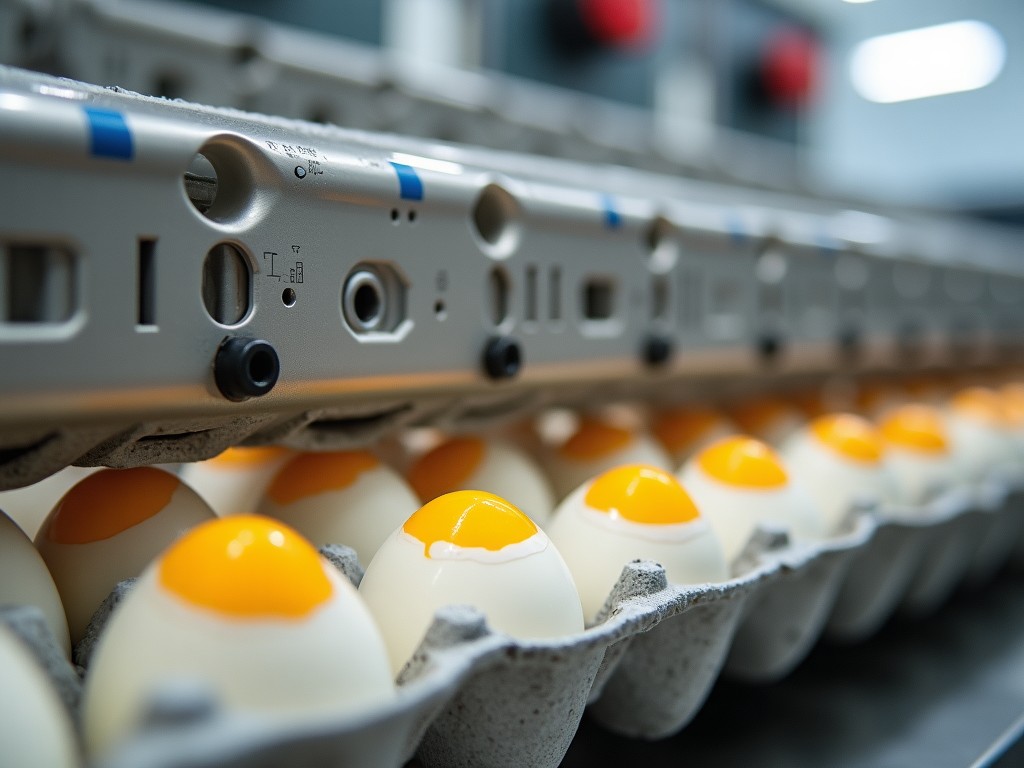
Factory Supply OEM Egg Grading and Washing Line
Overview
An egg grading and washing line integrates cleaning, sanitizing, size sorting, and quality inspection into a continuous flow system. The line is designed for high‑volume poultry farms and processing plants that require consistent product safety and traceability.
Core modules include a pre‑wash spray tunnel, a brush‑based scrubber, a rinse stage with controlled water temperature, an air‑drying zone, and a vision‑based grading unit that classifies eggs by weight, shell integrity, and internal defects.
Throughput can be scaled from 30,000 to 180,000 eggs per hour by adding parallel lanes or adjusting lane speed, allowing the same basic architecture to serve small cooperatives and large integrated producers.
Technical Specifications
| Parameter | Typical Value | Notes |
|---|---|---|
| Line Width (single lane) | 1.2 m | Includes walkways for maintenance |
| Installed Power | 45 kW | Motor drives for conveyors, pumps, and fans |
| Water Consumption | 150 L/h | Recirculation system reduces fresh water demand |
| Air Pressure (drying) | 0.5 MPa | Oil‑free compressed air |
| Control System | PLC with HMI touchscreen | Supports recipe selection and data logging |
Key Features
- Stainless steel 304 construction for corrosion resistance in wet environments
- Adjustable brush pressure to accommodate different egg sizes without shell damage
- UV‑C sanitation module optional for microbial load reduction
- Real‑time weight measurement with ±0.5 g accuracy
- Modular design allows addition of laser cracking detection or UV fluorescence inspection
Applications
Poultry farms benefit from reduced labor and improved hygiene, as the line automates a process that traditionally relied on manual washing and visual sorting.
Egg processing plants use the grading data to feed downstream packaging lines, ensuring that cartons receive uniformly sized eggs, which improves packing efficiency and reduces giveaway.
Integrated producers can trace each batch back to the farm of origin because the line logs weight, timestamp, and optional RFID tag data for each egg tray.
Customization Options
- Lane width adjustable from 0.9 m to 1.5 m for specialty eggs such as quail or duck
- Choice of brush materials: nylon, polypropylene, or stainless steel wire
- Add‑on modules: ozone spray, infrared crack detection, or automated tray loader
- Control software upgrades: MES connectivity, batch reporting, or remote diagnostics via VPN
Quality Control and Testing
Each unit undergoes a factory acceptance test that verifies water flow rates, brush torque, and vision system repeatability using standardized egg samples.
Surface finish is inspected for weld integrity and passivation thickness, ensuring compliance with FDA 21 CFR Part 110 for food‑contact surfaces.
Performance data, including energy consumption and throughput stability, is recorded and provided to the customer as part of the shipment documentation.
Frequently Asked Questions
Can dimensions be customized? Yes, the line length and lane count are adjusted to match facility layout and required capacity.
What information is required before quotation? Desired hourly throughput, egg type, available utilities (water, compressed air, electricity), and any special inspection needs.
What materials are available for food‑contact parts? All wetted components are supplied in 304 or 316 stainless steel, with optional food‑grade polymer coatings.
How is quality inspected? In‑line weight sensors, vision cameras, and optional UV fluorescence units are calibrated against traceable standards before shipment.
What packaging methods are available for shipment? The line is disassembled into skid‑mounted modules, wrapped in VCI film, and secured in ISO containers with bracing.
What is the typical production lead time? 10‑12 weeks after approval of layout drawings, subject to current workload.
Contact for Inquiry
To discuss your specific grading and washing requirements, provide your production volume, egg variety, and facility constraints. Our engineering team will return a detailed proposal including layout drawings, utility load summary, and delivery schedule.



