Factory Supply Egg Washing Grading Machine With Dryer
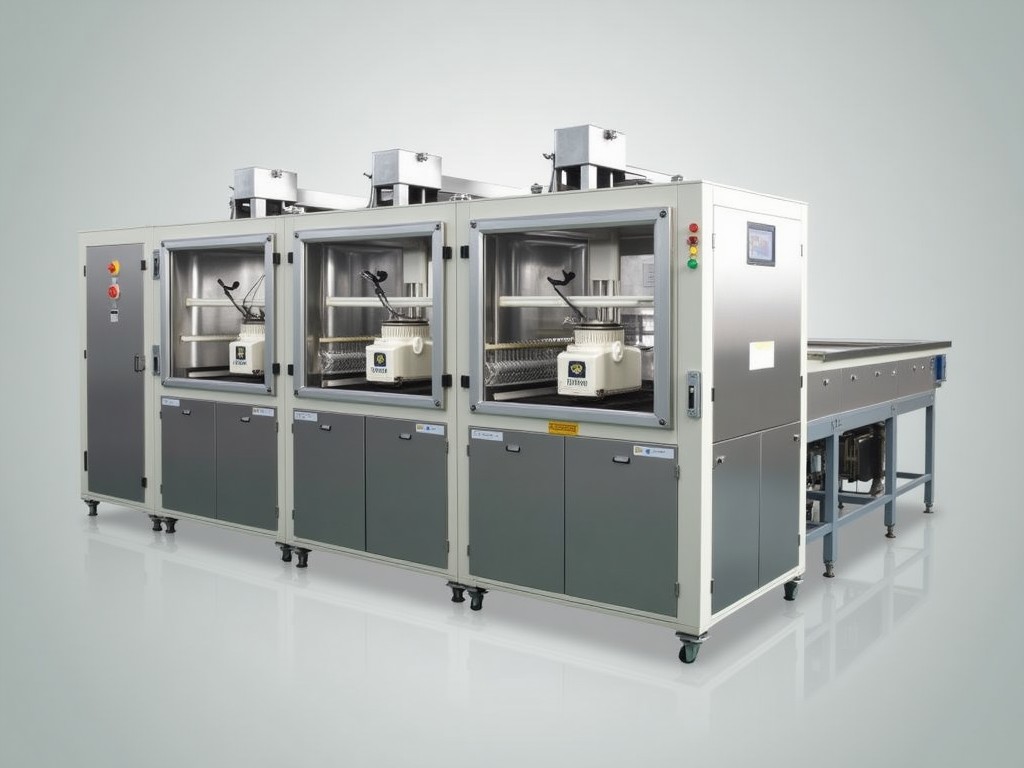
Factory Supply Egg Washing Grading Machine with Dryer
Working Principle
Eggs enter the inlet hopper and are conveyed by a food‑grade belt into a pre‑wash spray zone where ambient temperature water loosens loose debris. They then pass through a brush‑scrubbing section with adjustable pressure nozzles, followed by a sanitizing rinse using chlorinated water at 20‑25 ppm. After washing, the eggs travel over vibrating grading rollers that separate by weight and size into three output channels. Finally, a forced‑air dryer heated to 55 °C reduces surface moisture to below 0.5 % before exit.
Technical Specifications
| Parameter | Typical Value | Notes |
|---|---|---|
| Capacity | Up to 30,000 eggs/hour | Depends on egg size and grading settings |
| Washing tank volume | 150 L | Stainless steel 304, 1.2 mm thickness |
| Drying temperature | 55 °C ±2 °C | Adjustable via PID controller |
| Power consumption | 4.5 kW (wash) + 2.2 kW (dry) | Three‑phase 380 V, 50 Hz |
| Overall dimensions (L×W×H) | 2200 mm × 1100 mm × 1800 mm | Frame includes leveling feet |
| Machine weight | 620 kg | Net weight, excluding packaging |
Key Features
- Stainless steel 304 construction for corrosion resistance in wet environments
- Modular wash‑dry sections allow independent maintenance without line stoppage
- Variable frequency drive on conveyor belt enables speed adjustment from 5 to 30 m/min
- Integrated weight‑based grading system with three selectable size bands
- Heat‑recovery dryer reduces energy consumption by recirculating exhaust air
- IP65 rated electrical enclosure protects against water spray
Applications
In commercial egg processing facilities, the first processing step after collection is to remove fecal matter, feathers, and microbial load while preserving shell integrity. This machine's combined washing and gentle drying prevents thermal shock that can cause micro‑cracks, making it suitable for both table‑egg lines and break‑egg operations that supply liquid egg products to bakeries and foodservice.
Because the grading mechanism sorts by weight rather than size alone, it accommodates variations in egg shape common in free‑range or heritage breeds, ensuring consistent pack weights for retail cartons.
Customization Options
- Adjustable number of grading channels (2‑4) to match specific packaging configurations
- Alternative belt materials such as polyurethane for applications requiring FDA‑compliant surfaces
- Add‑on UV‑C sterilization module positioned after the final rinse
- Extended dryer length for higher moisture removal in humid climates
- Remote monitoring package with PLC‑based data logging and Ethernet connectivity
Quality Control and Testing
Each unit undergoes a hydrostatic test of the washing tank at 1.5 times design pressure to verify leak‑free seams. Functional testing includes a run‑with‑standard‑egg load to confirm washing efficacy (reduction of aerobic plate count >2 log), grading accuracy (±2 g weight tolerance), and dryer outlet moisture content (<0.5 %). Documentation of test results is provided with the shipment.
Frequently Asked Questions
Yes, the frame can be shortened or lengthened in 100 mm increments, and the conveyor height adjusted ±50 mm, subject to structural review.
Required details include target eggs‑per‑hour, egg size distribution, preferred washing temperature, and any required certifications (e.g., CE, FDA).
Standard is AISI 304 stainless steel; optional AISI 316L for higher chloride resistance or food‑grade polyurethane belts.
Each machine passes a factory acceptance test covering wash pressure uniformity, grading repeatability, dryer temperature stability, and electrical safety per IEC 60204‑1.
Get a Quote
To discuss how this egg washing, grading, and drying system can be integrated into your processing line, please provide your production specifications.
Request a Quotation


