Factory Supply Egg Grading Machine With Automatic Washer
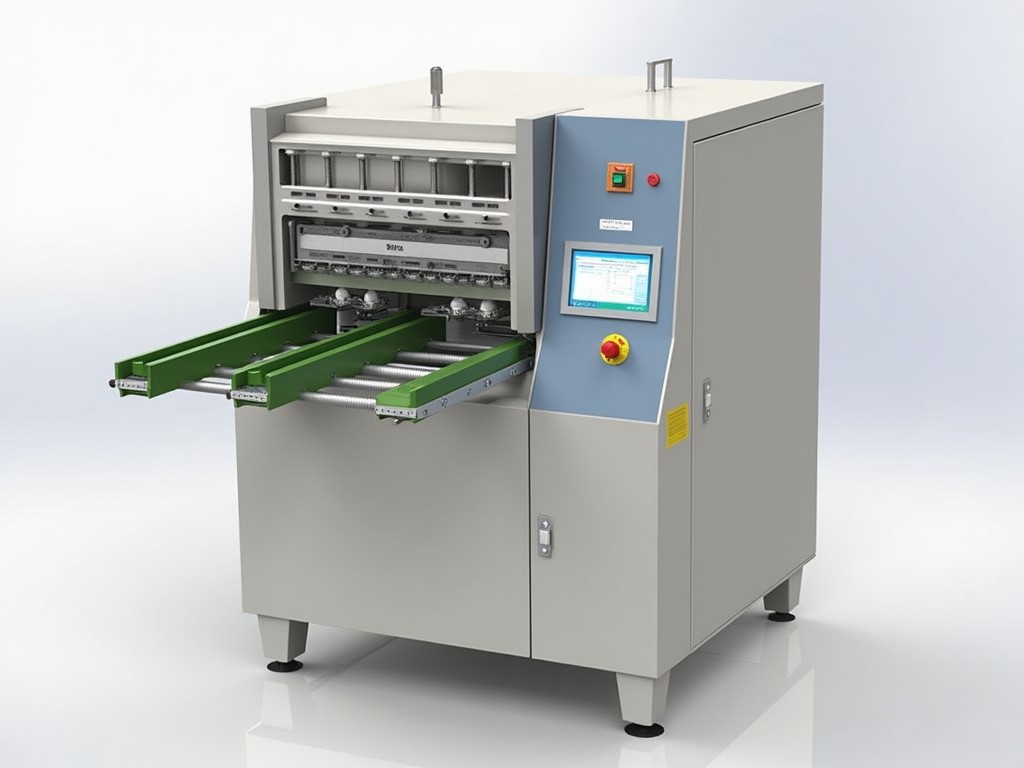
Factory Supply egg grading machine with automatic washer
The integration of automated cleaning and precision weight grading is a critical requirement for high-volume poultry processing. By combining de-contamination and sorting stages into a single continuous line, facilities can reduce manual labor dependencies while ensuring every unit meets stringent export-grade standards. This system is engineered to handle varying densities of eggs while maintaining the structural integrity of the shell through controlled transport and gentle agitation.
Integrated Washing and Cleaning Technology
The washing module utilizes a multi-stage spray nozzle system combined with rotating brushes to remove organic matter, dust, and feathers from the egg surface. Unlike manual scrubbing, this mechanical process applies uniform pressure, minimizing the risk of thinning the cuticle—the natural protective layer of the egg. The water temperature is adjustable, allowing operators to optimize the removal of stubborn debris without heating the internal egg mass.
Following the wet cycle, the eggs pass through a high-velocity air drying tunnel. This stage is vital to prevent moisture-induced bacterial ingress-contamination during the subsequent grading and packaging phases. The entire housing is constructed from grade 304 stainless steel to ensure corrosion resistance against constant exposure to water and cleaning agents.
High-Precision Grading Mechanisms
Precision sorting is achieved through a mechanical weight-sensing system that evaluates each egg with high accuracy. As eggs move along the grading conveyor, they are diverted into specific cells based on their mass.. mechanical process ensures that eggs are categorized into classes—such as Small, Medium, Large, and Extra Large—with minimal variance between individual units.
The distribution logic utilizes calibrated springs and mechanical rollers to guide eggs into their designated discharge chutes. This design prevents the impact damage often associated with high-speed pneumatic sorting systems. For facilities requiring tighter weight intervals, the system can be configured to meet specific local regulatory requirements or international export market demands.
Technical Specifications
| Parameter | Typical Values |
|---|---|
| Processing Capacity | 2,000 - 15,000 eggs per hour (Customizable) |
| Material Construction | SUS304 Stainless Steel / Food-grade Polymer |
| Grading Accuracy | ±1.0 gram tolerance |
| Power Requirement | 380V/3Phase/50Hz or 220V |
| Washing Method | High-pressure spray + Rotating brush |
Industrial Applications and Process Integration
This machinery is designed for large-scale poultry operations where throughput and consistency are the primary KPIs. It integrates seamlessly into existing production lines, acting as the bridge between raw egg collection and final retail packaging.
- Export-Oriented Facilities: Ensures eggs meet the sanitary and weight standards required for international trade.
- Commercial Processing Plants: Automates the labor-intensive task of cleaning and sorting bulk batches.
- Wholesale Distribution Centers: Provides a reliable method to re-grade bulk product for local market distribution.
Maintenance and Durability
Operational uptime is prioritized through a modular design. The conveyor belts and grading cells are accessible, allowing for rapid inspection and cleaning without dismantling the entire frame. All moving parts, such as motors and brushes, are selected for high-duty cycle operation in humid environments.
Routine maintenance involves checking the spray nozzles for calcification buildup and calibrating the weight-sensing springs periodically. These simple tasks ensure the machine maintains its precision levels over years of continuous use.
Need a technical configuration for your production volume?
Our engineers provide detailed layouts and technical specifications based on your specific facility throughput requirements.
Request Technical Quotation


