Factory Supply Egg Grader Washer For Commercial Egg Farm
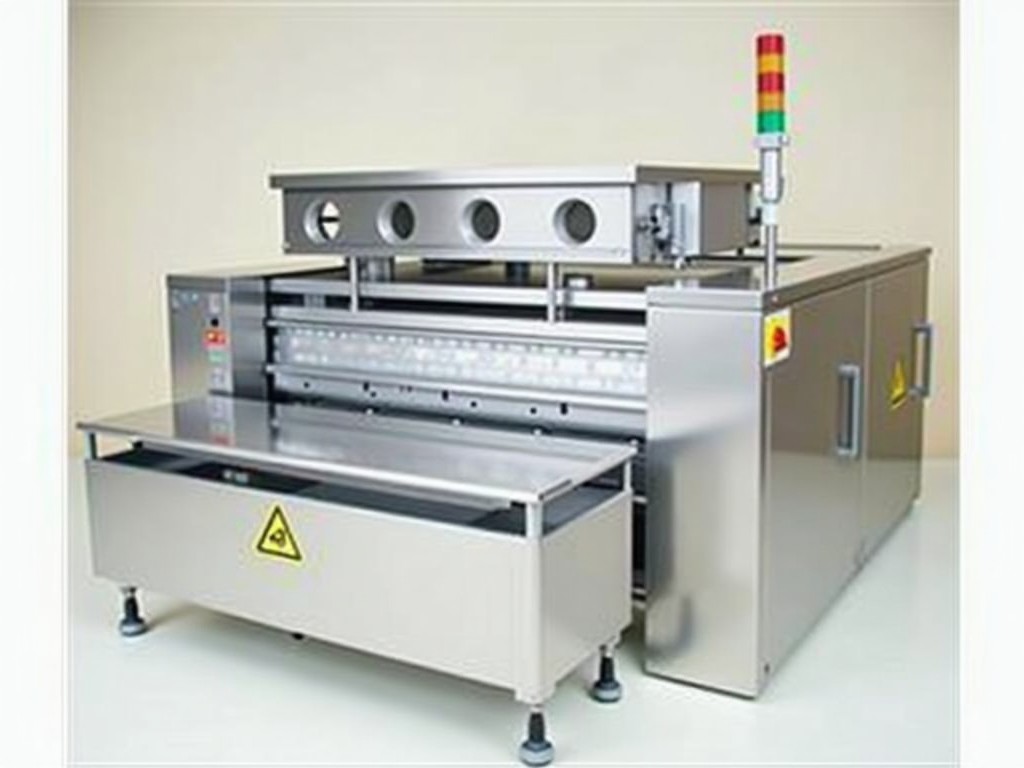
Factory Supply Egg Grader Washer for Commercial Egg Farm
This equipment combines size‑based grading with a low‑impact wash cycle to prepare table eggs for packing lines. It is designed for continuous operation in facilities processing 30,000 to 120,000 eggs per hour, depending on configuration.
Overview
The unit consists of a rotating grading drum, a series of interchangeable sieves, and a spray‑zone washing tunnel. Eggs enter the drum, are sized by passing through sieves that match target weight classes, then proceed to the wash section where recycled water removes debris and microbial load before drying.
Design and Construction
The frame is fabricated from 2 mm stainless steel grade 304, providing corrosion resistance in high‑humidity environments. All contact surfaces with eggs are polished to Ra 0.8 µm to minimize micro‑abrasion. Bearings are sealed, food‑grade PTFE‑lined units rated for 20,000 h operation at 80 % load.
Grading Mechanism
Grading accuracy depends on sieve aperture tolerance and drum speed. Standard sieve sets are available in 0.5 mm increments from 42 mm to 56 mm diameter, enabling separation into USDA weight classes (Peewee, Small, Medium, Large, Extra Large, Jumbo). Drum speed is adjustable from 12 to 28 rpm via a variable‑frequency drive, allowing fine‑tuning of throughput versus grade precision.
Washing System
The wash tunnel employs three stages: pre‑spray with 0.5 % chlorine solution, main spray with recycled water at 45 °C, and final rinse with potable water. Spray nozzles are positioned at 15° angles to ensure uniform coverage while limiting water usage to ≤ 2 L per 100 eggs. A centrifugal separator removes solids before water is returned to the tank, maintaining turbidity below 10 NTU.
Throughput and Capacity
Maximum egg flow is limited by drum circumference and sieve open area. With a 600 mm drum diameter and 30 % open sieve area, the theoretical capacity reaches 115,000 eggs/hour. Actual output varies with egg size distribution, grading tolerance settings, and wash cycle time; typical installations report 80,000–100,000 eggs/hour under steady‑state conditions.
Material Selection
- Frame and housing: AISI 304 stainless steel, 2 mm thickness
- Grading sieves: perforated stainless steel 316L, aperture tolerance ± 0.05 mm
- Spray nozzles: brass with PTFE coating, flow rate 0.8 L/min @ 2 bar
- Drive motor: IE3 efficiency, 1.5 kW, IP65 rating
- Seals and gaskets: EPDM, FDA‑compliant
Customization Options
Customers may request alternative sieve materials (e.g., food‑grade polymer for specialty egg types), adjustable wash temperature ranges (10 °C–60 °C), or integration with existing conveyor lines via custom inlet/outlet adapters. Control panels can be supplied with Modbus TCP or Profibus interfaces for PLC synchronization.
Applications
The grader‑washer is suited for commercial egg farms that supply graded eggs to retail, food‑service, or processing plants. By delivering uniform size classes and reducing surface contamination, the equipment helps meet USDA Grade A standards and lowers downstream breakage rates during transport.
Technical Specifications
| Parameter | Typical Value | Notes |
|---|---|---|
| Egg size range | 42 mm – 56 mm diameter | Custom sieves available |
| Grading accuracy | ± 2 g weight class | At 20 rpm drum speed |
| Wash water consumption | ≤ 2 L/100 eggs | Recirculated 85 % |
| Power supply | 380 V 3‑phase, 50/60 Hz | Optional 460 V |
| Noise level | ≤ 78 dB(A) at 1 m | Measured per ISO 3744 |
| Footprint (L×W×H) | 2200 mm × 1100 mm × 1500 mm | Includes control cabinet |
Quality Assurance
Each unit undergoes hydrostatic testing of the wash tank at 1.5 × design pressure, functional verification of grading accuracy using calibrated test eggs, and a 48‑hour endurance run at 90 % rated load. Documentation includes material certificates, weld inspection reports, and CE conformity files.
Frequently Asked Questions
Can the grading sieves be changed without stopping the line?
Yes. The sieve cartridge is mounted on a quick‑release frame; replacement takes under five minutes and does not require line shutdown if a spare cartridge is pre‑installed.
What information is needed for a quotation?
Required details include target hourly throughput, desired egg size classes, available water temperature and pressure, electrical supply specifications, and any integration constraints such as conveyor height or space limitations.
How is the wash water treated?
Water passes through a centrifugal separator to remove solids, then a UV‑optional disinfection stage before reuse. The system maintains turbidity below 10 NTU and chlorine residual within 0.2–0.5 ppm for effective sanitation.
For further technical discussion or to request a detailed proposal, please contact our engineering team.
Request Quote


