Factory Supply Antique Egg Grading Machine
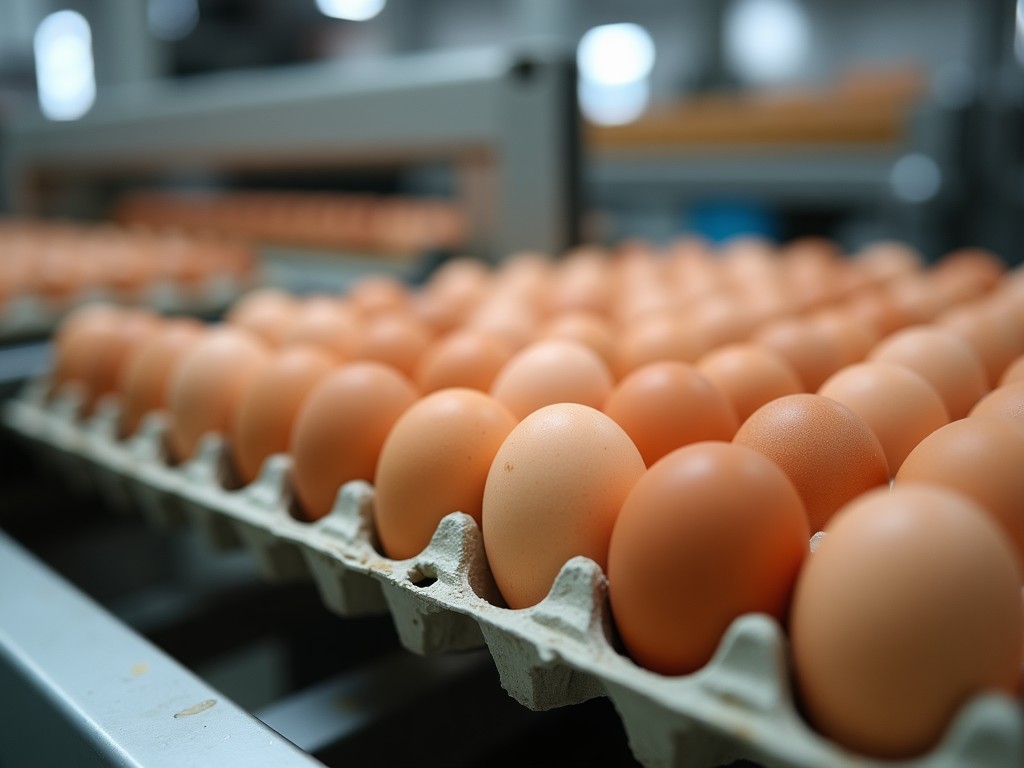
Factory Supply Antique Egg Grading Machine
Overview
The antique egg grading machine is a mechanical sorter originally designed for mid‑20th‑century poultry processing lines. It separates eggs into size categories by passing them over a series of adjustable gaps or rollers, allowing only eggs below a certain diameter to fall through each stage. Modern reproductions retain the original geometry while incorporating contemporary materials for durability and ease of maintenance.
Design and Construction
The frame is typically constructed from welded steel channels with a powder‑coat finish to resist corrosion in humid environments. Grading elements consist of hardened steel rollers or interchangeable brass bars whose spacing can be set in 0.5 mm increments. A variable‑speed drive unit, usually a 0.37 kW AC motor with a reduction gearbox, provides adjustable feed rates between 30 and 120 eggs per minute depending on roller diameter and product flow.
- Overall footprint: 800 mm (L) × 500 mm (W) × 1100 mm (H) (customizable)
- Machine weight: approximately 120 kg (steel frame) or 95 kg (aluminum‑option frame)
- Drive motor: single‑phase 220 V, 50/60 Hz, IP55 enclosure
- Control panel: push‑button start/stop, potentiometer for speed adjustment, overload relay
Operational Principle
Eggs are introduced at the inlet hopper and conveyed by a gentle belt or screw feeder onto the first set of rollers. As each egg contacts the rollers, its effective diameter determines whether it passes through the gap or is deflected to the next lane. The system typically includes three to five grading stages, each corresponding to a commercial size class (e.g., small, medium, large, extra‑large). The separated streams exit via individual chutes that can be fitted with collection trays or packaging conveyors.
Technical Specifications
| Parameter | Typical Value / Note |
|---|---|
| Grading stages | 3‑5 adjustable (customizable) |
| Roller diameter range | 20 mm – 45 mm (step 0.5 mm) |
| Throughput capacity | 30‑120 eggs/min (dependent on feed speed and egg size distribution) |
| Power consumption | 0.37 kW motor, approx. 0.45 kW input at full load |
| Noise level | ≤78 dB(A) measured at 1 m distance |
| Material options | Frame: S235JR steel (standard) or EN‑AW 6063 aluminium (optional); Rollers: hardened steel (HRC 58‑62) or food‑grade brass |
| Dimensions (L×W×H) | 800 mm × 500 mm × 1100 mm (standard); scalable to 1200 mm length for higher capacity |
| Weight | ≈120 kg (steel frame) / ≈95 kg (aluminum frame) |
Applications
Although originally intended for egg farms, the machine's gentle handling and size‑based segregation make it suitable for other fragile oval products where dimensional sorting is required. Its low‑speed operation minimizes impact forces, reducing the risk of micro‑cracks in the shell.
- Sorting of quail, duck, or turkey eggs in specialty poultry operations
- Grading of small fruits such as cherry tomatoes or grapes where size uniformity affects packaging
- Separation of pharmaceutical capsules or tablets by diameter in pilot‑scale lines
- Educational demonstrations of mechanical sorting principles in technical schools
Material Options
Material selection influences both corrosion resistance and product contact compliance. For food‑grade applications, all surfaces that contact eggs can be supplied in stainless steel AISI 304 or FDA‑approved brass. The frame can be supplied in either painted carbon steel for cost‑sensitive installations or in aluminium for reduced weight and easier relocation.
Customization
The grading gap settings, number of stages, and drive speed can be tailored to match specific product size distributions and line speeds. Optional accessories include vibratory feeders for consistent egg presentation, stainless steel collection trays with drainage, and pneumatic diverters for automated routing to downstream packaging equipment.
Quality Control Philosophy
Each unit undergoes a dimensional inspection of roller spacing using calibrated gauge blocks to verify tolerance within ±0.1 mm. Functional testing is performed with a calibrated sample set of eggs covering the full size range; the machine must achieve correct segregation for at least 98 % of the sample before release. Welds on the frame are inspected visually and, where required, by dye‑penetrant testing to ensure structural integrity.
Frequently Asked Questions
- Can the roller spacing be adjusted while the machine is running? Adjustments are recommended during a stopped condition to ensure accurate gap setting and avoid damage to the rollers.
- What information is needed for a quotation? Required details include target egg size range, desired throughput (eggs per hour), preferred frame material, and any additional accessories such as feeders or diverters.
- Are spare parts readily available? Standard rollers, belts, and motor components are stocked; lead times for custom‑ground rollers are typically 2‑3 weeks.
- How is the machine shipped for overseas orders? Units are securely bolted to a pallet, wrapped in polyethylene film, and placed in a wooden crate with corner protection; optional heat‑treated palletization is available for ISPM‑15 compliance.
Contact for Inquiry
To discuss how the antique egg grading machine can be integrated into your processing line or to request a detailed quotation, please use the inquiry form linked below.
Request Quotation


