China Manual Egg Grader Machine For Sale
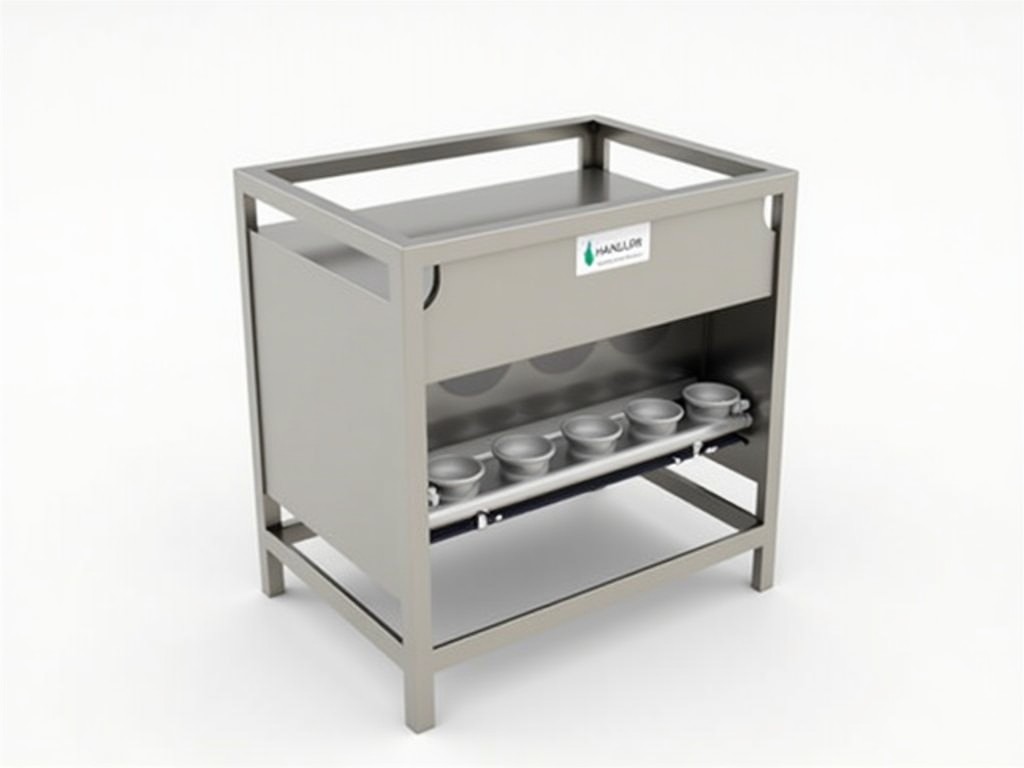
China Manual Egg Grader Machine for Sale
A manual egg grader sorts eggs into size categories by passing them between adjustable rollers or belts that apply a consistent gap. Operators feed eggs by hand, and the machine relies on mechanical leverage rather than electricity, making it suitable for locations with limited power infrastructure.
Operating Principle and Mechanics
The core mechanism consists of two parallel rollers mounted on a stainless steel shaft. Turning a hand crank rotates the rollers at a low speed, typically 30 to 50 revolutions per minute. Eggs enter the inlet, travel through the narrowing gap, and exit into chutes corresponding to predetermined size brackets.
Key Technical Parameters
Typical specifications for a standard manual egg grader are outlined below.
| Parameter | Typical Value | Unit | Notes |
|---|---|---|---|
| Grading Capacity | Up to 1,200 | eggs/hour | Depends on operator speed |
| Adjustable Size Range | 30 – 45 | mm | Gap between rollers |
| Frame Material | Powder‑coated carbon steel | – | Provides structural rigidity |
| Roller Material | Hardened chrome‑plated steel | – | Maintains dimensional stability |
| Overall Dimensions | 600 × 400 × 800 | mm (L×W×H) | Approximate |
| Weight | 28 | kg | Net weight |
| Power Requirement | Manual | – | Hand crank operation |
Material Selection and Durability
Food‑contact surfaces are constructed from AISI 304 stainless steel, which resists corrosion from egg wash and cleaning agents. Roller shafts use hardened chrome‑plated steel to maintain dimensional stability under repeated loading, while the frame employs powder‑coated carbon steel for structural rigidity.
Adjustability and Calibration
Gap adjustment is achieved via a micrometer screw that moves one roller relative to the other, allowing settings from 30 mm to 45 mm in 0.5 mm increments. A calibrated gauge block set is used to verify gap width before each production shift, ensuring repeatability within ±0.2 mm.
Typical Applications in Poultry Processing
Small‑scale farms and backyard operations benefit from the low initial cost and absence of electrical wiring. By classifying eggs into uniform size groups, the machine supports consistent packaging for retail cartons and reduces manual sorting time by approximately 60 % compared with hand grading.
Quality Assurance and Testing
Each unit undergoes a three‑step inspection: roller diameter measured with a laser micrometer (±0.01 mm), gap uniformity checked across the full length using a feeler gauge set, and load testing with a 5 kg static weight to confirm frame deflection remains under 0.5 mm.
Customization Options
Manufacturers offer several configuration choices to match specific workflow requirements.
- Roller length (300 mm, 400 mm, 500 mm)
- Number of grading stages (single, double, triple)
- Handle orientation (left‑hand, right‑hand, ambidextrous)
- Base frame options (fixed legs, lockable casters)
- Surface finish (brushed stainless, electropolished)
FAQ
Can the roller length be customized?
Yes, roller length can be specified in 100 mm increments from 300 mm to 600 mm to suit different throughput needs. Please consult the sales team for exact pricing and lead time.
What information is required before quotation?
To prepare an accurate quote we need the desired grading capacity (eggs per hour), roller length, number of stages, and any special surface finish or frame modifications. Providing the intended operating environment (e.g., humidity level) helps select appropriate materials.
How is quality inspected?
Quality control includes laser measurement of roller diameter, feeler‑gap verification across the full roller length, and static load testing of the frame. All inspection records are retained for traceability.
Contact for Inquiry
To request a detailed quotation or discuss specific configuration needs, please use the inquiry form linked below.
Request Quotation


