China Commercial Egg Washing Machine Supplier
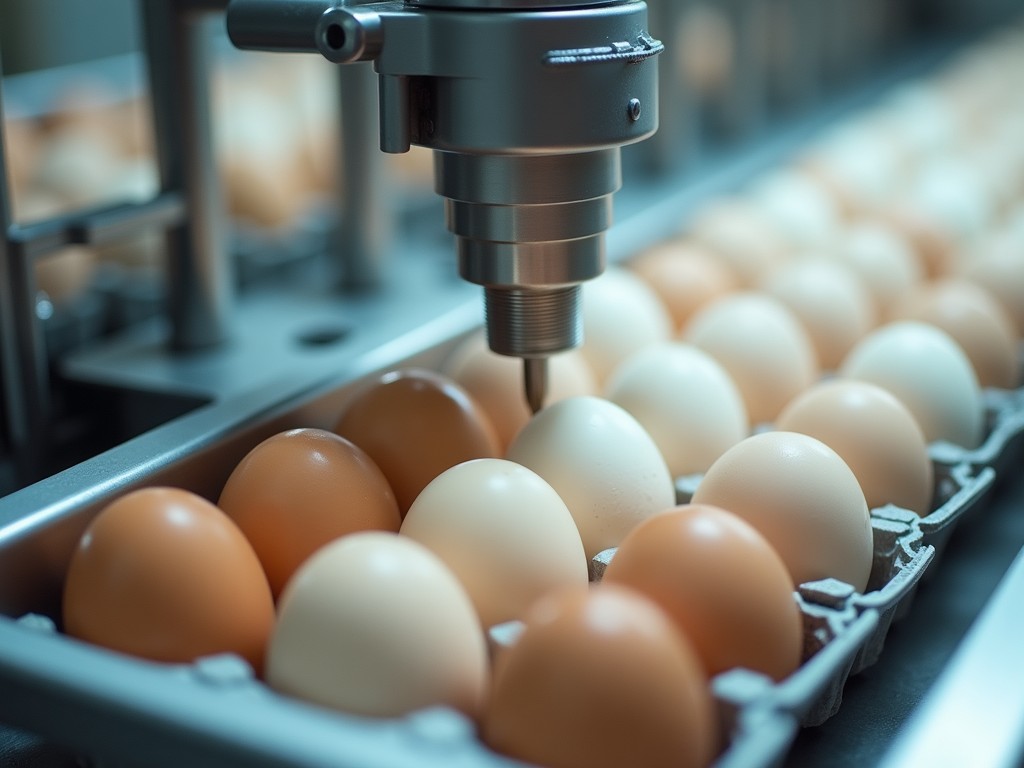
Commercial Egg Washing Machine
The machine is designed for continuous washing of table eggs in poultry processing lines, removing contaminants such as dirt, feces, and bacteria before grading or packaging.
Technical Specifications
| Parameter | Typical Value |
|---|---|
| Capacity (eggs per hour) | Up to 30,000 |
| Wash stages | 2–4 (pre‑wash, main wash, rinse, sanitizer) |
| Conveyor speed | 0.1–0.5 m/min, adjustable via VFD |
| Power consumption | 2.5 kW (main motor) + 0.5 kW (pump) |
| Water usage | 150–250 L/h (recirculation with filtration) |
| Construction material | 1.2 mm 304 stainless steel (optionally 316 for corrosive environments) |
| Control system | PLC with touchscreen HMI, IP65 rated |
| Dimensions (L×W×H) | 2200 mm × 900 mm × 1500 mm (configurable) |
| Weight | Approx. 480 kg |
Operating Principle
Eggs are loaded onto a food‑grade stainless‑steel conveyor that transports them through a series of spray chambers. In each chamber, nozzles deliver heated water (typically 45–55 °C) mixed with approved detergent at controlled pressure (1.5–2.5 bar). Brushes or soft rollers may engage the shell surface to dislodge adhered particles. After washing, a rinse stage removes detergent residues, and an optional sanitizing spray applies a food‑grade chlorine‑based or peracetic acid solution. The conveyor speed and spray duration are adjustable to match line throughput and soil load.
Key Features
- Modular design allows addition or removal of wash stages without rewiring.
- Variable frequency drive (VFD) controls conveyor speed for precise dwell time.
- Stainless‑steel construction resists corrosion and meets food‑grade hygiene standards (FDA, EU).
- Closed‑loop water filtration reduces consumption and limits wastewater discharge.
- Touchscreen HMI provides real‑time monitoring of temperature, pressure, and cycle count.
- Safety interlocks prevent operation when guards are open; emergency stop meets ISO 13850.
Applications
The machine integrates into egg processing lines where high shell integrity is required, such as:
- Commercial layer farms producing table eggs for retail.
- Hatcheries that need clean eggs before incubation to reduce microbial load.
- Egg product facilities supplying liquid egg, powder, or ready‑to‑eat items.
- Food service suppliers that require washed eggs for cracking operations.
Customization Options
Depending on plant layout and product specifications, the following options are available:
- Number of wash stages (2 to 4) and choice of detergent or sanitizer injection points.
- Conveyor width and height adjustments to accommodate different egg sizes (small, medium, large, jumbo).
- Integration with downstream drying, UV treatment, or automatic grading equipment.
- Alternative materials such as 316L stainless steel for high‑salinity or acidic cleaning agents.
- Explosion‑proof motor and controls for environments with combustible dust.
Quality Assurance
Each unit undergoes a factory acceptance test that includes:
- Material verification via mill certificates and spot‑check XRF analysis.
- Hydrostatic pressure test of spray nozzles and piping at 1.5× operating pressure.
- Electrical safety inspection (ground continuity, insulation resistance) per IEC 60204‑1.
- Functional run‑test with a batch of 5,000 eggs to confirm cleaning efficacy (ATP bioluminescence < 100 RLU).
- Documentation package: CE declaration, wiring diagram, operation manual, and spare‑parts list.
Packaging and Shipping
Machines are secured on a steel pallet with stretch film and corner protectors. The control panel is housed in a removable wooden crate to prevent shock. Standard shipping methods include:
- Full container load (FCL) 20‑ft or 40‑ft depending on configuration.
- Less than container load (LCL) with foam edge protection for smaller units.
- Air freight available for urgent spare‑parts shipments.
Frequently Asked Questions
What information is needed for a quotation?
Please provide required egg throughput (eggs per hour), number of wash stages, preferred detergent type, any space constraints, and whether integration with existing conveyors is required.
Can the machine be customized for specific egg sizes?
Yes. Conveyor belt width, guide rails, and spray nozzle height can be adjusted to accommodate small to jumbo eggs without changing the frame.
What is the typical lead time?
Standard units ship within 4–6 weeks after receipt of deposit and final specification confirmation. Custom configurations may extend lead time to 8–10 weeks.
How is cleaning effectiveness verified?
Post‑wash samples are tested using ATP bioluminescence or aerobic plate count; acceptable limits are <100 RLU or <1 CFU/mL respectively, depending on customer specification.
Call to Action
To discuss your egg washing requirements or request a detailed quotation, please reach out to our technical team.



