Buy 10000 Eggs Per Hour Egg Washer Grader
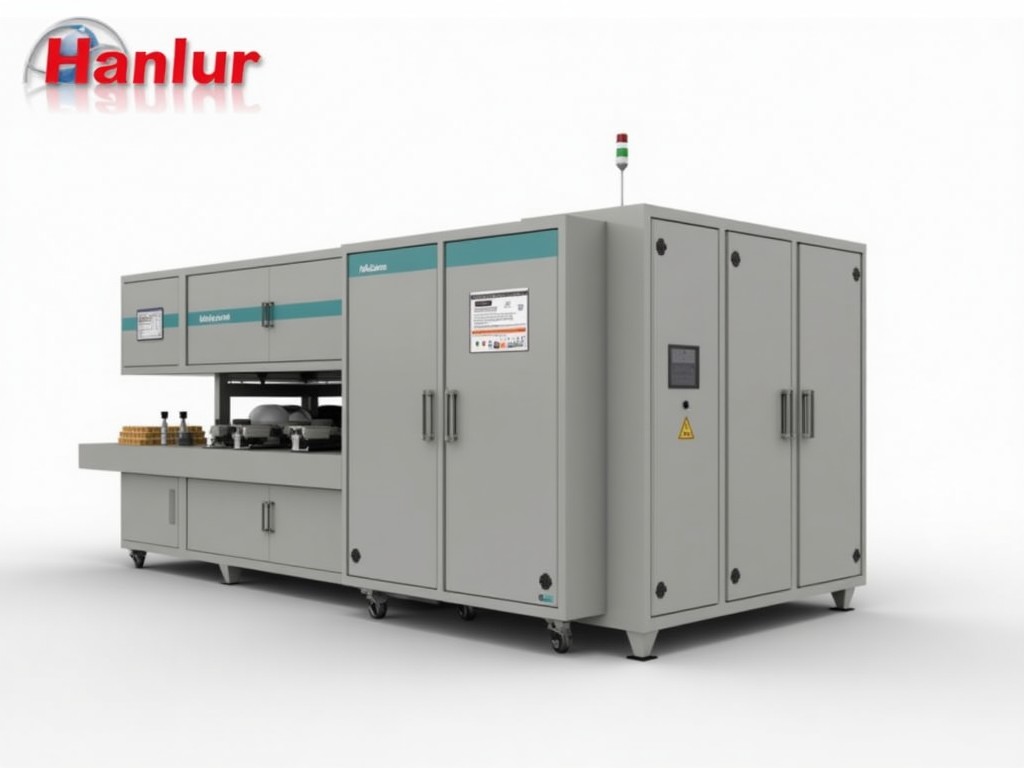
Buy 10000 Eggs per Hour Egg Washer Grader
Overview
This system combines high‑speed washing and precise grading for egg processing lines that require throughput of up to ten thousand eggs per hour. It integrates a multi‑stage spray cleaning module with a weight‑based grading mechanism, allowing continuous operation without manual sorting.
The design focuses on minimizing water usage while achieving a bacterial reduction of at least 3 log CFU per egg, meeting typical food‑safety standards for shell egg sanitation.
Technical Specifications
| Parameter | Typical Value |
|---|---|
| Capacity | 10 000 eggs/hour |
| Washing stages | 3 (pre‑soak, main spray, rinse) |
| Water consumption | ≈ 12 L/min (adjustable) |
| Grading accuracy | ± 2 g weight tolerance |
| Power requirement | 3 kW, 380 V 3‑phase |
| Construction material | Stainless steel 304 (food grade) |
| Overall dimensions (L×W×H) | 2200 mm × 950 mm × 1500 mm |
| Control system | PLC with touch‑screen HMI |
Working Principle
Eggs enter the inlet conveyor and are first immersed in a pre‑soak tank where loose debris is loosened by low‑pressure spray. They then pass through a high‑impact spray chamber that uses rotating nozzles to deliver water at 2 bar pressure, removing surface contaminants.
After washing, eggs are transferred to a rinsing stage with fresh water to eliminate detergent residues. The cleaned eggs then reach the grading module, where each egg is weighed on a load‑cell based scale; based on preset weight bands, diverters route eggs to the appropriate outflow chutes.
All movements are synchronized by variable‑frequency drives, allowing the line to maintain the target 10 000 eggs/hour rate while accommodating minor variations in egg size or flow.
Key Features
- Modular washing zones enable independent adjustment of spray time, pressure, and temperature for each stage.
- Weight‑based grading eliminates reliance on size‑based mechanisms, providing consistent classification even with irregular egg shapes.
- Quick‑change spray nozzles reduce maintenance downtime to under 15 minutes per module.
- Integrated CIP (clean‑in‑place) ports allow automated sanitation without disassembly.
- Energy‑efficient motors recover kinetic energy during deceleration, lowering overall power draw by approximately 8 %.
Applications
The washer‑grader is suited for large‑scale egg packing facilities that supply retail chains, where consistent product safety and uniform weight classes directly affect pricing and compliance.
It also serves break‑and‑process plants that require pre‑graded eggs for liquid egg production, as precise weight sorting reduces downstream yields loss.
In regions with strict water‑usage regulations, the adjustable spray system helps operators meet local consumption limits while maintaining hygiene standards.
Customization Options
- Number of washing stages (2‑4) can be increased or reduced based on product contamination levels.
- Grading chutes can be configured for 3‑5 weight bands, with optional color‑coded outlets for visual sorting.
- Conveyor speed range adjustable from 6 000 to 12 000 eggs/hour via VFD settings.
- Optional UV‑C disinfection module post‑rinse for additional microbial safety.
- Custom inlet and outlet heights available to integrate with existing line elevations.
Quality Assurance
Each unit undergoes hydrostatic testing of all spray manifolds to verify leak‑free operation at 5 bar pressure.
Load‑cell grading accuracy is calibrated using traceable weights before shipment, with a calibration certificate provided.
Material composition of stainless steel parts is verified via X‑ray fluorescence to ensure 304 grade compliance.
Final functional test runs the line at nominal capacity for 30 minutes, logging water usage, power draw, and grading deviation to confirm conformance to specification.
FAQ
Can the washing parameters be adjusted for different egg sizes?
Yes, spray pressure, duration, and temperature are independently controllable via the HMI, allowing optimization for small, medium, or large eggs without changing hardware.
What information is needed to prepare a quotation?
Required details include desired throughput (eggs/hour), water supply pressure and temperature, available electrical supply (voltage, frequency), and any specific grading weight bands.
Are spare parts readily available?
Critical wear items such as spray nozzles, seals, and load‑cells are stocked regionally; lead time for standard spares is typically 5‑7 business days.
How is the machine protected during export shipment?
The unit is secured on a steel skid with shock‑absorbing brackets, wrapped in corrosion‑inhibiting film, and placed inside a wooden crate meeting ISPM‑15 standards.
Contact Us
For further technical details, customization requests, or a formal quotation, please reach out to our engineering team.
Request Quote


