Bulk Egg Washing And Grading Line In Philippines
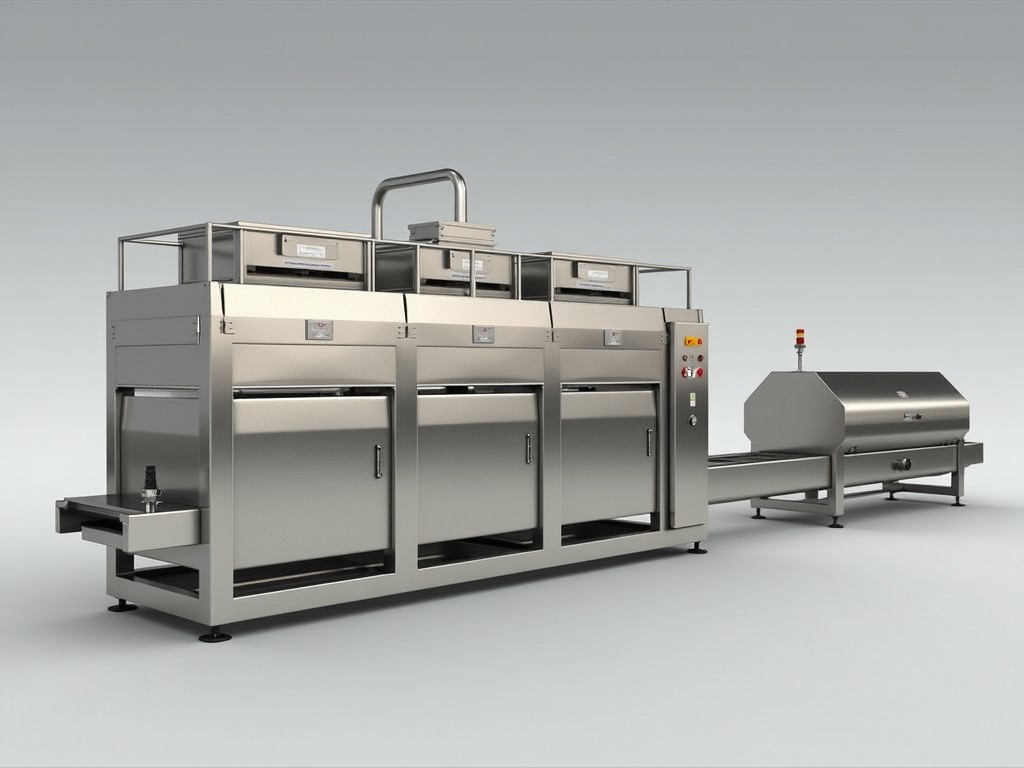
Bulk Egg Washing and Grading Line for Philippines
Process Overview
Eggs are first conveyed to a pre‑wash tank where loose debris is removed by gentle spray. They then move through a series of brush‑scrubbing chambers that clean the shell surface while maintaining integrity. After washing, a controlled air‑dry section reduces surface moisture before the eggs reach the grading station, where they are sorted by weight and size using precision load cells and mechanical divertors.
Key Technical Specifications
| Parameter | Typical Value | Notes |
|---|---|---|
| Throughput (eggs per hour) | 30,000 – 60,000 | Dependent on egg size and line speed |
| Washing tank volume | 150 L per stage | Three‑stage counter‑flow design |
| Conveyor speed | 0.2 – 0.6 m/s | Variable frequency drive control |
| Water consumption | 8 – 12 L/min (recycled) | Closed‑loop filtration with UV disinfection |
| Power requirement | 15 kW (three‑phase 380 V) | Includes motors, pumps, and control system |
| Grading accuracy | ±2 g weight tolerance | Load cell resolution 0.1 g |
Design Considerations for Philippine Operations
High ambient humidity and temperatures above 30 °C accelerate microbial growth on egg surfaces; the line incorporates stainless‑steel components with seamless welds to eliminate crevices where contaminants can accumulate. Water recycling reduces reliance on municipal supply, which can be seasonal in some regions, while the UV disinfection stage ensures compliance with BAFPS microbiological limits for table eggs.
Material Selection and Construction
All contact surfaces are fabricated from AISI 304 stainless steel, with optional upgrade to 316L for facilities processing eggs destined for export markets requiring higher chloride resistance. Food‑grade PVC belts are used in the drying zone to prevent static buildup, and all fasteners are passivated to resist corrosion. Frame structures employ hot‑dip galvanized steel with a powder‑coat finish for added durability in tropical climates.
Control and Automation
A Siemens S7‑1200 PLC manages sequencing of wash, rinse, and dry cycles, while a touch‑screen HMI provides real‑time monitoring of flow rates, tank levels, and motor loads. Load‑cell feedback enables dynamic adjustment of grading divertors to maintain consistent output quality. Optional data logging supports traceability and facilitates integration with plant MES systems.
Applications in the Egg Supply Chain
The line serves large‑scale layer farms that need to prepare eggs for retail packaging, as well as processing plants that produce liquid egg products requiring low microbial loads. By delivering uniformly cleaned and graded eggs, the system reduces downstream breakage during transport and improves yield in further processing steps such as pasteurization or powder production.
Customization Options
- Adjustable number of washing stages (2‑4) based on water quality
- Alternative brush materials (nylon, polypropylene) for specific shell types
- Integration of laser‑based crack detection prior to grading
- Modular frame extensions for future capacity increase
- Optional ozone injection for enhanced surface disinfection
Quality Assurance and Testing
Each unit undergoes factory acceptance testing that includes a 24‑hour run with graded egg samples to verify wash efficiency (measured by ATP bioluminescence) and grading accuracy. Prior to shipment, a detailed FAT report is provided, covering electrical safety, emergency stop functionality, and sanitation protocol validation. Site acceptance testing can be arranged upon request to confirm performance under local water and power conditions.
Frequently Asked Questions
Can the line be adapted for duck or quail eggs?
Yes, brush speed and conveyor gap can be adjusted to accommodate different egg dimensions while maintaining effective cleaning.
What information is required before quotation?
Required data include target hourly throughput, average egg weight range, available water pressure and quality, and facility power supply specifications.
How is quality inspected during production?
In‑process checks involve random sampling for shell cleanliness (UV fluorescence) and weight verification; final QA includes a full batch audit against client specifications.
Contact for Inquiry
To discuss how a bulk egg washing and grading line can be configured for your operation in the Philippines, please send an inquiry with your production details.



