Bulk Egg Grading Machine For Sale In South Africa
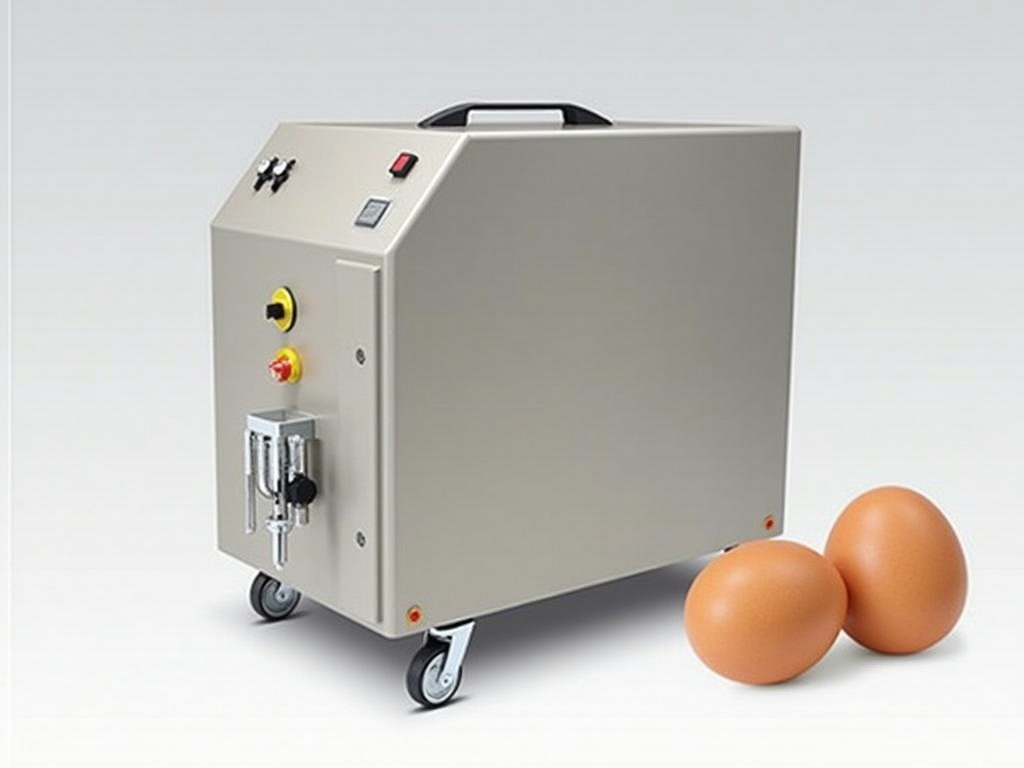
Bulk Egg Grading Machine for Sale in South Africa
Bulk egg grading machines automate the sorting of eggs by weight, size, and internal quality before packaging. They integrate load‑cell weighing stations and high‑speed vision systems to classify eggs into predefined grades at rates exceeding 20,000 units per hour. In South African poultry operations, such equipment reduces manual labor and improves consistency for retail and processing markets.
Technical Specifications
| Parameter | Typical Value | Notes |
|---|---|---|
| Throughput | 20,000–35,000 eggs/hour | Depends on egg size distribution and grading criteria |
| Weight Accuracy | ±1 g | Calibrated load cells with temperature compensation |
| Size Grading | 4–7 size classes (e.g., Peewee to Jumbo) | Vision system measures length and diameter |
| Shell Quality Inspection | Detects cracks, thin spots, and staining | LED back‑lighting and pixel‑level analysis |
| Power Supply | 380 V ±10 %, 3‑phase, 50/60 Hz | Total connected load approx. 4 kW |
| Machine Dimensions (L×W×H) | 2.2 m × 0.9 m × 1.5 m | Footprint includes infeed and outfeed conveyors |
| Construction Material | Stainless steel 304 (food grade) | All contact surfaces polished to Ra ≤ 0.8 µm |
| Cleaning Method | CIP‑compatible spray nozzles | Quick‑release belts for manual wipe‑down |
Key Features
- Dual‑stage weighing: pre‑weigh for speed, final weigh for accuracy
- Adjustable grade thresholds via touchscreen PLC interface
- Low‑vibration belt drive reduces egg damage
- Integrated data logging for traceability and audit reports
- Modular conveyor sections allow line length adaptation
Applications
Large‑scale egg producers in South Africa require consistent grading to meet retail specifications and export standards such as those set by the South African Poultry Association. By automating size and weight segregation, the machine enables direct packing into consumer cartons without secondary handling, reducing breakage risk. The built‑in shell quality detection helps satisfy stringent market requirements for Grade A eggs, minimizing downgrades. Processing plants also benefit from the uniform feed to downstream operations like breaking or pasteurizing lines.
Customization Options
- Variable lane count (2‑4 lanes) to match plant layout
- Alternative reject mechanisms: air jet, mechanical diverter, or drop‑out
- Integration with existing MES or ERP systems via OPC UA
- Specialized coatings for high‑humidity environments
- Extended infeed buffers for continuous operation during shift changes
Build Quality & Reliability
The frame is constructed from welded stainless‑steel 304 tubing, providing corrosion resistance in wash‑down environments. Critical moving parts use sealed bearings rated for 20,000 hours of operation, minimizing maintenance intervals. Electrical components are housed in IP65-rated enclosures, protecting against dust and moisture ingress. Routine maintenance involves belt tension checks and sensor calibration, both achievable with standard tools.
Frequently Asked Questions
Q: Can the grading thresholds be adjusted for different egg breeds?
A: Yes, the PLC stores multiple recipe files; operators can switch between breeds (e.g., commercial layers vs. free‑range) via the touchscreen without mechanical changes.
Q: What information is required before quotation?
A: Required details include expected hourly volume, egg size mix, available power supply, and any required integration with existing conveyors or packaging equipment.
Q: How is quality inspected during manufacturing?
A: Each unit undergoes a factory acceptance test that verifies throughput, weight accuracy (±1 g), and reject mechanism response time under simulated production load.



