B2B Electronic Egg Weight Grading Machine
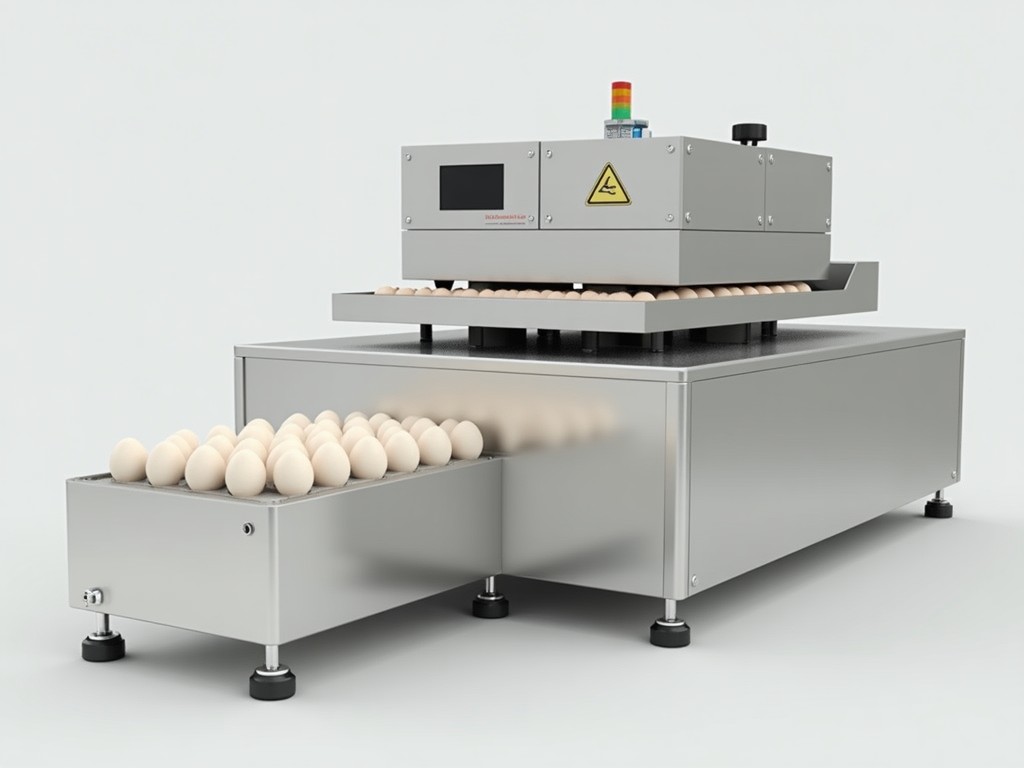
B2B Electronic Egg Weight Grading Machine
This equipment continuously measures the mass of individual eggs as they travel on a conveyor, enabling sorting into predefined weight classes for downstream processing such as packaging, breaking, or incubation.
Core Measurement Technology
A series of precision load cells mounted under the conveyor belt detect the force exerted by each egg. The signal is conditioned by a 24‑bit analog‑to‑digital converter, providing a weight resolution of 0.1 g and a repeatability better than ±0.2 g at 95 % confidence.
Throughput and Sorting Capacity
The conveyor speed is adjustable from 0.2 m/s to 1.0 m/s, allowing a maximum throughput of 30 000 eggs per hour when set to 0.8 m/s with a 2‑second interval between items. The machine supports up to six weight grades, each defined by a user‑settable tolerance band.
Control System and User Interface
An industrial PLC (IEC 61131‑3 compliant) runs the grading logic, while a 7‑inch touchscreen HMI displays real‑time weight histograms, grade counts, and fault diagnostics. Data can be exported via Ethernet (Modbus TCP) or USB flash drive for traceability.
Physical Dimensions and Installation Requirements
| Parameter | Value |
|---|---|
| Overall length (conveyor included) | 2 200 mm |
| Width | 800 mm |
| Height | 1 200 mm |
| Weight (net) | 350 kg |
| Power supply | 380 V 3‑phase, 50/60 Hz, 2.5 kW |
| Conveyor belt material | Food‑grade PVC, FDA‑compliant |
Typical Applications in Poultry Processing
Grading by weight enables uniform batch sizes for downstream operations such as carton filling, where under‑ or over‑weight eggs cause packaging line jams. In hatcheries, separating eggs by mass improves incubation consistency because embryo development correlates with initial egg weight.
Customization Options
- Conveyor length adjustable from 1.5 m to 3.0 m to fit facility layout
- Number of selectable grades configurable from 2 to 8 via software
- Reject mechanisms: pneumatic diverter, mechanical arm, or drop‑out chute
- Enclosure rating upgrades to IP65 for wash‑down environments
- Integrated data logging with SQL database export
- Optional UV sterilization module mounted upstream of the conveyor
Quality Assurance and Calibration
Each unit undergoes a factory acceptance test using traceable calibration weights (Class F1, ±0.01 g) across the full operating range. The load cell zero drift is monitored continuously; automatic zero‑tracking compensates for temperature variations up to ±5 °C. A calibration certificate is supplied with every shipment.
Frequently Asked Questions
Can the conveyor speed be changed during operation? Yes, the HMI allows on‑the‑fly adjustment from 0.2 m/s to 1.0 m/s without stopping the line.
What information is required for a quotation? Required details include desired throughput (eggs/hour), number of grades, conveyor length, enclosure rating, and any optional features such as data logging or UV module.
What materials are available for the conveyor belt? Standard is food‑grade PVC; alternatives include polyurethane (PU) and stainless‑steel mesh for high‑temperature applications.
How is quality inspected before shipment? Each machine is run through a 2‑hour endurance test with a simulated egg flow, verifying weight accuracy, reject timing, and HMI functionality.
What is the typical production lead time? Lead time ranges from 6 to 8 weeks after receipt of a signed purchase order, depending on selected customizations.



