B2B Egg Washing And Grading Line In Kenya
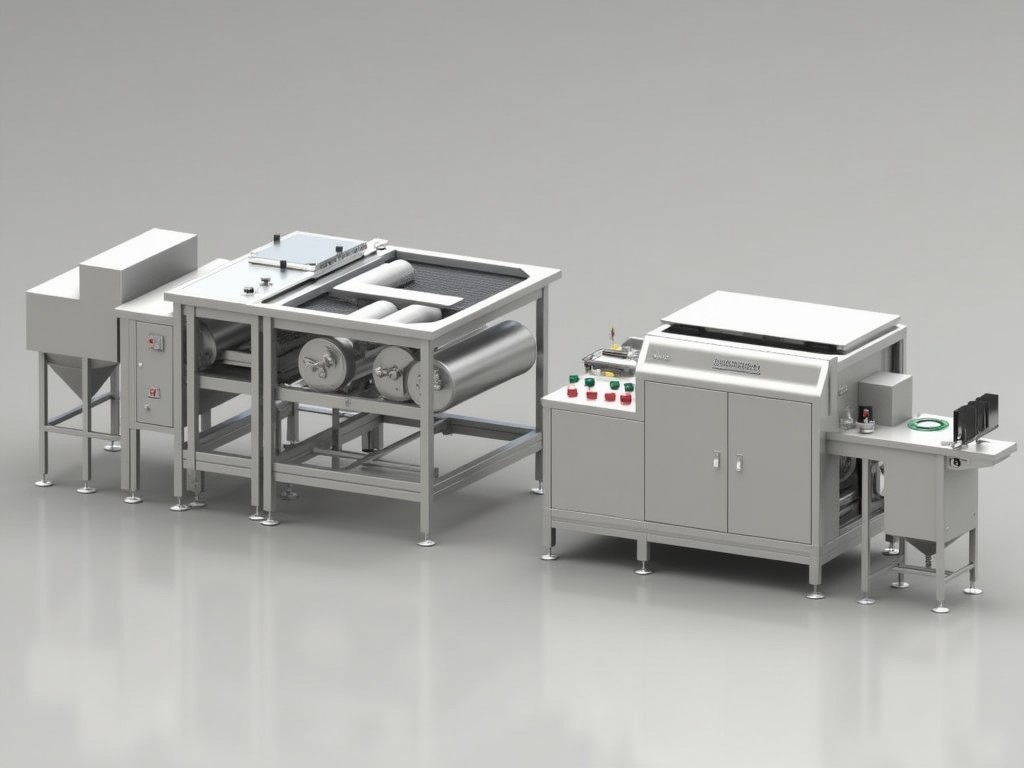
B2B Egg Washing and Grading Line for Kenya
The line integrates washing, sanitizing, drying, and grading stages into a continuous flow that processes eggs from reception to packaging. Throughput is expressed as eggs per hour, with typical models ranging from 5,000 to 30,000 eggs/h depending on module configuration. Water consumption is monitored per cycle, allowing operators to adjust spray pressure and recycle rates to match local supply conditions.
Technical Specifications
| Parameter | Typical Value | Notes |
|---|---|---|
| Egg throughput | 5,000–30,000 eggs/h | Adjustable via conveyor speed and module count |
| Washing tank volume | 150–500 L | Stainless steel 304L, heated to 45–55 °C |
| Sanitizer dosage | 20–50 ppm chlorine‑based | Controlled by inline metering pump |
| Grading criteria | Weight (±2 g), size (length/diameter), shell integrity (vision) | Options: load‑cell scales, CCD cameras |
| Power requirement | 380 V / 3 ph, 5–15 kW | Dependent on dryer and motor load |
| Footprint (L × W × H) | 2.5–4.0 m × 1.2 m × 2.2 m | Modular sections allow site‑specific layout |
| Materials contact with product | AISI 304 or 316 stainless steel, food‑grade PVC | Optional electropolished finish for corrosion resistance |
Key Features
- Counter‑flow washing reduces water usage by up to 30 % compared with single‑pass systems.
- Variable‑frequency drives on conveyors enable precise speed control for different egg sizes.
- Modular design permits addition of drying, oiling, or packing stations without line shutdown.
- Integrated CIP (clean‑in‑place) ports allow automated sanitation cycles between shifts.
- Real‑time data logging captures throughput, water consumption, and reject rates for traceability.
Applications and Suitability for Kenyan Conditions
Egg producers in Kenya face ambient temperatures that frequently exceed 30 °C and seasonal variations in water availability. The line’s insulated washing tanks maintain target temperatures with minimal energy input, while the optional rain‑water harvesting interface reduces reliance on municipal supplies. Grading accuracy remains stable because load‑cell sensors are temperature‑compensated, and vision systems include auto‑gain control for varying lighting conditions in open‑sided barns.
Typical users include large‑scale layer farms supplying retail chains, hatcheries requiring sorted eggs for incubation, and export‑oriented processors needing compliance with international import standards. By adjusting the grading thresholds, the same line can serve both table‑egg and hatching‑egg markets without retooling.
Customization Options
- Number of washing stages (1‑3) and sanitizer types (chlorine, peracetic acid, UV).
- Drying method: forced air, infrared, or combined air‑heat.
- Grading precision: basic weight sorting vs. multi‑parameter vision with defect detection.
- Packaging integration: inline carton filler, tray sealer, or bulk bagger.
- Control panel: local PLC with HMI or SCADA‑ready Ethernet/IP interface.
Quality Control and Compliance
All wetted parts are fabricated from stainless steel grades selected for resistance to chlorides and acids commonly used in egg sanitization. The design follows ISO 22000 prerequisites, facilitating HACCP plan development for critical control points such as wash temperature, sanitizer concentration, and drying efficiency. Routine verification includes temperature loggers, conductivity probes for sanitizer residual, and periodic swab testing for microbial load.
Manufacturing tolerances are maintained within ±0.5 mm for frame assemblies to ensure consistent belt tracking. Final factory acceptance tests verify throughput accuracy within ±5 % of rated capacity and confirm that graded eggs meet specified weight bands.
Frequently Asked Questions
- Can the line be adapted for small‑holder farms with limited power?
- Yes, low‑power models operate on 220 V single‑phase supply and include a manual bypass for washing when grid reliability is a concern.
- What spare parts should be kept on site?
- Typical spares include conveyor belts, spray nozzles, solenoid valves, and load‑cell modules; a recommended list is provided during commissioning.
- Is training included with installation?
- Installation packages cover operator training on start‑up, sanitation cycles, and basic troubleshooting; advanced maintenance training can be arranged separately.
- How is the line protected against corrosion in humid environments?
- All structural steel is hot‑dip galvanized before assembly, and exposed fasteners are stainless steel; optional coating systems are available for high‑salinity coastal areas.
Next Steps
To obtain a quotation tailored to your facility’s throughput, water source, and product mix, please share the following details: expected eggs per hour, preferred washing and grading specifications, any space constraints, and required compliance standards. Our engineering team will prepare a layout drawing and cost estimate within five business days.



