B2B Automatic Fault Egg Sorting Machine
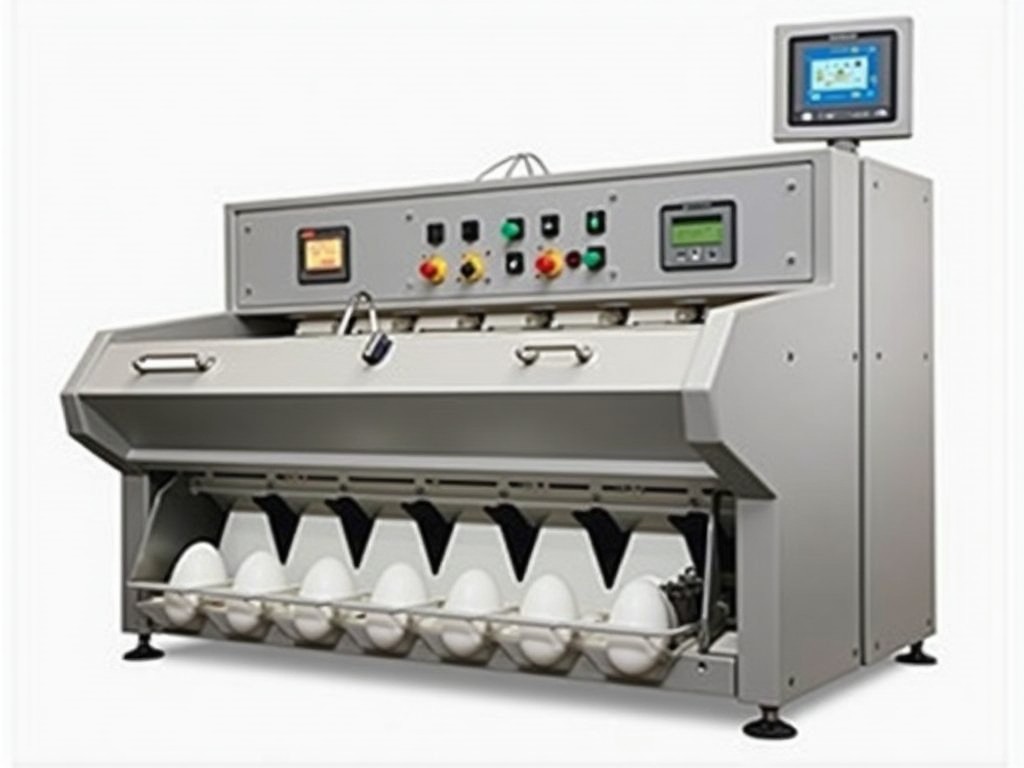
B2B Automatic Fault Egg Sorting Machine
Large-scale poultry production demands a transition from manual inspection to automated grading to maintain food safety standards and operational efficiency. An automatic fault egg sorting machine integrates high-precision optical sensors with mechanical weighing to identify defects that are often invisible to the human eye. By automating the grading process, these systems ensure that only products meeting specific commercial criteria reach the packaging stage, significantly reducing waste and brand risk.
Technical Overview of Fault Detection Logic
The core of the sorting system relies on a multi-stage inspection pipeline. As eggs move along the conveyor system, they pass over high-frequency load cells that determine weight classification with sub-gram precision. Following this, multi-spectral cameras and ultrasonic sensors scan the shell surface and internal structure to detect structural irregularities, hairline cracks, or internal deformities.
Data from these sensors is processed by an industrial PLC that evaluates each egg in real-time. This allows the machine to distinguish between minor shell variations and critical faults like blood spots or rot. Once a fault is identified, a pneumatic-controlled ejection system diverts the defective unit from the main production line without disrupting the flow of high-quality eggs.
Technical Specifications
| Feature | Typical Values / Capabilities |
|---|---|
| Processing Capacity | 5,000 to 30,000 eggs per hour (depending on configuration) |
| Weight Accuracy | ± 0.5 grams |
| Detection Parameters | Cracks, blood spots, air cell size, shell thickness, deformities |
| Material Construction | 304 Stainless Steel, Food-grade polymers |
| Control System | Siemens/Allen-Bradley PLC with HMI |
Comprehensive Fault Classification
The system is programmed to categorize faults based on severity and market-specific requirements. This granular control allows processors to maintain data on flock trends and identify issues within the supply chain.
- Structural Defects: Detection of hairline cracks, shell roughness, and surface discoloration that could compromise the shell integrity during transport.
- Internal Defects: Use of optical analysis to identify blood spots, meat spots, and excessive air cell size, which serves as an indicator of egg freshness.
- Geometric Irregularities: Identifying elongated or misshapen shell eggs that may interfere with automated packaging machinery.
- Contamination Detection: Identification of foreign matter or mold growth that violates hygiene protocols.
Industrial Applications and Integration
Automated fault sorting is essential for high-volume hatcheries and export grading facilities that require consistent quality. These machines are designed to integrate seamlessly into existing production lines, following cleaning and drying modules and preceding packaging.
In export-oriented operations, the machine ensures that every carton meets international quality standards regarding shell strength and internal clarity. For processing plants, the system helps in separating eggs suitable for liquid egg production from premium table eggs, maximizing the value of the raw material.
Customization and Engineering Requirements
Each installation is tailored to the specific throughput and footprint constraints of the facility. We offer modular configurations that can accommodate different egg sizes, from quail to ostrich. Technical requirements, such as available air pressure, voltage supply, and existing PLC protocols, are evaluated during the design phase to ensure seamless communication.
Material selection focuses on durability and ease of sanitation. All contact-surfaces are constructed from stainless steel to withstand rigorous wash-down procedures and corrosive environments.
Request a technical data sheet or a custom configuration consultation for your sorting facility.
Inquire About Technical Specifications


