Semi Automatic Case Palletizer Machine Suppliers
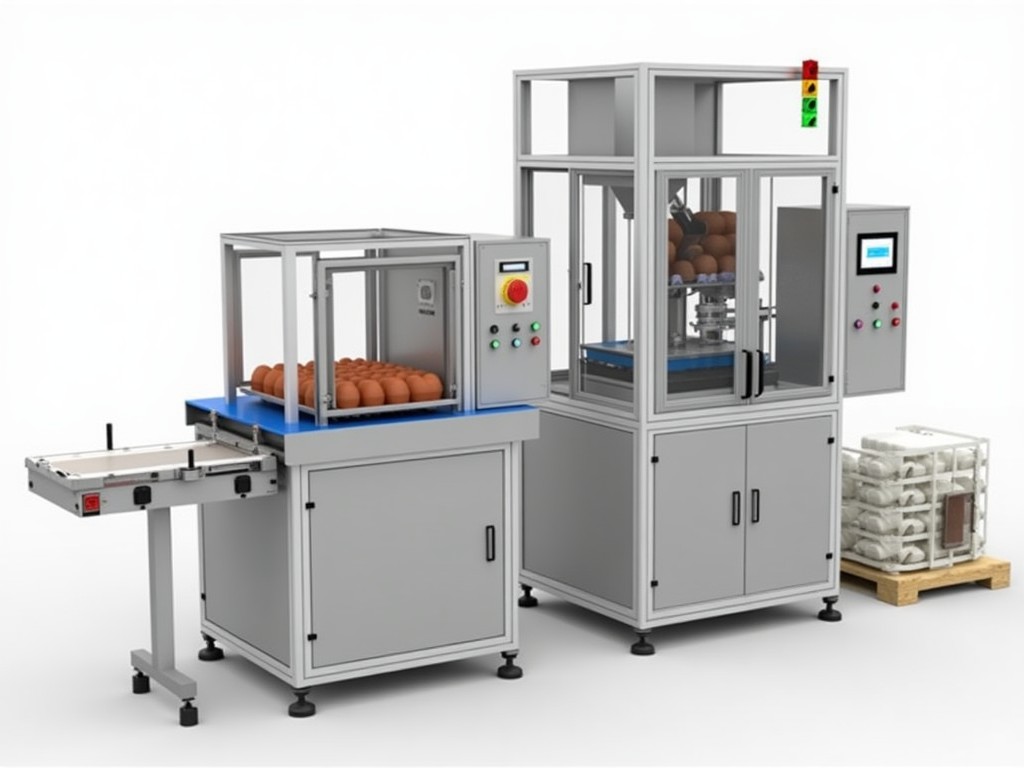
Semi Automatic Case Palletizer Machine Suppliers: Technical Overview
A semi automatic case palletizer combines manual case feeding with automated layer formation and pallet discharge. It is suited for production lines where case orientation varies or where full automation is not economically justified.
The operator places cases onto an infeed conveyor; a mechanical pusher arranges them into a predefined layer pattern on a lifting platform. Once a layer is complete, the platform lowers, the pallet is indexed, and the process repeats until the target pallet height is reached.
Core Technical Specifications
| Parameter | Typical Value | Notes |
|---|---|---|
| Maximum case weight | 20 kg | Customizable up to 35 kg on request |
| Pallet size compatibility | 800 × 1200 mm, 1000 × 1200 mm | Other sizes available via adjustable side guides |
| Cycle time per layer | 4.5 s (average) | Dependent on case dimensions and layer pattern |
| Power supply | 380 V / 3 ph / 50 Hz | Optional 460 V version for North America |
| Control system | PLC with HMI touch panel | Recipe storage for up to 20 case types |
| Footprint (L × W × H) | 2200 mm × 1500 mm × 2100 mm | Includes safety guarding; can be reduced with compact frame |
These specifications enable the machine to handle typical secondary packaging loads while maintaining a modest floor footprint, which is critical for facilities with limited aisle space or those planning line reconfigurations.
Typical Applications and Industry Fit
In food and beverage plants, the semi automatic palletizer accommodates frequent case size changes between product SKUs without lengthy reprogramming, supporting mixed‑case pallets required for retail distribution.
Consumer goods manufacturers benefit from the low‑speed, gentle handling that reduces case damage during pallet formation, especially for lightweight or irregularly shaped packages.
Pharmaceutical lines use the machine’s ability to integrate with existing conveyor systems and maintain clean‑room compatible surfaces, ensuring compliance with hygiene standards while keeping operator involvement minimal for validation purposes.
Customization Options
- Infeed conveyor type – roller, belt, or powered chain to match upstream equipment
- Layer pattern configurator – interlocking, staggered, or column arrangements via HMI
- Safety guarding – fixed barriers, light curtains, or emergency stop zones based on risk assessment
- HMI language and units – selectable metric/imperial, multiple language packs for global teams
- Frame finish – powder‑coated carbon steel or stainless steel (304/316) for corrosive environments
Manufacturing Considerations and Quality Control
Primary structural components are fabricated from S355JR steel, providing a yield strength of 355 MPa that resists deflection under repeated pallet loads. All welds follow EN 1090‑2 standards, with non‑destructive testing (ultrasonic) performed on critical joints. Surfaces receive a zinc‑rich primer followed by a UV‑stable top coat, achieving a minimum 120 µm dry film thickness for corrosion resistance in humid environments.
Before shipment, each unit undergoes a functional test cycle using simulated cases weighing up to the maximum rated load, verifying layer accuracy, pallet positioning precision (±5 mm), and safety system response times. Test logs are retained for traceability and can be supplied to the buyer upon request.
Frequently Asked Questions
- Can the machine dimensions be customized to fit an existing line layout? Yes, the frame width and conveyor height can be adjusted within ±150 mm of the standard footprint; detailed layout drawings are provided after a site survey.
- What information is required before a quotation can be issued? Needed data include case dimensions and weight, desired pallet configuration, line speed (cases per minute), and any environmental constraints such as temperature or wash‑down requirements.
- Which materials are available for the frame and contact surfaces? Standard is powder‑coated carbon steel; optional stainless steel (304 or 316) for food‑grade or wash‑down applications.
- How is quality inspected during production? Dimensional inspection of machined parts, weld visual and ultrasonic testing, and final functional validation with load simulation.
- What packaging methods are used for export shipments? Machines are secured on a steel skid, covered with corrosion‑inhibiting film, and placed in a vented wooden crate compliant with ISPM‑15 standards.
Request Technical Details
For engineering drawings, CAD models, or a formal quotation tailored to your facility’s specifications, contact our technical team.



