Robot Automatic Palletizing Machine Manufacturer
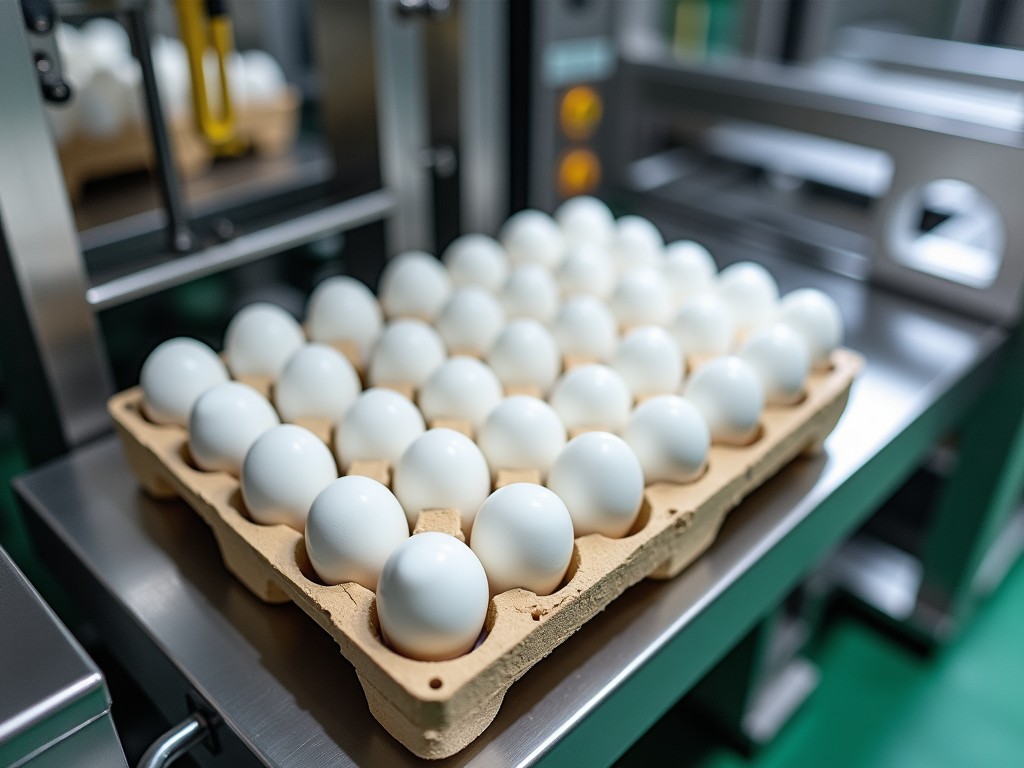
Robot Automatic Palletizing Machine Manufacturer
The transition from manual palletizing to robotic automated systems addresses the need for consistent throughput in fluctuating market environments. Robotic palletizing eliminates the physical strain associated with repetitive lifting while ensuring that stack stability remains uniform across every pallet. By integrating high-precision robotics into the production line, facilities can achieve cycle times that are physically impossible for human operators to maintain over long shifts.
Engineering an effective palletizing solution requires a deep understanding of mechanical limits, payload dynamics, and end-effector synchronization. Our systems are designed to handle diverse product geometries, from rigid cardboard boxes to heavy-duty industrial bags, while maintaining the integrity of the packaging through calculated force-sensitive movements.
Technical Specifications of Robotic Palletizing Systems
| Parameter | Typical Values / Customizable Range |
|---|---|
| Payload Capacity | 5kg to 500kg (depending on arm type) |
| Maximum Reach | 700mm to 3500mm |
| Standard Cycle Time | 2 to 12 cycles per minute |
| Communication Interface | EtherNet/IP, PROFINet, Modbus TCP |
| Robot Accuracy | ±0.05mm to ±0.1mm |
| Power Requirements | 230/480V AC, Three-Phase |
Key Engineering Components and End-Effector Technology
The core of any robotic palletizing system is the arm architecture, typically selected between a 6-axis industrial robot for maximum degrees of freedom, allowing for complex pallet patterns and de-layering operations. Alternatively, SCARA robots are often deployed for high-speed, low-profile applications where floor space is constrained and vertical movement is primary.
End-of- tooling, or EOAT, serves as the interface between the robot and the product. Vacuum-based systems utilize multiple independent suction cups to handle flat surfaces like boxes, while mechanical grippers with side clamps are necessary for heavy bags or unstable sacks. We design custom multi-tool configurations that can integrate sensors to detect product presence and orientation, preventing misalignment damage during the placement cycle.
- Safety Integration: Integrated light curtains and laser scanners ensure the robot slows down or stops when a human enters the work envelope.
- Control Logic: High-speed PLC controllers manage real-time data exchange between conveyors and the warehouse management system (WMS).
- Drive Systems: High-torque servo motors with absolute encoders provide precise acceleration and deceleration to minimize mechanical shock and wear.
Industry Applications and Operational Logic
Food and beverage sectors utilize robotic palletizing primarily to meet stringent hygiene standards and wash-down requirements. In these environments, robots are often constructed with stainless steel components and IP69 ratings to withstand chemical cleaning agents and moisture without performance degradation.
The automotive and heavy manufacturing industries require palletizing systems capable of handling high-density metal components and heavy crates. The operational logic here focuses on center-of-gravity calculations to ensure that each pallet is stable for transport, preventing load shifts during high-speed transit.
Logistics centers and reverse logistics operations benefit from robotic de-layering capabilities. The robot is programmed to deconstruct incoming pallets and sort individual items based on destination codes or return status, a task that requires high precision and repetitive duty cycles that exhaust manual labor.
Customization Options and Integration Process
Customization is the standard rather than the exception, as no two production lines share identical dimensions or workflows. We offer linear tracks to extend the robot's reach, allowing a single cell to serve multiple conveyor lines or handle oversized pallet footprints simultaneously.
The integration process begins with a technical site audit to measure product dimensions, weight, and existing conveyor speeds. Based on this data, a digital simulation is created to validate the motion path, identify potential collisions, and optimize cycle times before a single component is bolted to the floor.
Quality Control and Testing Standards
Every palletizing system undergoes rigorous stress testing to ensure it meets the specified throughput. This includes load-bearing tests at 110% of rated capacity and continuous-run cycles to verify the thermal stability of the motors and controllers.
Compliance with international safety standards, such as ISO 10218 for industrial robot safety, is mandatory. We provide comprehensive documentation, including risk assessments and safety circuit diagrams, to ensure the system operates safely within your facility's specific environment.
Frequently Asked Questions
What information is required before a quotation?
We require product dimensions (length, width, height), weight, pallet type, required cycles per minute, and a layout of your existing facility.
Can the system integrate with our existing Warehouse Management System?
Yes, systems communicate via standard protocols like EtherNet/IP or PROFINet to receive pallet patterns and report cycle data in real-time.
What are the power requirements?
Most systems operate on 230V or 480V three-phase power, but specific low-voltage configurations are available for smaller-payload SCARA applications.
Ready to optimize your pallet palletizing process?
Request a Technical Consultation


