Packaging And Palletizing Robots Line Factory
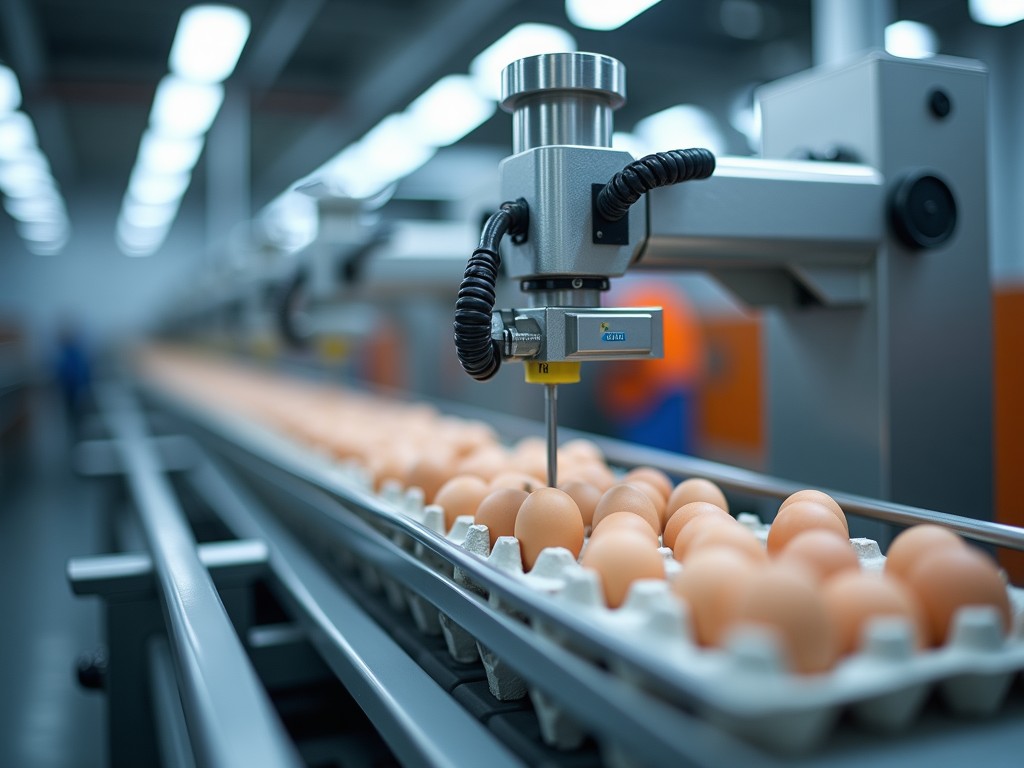
Packaging and Palletizing Robots Line – Factory Solution
Overview
A packaging and palletizing robots line integrates multiple coordinated robots to handle product infeed, case forming, loading, sealing, and pallet stacking in a continuous flow. The layout is designed to minimize manual intervention while maintaining flexibility for SKU changeovers.
System Architecture
The line typically comprises an infeed conveyor, a case erecting robot, a loading robot equipped with a vacuum or gripper end‑effector, a sealing station, and a palletizing robot with a multi‑axis arm. Safety zones are defined by laser scanners and safety PLCs to allow collaborative operation where required.
Each robot communicates via a centralized EtherCAT bus, enabling deterministic cycle times below 10 ms for synchronized motion. The control software provides a single HMI for line monitoring, recipe management, and fault diagnostics.
Technical Specifications
| Parameter | Typical Value | Notes |
|---|---|---|
| Robot Reach (max) | 1800 mm | Sufficient for standard pallet dimensions up to 1200 × 1000 mm |
| Payload Capacity | 20 kg | Includes end‑effector and product weight |
| Repeatability | ±0.05 mm | ISO 9283 compliant |
| Cycle Time (pick‑and‑place) | 1.2 s | At nominal load, includes approach and retreat |
| Power Consumption (per robot) | 1.5 kW | Average during continuous operation |
| Footprint (single cell) | 2.5 m × 2.0 m | Excludes safety guarding |
| Operating Temperature | 5 °C – 45 °C | With optional enclosure for harsh environments |
Key Performance Characteristics
Throughput is primarily limited by the slowest station; typical line speeds range from 8 to 15 cycles per minute depending on product size and pallet pattern. The system achieves an overall equipment effectiveness (OEE) above 85 % when preventive maintenance follows the manufacturer’s schedule.
- Dynamic load compensation reduces vibration during high‑speed pallet stacking.
- Vision‑guided product detection enables tolerance of ±3 mm on case dimensions.
- Energy‑recovery braking returns up to 20 % of kinetic energy to the DC bus.
Applications in Packaging and Palletizing
The line is suited for industries that require consistent case formation and stable pallet loads, such as beverage bottling, food processing, consumer goods, and pharmaceutical secondary packaging. By automating the repetitive motions of case erecting and palletizing, labor fatigue is reduced and product damage from manual handling is minimized.
- Beverage cans and bottles packed into 24‑count cases.
- Dry food pouches grouped into shrink‑wrapped trays before palletizing.
- Pharmaceutical blister packs loaded into cartons with strict orientation requirements.
- Industrial components stacked on pallets with interleaving sheets for load stability.
Integration and Flexibility
Modular mounting plates allow each robot cell to be relocated or replaced without rewiring the main power distribution. The conveyor system uses variable‑frequency drives, enabling speed matching between upstream fillers and downstream case sealers.
Recipe changes are executed via the HMI, adjusting pick points, pallet patterns, and layer counts in under 30 seconds. Optional quick‑change end‑effectors (gripper, vacuum, or clamp) can be swapped in less than five minutes to accommodate different product geometries.
Quality Assurance and Reliability
Each robot undergoes a 48‑hour burn‑in test under load before shipment, verifying encoder accuracy and joint torque repeatability. The control cabinet conforms to IP54 protection, and all moving parts are lubricated with food‑grade grease where contact with packaging material is possible.
- Preventive maintenance intervals: 2000 h for gearboxes, 4000 h for bearings.
- Spare parts kit includes commonly worn items such as timing belts and motor couplings.
- Warranty period: 24 months or 4000 operating hours, whichever occurs first.
Customization Options
The line can be tailored to specific facility constraints, product characteristics, and regulatory requirements. Customization does not affect the core robot architecture but adjusts peripherals, guarding, and software logic.
- Conveyor width adjustable from 600 mm to 1200 mm.
- Pallet magazine capacity options: 10, 20, or 30 pallets.
- Integration with existing MES via OPC UA or Modbus TCP.
- Optional stainless‑steel frame for wash‑down environments (IP69K).
- Additional safety laser scanners for collaborative mode with human operators.
Frequently Asked Questions
Q: Can the robot reach be extended for larger pallets?
A: Yes, optional extended arms up to 2200 mm are available, requiring a reinforced base frame and updated safety zone calculations.
Q: What information is needed for a quotation?
A: Required details include product dimensions, weight, case format, desired pallet pattern, line speed target, and facility layout constraints (ceiling height, floor load).
Q: Which materials are available for the robot frame?
A: Standard frames are powder‑coated carbon steel; stainless‑steel (AISI 304) frames are offered for corrosive or wash‑down applications.
Q: How is quality inspected before shipment?
A: Each robot undergoes functional testing, laser tracker verification of TCP accuracy, and a visual inspection of welds and paint thickness per ISO 12944.
Q: What is the typical production lead time?
A: Lead time ranges from 10 to 14 weeks after order confirmation, depending on selected options and current factory load.



