Modular Palletizing Automation Systems Equipment
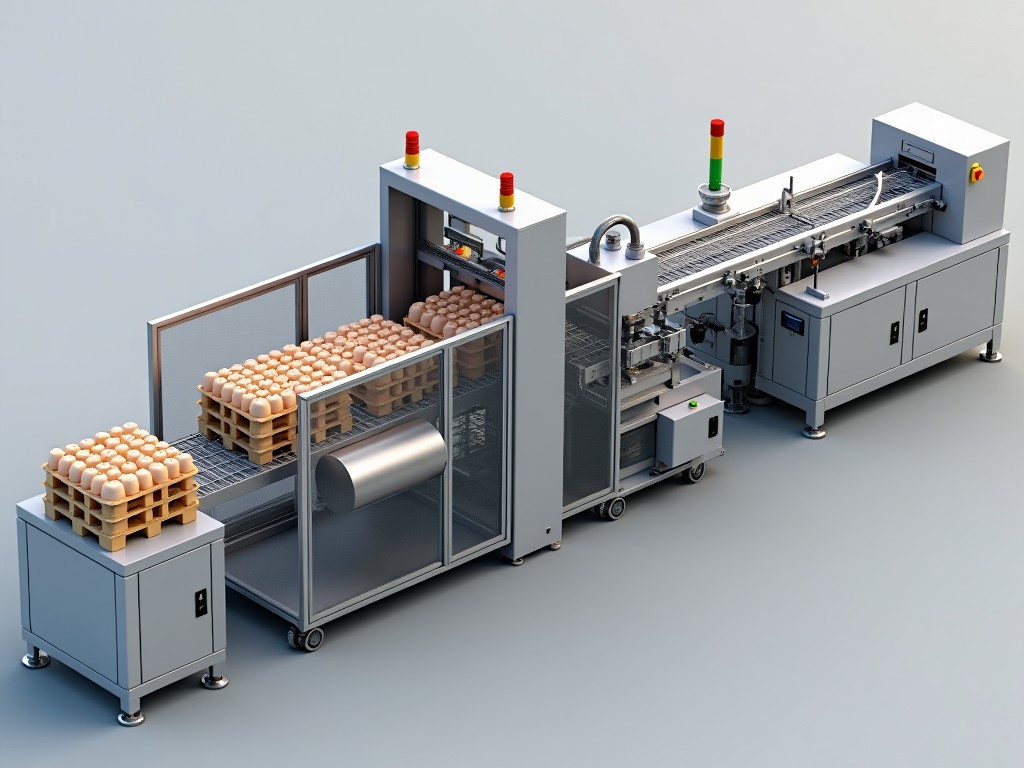
Modular palletizing automation systems equipment
Modern manufacturing environments require a departure from fixed-line configurations toward flexible architectures that accommodate fluctuating production volumes. Modular palletizing automation systems equipment provides a framework where de-coupled components can be reconfigured, scaled, or relocated to meet changing product mix requirements without decommissioning the entire line. This approach minimizes capital expenditure risk by allowing facilities to start with the necessary modules and expand capacity as demand grows.
Technical Components of Modular Systems
The core of a modular system relies on the interoperability between hardware modules and centralized control software. At the heart of the operation, multi-axis articulated robotic arms or high-speed delta robots perform the primary lifting, selected based on payload and cycle time requirements. These units are mounted on standardized frames that facilitate rapid installation and alignment, ensuring precise integration between the conveyor system and the final pallet stack.
Robotic Handling and End-Effectors
End-of-arm tooling (EOAT) selection is critical for versatility. Modular systems utilize vacuum-based grippers for flat-surface cardboard or mechanical grippers with adaptive fingers for irregular geometries. Quick-change coupling mechanisms allow operators to swap tooling in minutes, enabling a single cell to handle various box sizes, bags, or crates with minimal downtime.
Conveyor and Sensor Integration
Modular conveyor sections, featuring belt or roller designs, can be linked to fit specific floor layouts. Integrated photoelectric sensors and vision systems provide real-time data on product orientation and presence, which is fed into the robot controller. This feedback loop ensures that the robot adjusts its trajectory dynamically, compensating for slight variations in inbound line speed.
Customization and Scalability Logic
Scalability is achieved through the use of standardized mechanical and electrical interfaces. When throughput exceeds the capacity of a single robot, a second cell can be integrated into the existing network architecture without redesigning the primary control logic. This "plug-and-play" philosophy reduces engineering hours during facility expansions, as the new modules utilize pre-configured communication protocols.
Layout flexibility is another primary driver for modular selection. Engineers can choose between linear, L-shaped, or U-shaped configurations to optimize available floor space in existing plants. This adaptability is particularly valuable in retrofitting older facilities where space-optimized footprints are mandatory to replace manual manual palletizing areas.
Technical Specifications Overview
| Parameter | Typical Values | Customizable Options |
|---|---|---|
| Payload Capacity | 3kg to 200kg | Based on robot selection |
| Reach Radius | 700mm to 3000mm | Adjustable arm length |
| Cycle Time | 5-15 pallets/min | Dependent on pattern complexity |
| Communication Protocol | EtherNet/IP, PROFINET, Modbus | Custom fieldbus interfaces available |
Industrial Applications
Modular palletizing is deployed across sectors where hygiene and precision are equally weighted. In the food and beverage industry, stainless steel modular cells allow for wash-down environments while maintaining high-speed output for packaging.
- Food & Beverage: High-speed handling of cases and bags with IP69K rated components.
- Pharmaceuticals: Precision placement of small cartons in clean-room environments.
- Logistics & E-commerce: Rapid reconfiguration for varying SKUs during peak seasonal demands.
- Building Materials: Heavy-duty handling of bags of cement or abrasive tiles.
System Integration and Connectivity
Integration extends beyond the physical movement to the digital layer of the factory floor. Modular systems interface with Manufacturing Execution Systems (MES) and ERP software to update pallet counts, track batch numbers, and monitor health metrics. This data transparency enables predictive maintenance, identifying component wear before it causes unplanned downtime.
Safety protocols are integrated into the modular framework via safety scanners, light curtains, and interlocked gate systems. These components are configured to ensure that if one module is breached, the system can enter a safe state without necessarily halting the entire production line, where possible.
Frequently Asked Questions
Can system dimensions be customized for existing floor spaces?
Yes, the modular nature of the conveyors and robotic frames allows them to be arranged in various configurations to fit specific spatial constraints within your facility.
What information is required before a technical quotation?
Detailed specifications including product dimensions, weight, material type, required throughput (pallets per hour), and available floor plan are necessary.
What safety standards do these systems comply with?
Systems are designed in accordance with ISO 10218-1 and ISO 13849 standards, utilizing appropriate safety-rated sensors and risk assessment methodologies.
Ready to optimize your palletizing process? Contact our engineering team to evaluate your specific throughput requirements.
Request a Technical Consultation


