Egg Crate Packing Robot Source Factory
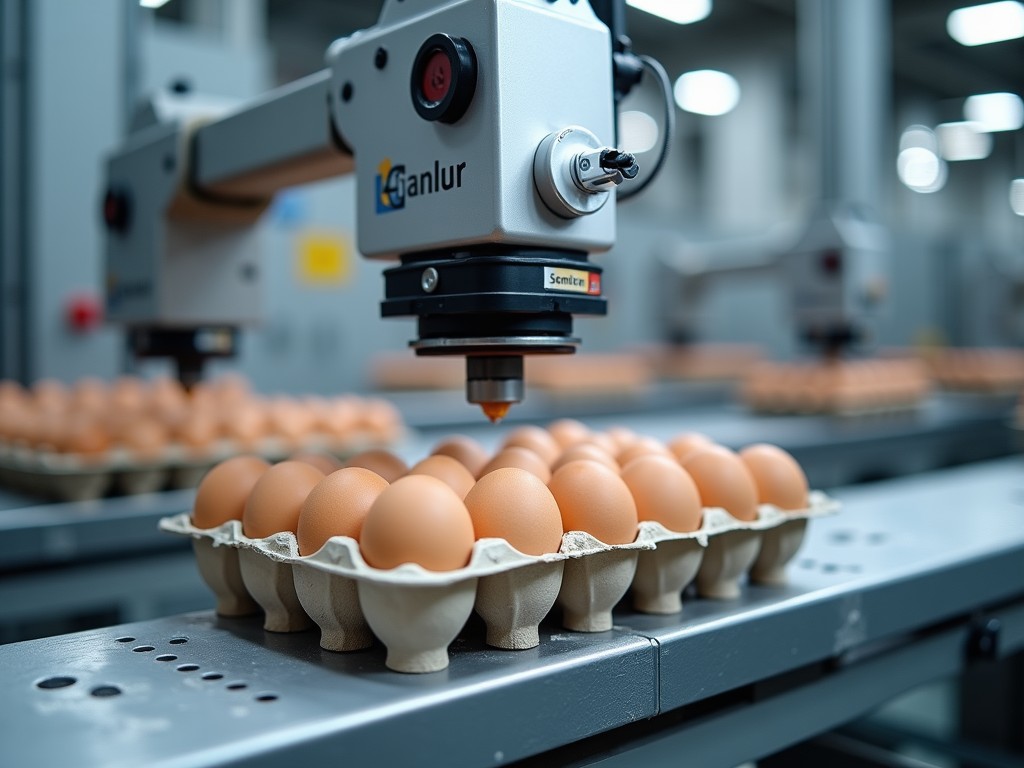
Egg Crate Packing Robot Source Factory
The transition from manual egg packing to automated systems represents a critical shift for poultry processing facilities seeking consistent throughput and reduced breakage. Egg crate packing robots are engineered to handle the delicate nature of avian products while maintaining high-speed cycles required for industrial-scale operations. By leveraging source manufacturing, facilities can access engineered solutions that integrate directly into existing grading and packaging lines, minimizing the mechanical stress often associated with manual labor inconsistencies.
Automation in this sector requires more than just speed; it demands precise force control and sophisticated vision integration to ensure product integrity. These systems utilize specialized end-effectors designed to cradle each egg or tray with sub-millimeter tolerances, preventing structural damage to the shells during the rapid movement phase.
Technical Specifications and Capabilities
| Parameter | Standard Configuration | Customizable Options |
|---|---|---|
| Robot Architecture | SCARA or Delta | 6-Axis Articulated |
| Payload | 3kg - 7kg | Up to 15kg (for heavy crates) |
| Cycle Time | 35 - 60 picks/min | Variable based on geometry |
| Reach/Radius | 600mm - 1000mm | Extended arm available |
| Ingress Protection | IP65 | IP69K (Washdown) |
Key Engineering Features for Egg Handling Systems
Precision engineering in an egg crate packing robot starts with the end-effector design. Unlike standard industrial grippers, these utilize food-grade vacuum nozzles or soft-touch mechanical fingers that distribute pressure evenly across the egg's surface. This prevents the micro-fractures that can lead to reduced shelf-life or spoilage in the retail environment.
Vision-guided sorting serves as the "brain" of the packing cell. High-speed cameras identify the orientation of each egg or tray on the conveyor in real-time. The robot controller then adjusts its trajectory to ensure each unit is placed perfectly within the crate cells, compensating for slight variations in product positioning without stopping the line.
- Servo-Driven Motion: Provides smooth acceleration and deceleration curves to minimize jerky movements that could displace fragile products.
- Food-Safe Construction: Components utilize 304 stainless steel and specialized polymers designed to withstand rigorous chemical cleaning agents during sanitation.
- PLC Integration: Seamless communication via EtherNet/IP or PROFINET for data exchange with existing factory floor SCADA systems.
Industrial Applications
Large-scale poultry operations utilize these robots to manage high volumes where manual packing becomes economically unsustainable. In these environments, the robot operates at the end of the grading line, taking sorted eggs and placing them into 12-count, 18-count, or 30-count crates with mathematical precision.
Specialized egg processing facilities also benefit from automation when handling pre-packed trays or liquid products. Because the robot can be programmed with different packing patterns, a single cell can switch between various crate sizes or configurations with minimal downtime, providing the flexibility needed for distributors who manage diverse product lines.
Customization Options and Quality Control
Customization allows engineers to tailor the hardware to the specific dimensions of the packaging used. Whether the facility uses standard cardboard, plastic reusable crates, or molded pulp trays, the robot's kinematics and gripper-tool are adjusted to ensure optimal fit and speed.
Quality control at the source factory involves rigorous stress testing of the robot arm and vision cycles. Each system undergoes a simulated-run test to verify that the mean time between failures (MTBF) meets industrial standards. This pre-emptive testing reduces the risk of unexpected downtime once the system is integrated into the production environment.
FAQ
How can the robot be integrated with existing conveyor lines?
The robots are equipped with standard industrial communication protocols, allowing them to interface with conveyor sensors and PLCs to synchronize product arrival with the packing cycle.
What materials are used for food safety compliance?
The primary structures utilize 304 stainless steel, with non-toxic lubricants and food-grade plastics that meet FDA requirements for food contact environments.
What is the typical production lead time for custom orders?
Lead times typically range from 8 to 12 weeks, depending on the complexity of the vision system and the specific gripper engineering required.
Implementing an automated egg packing line requires detailed analysis of your current throughput and product geometry. Contact our engineering team for a technical consultation and a detailed quote.
Request Technical Specifications


