Customized Automatic Palletizing And Loading System
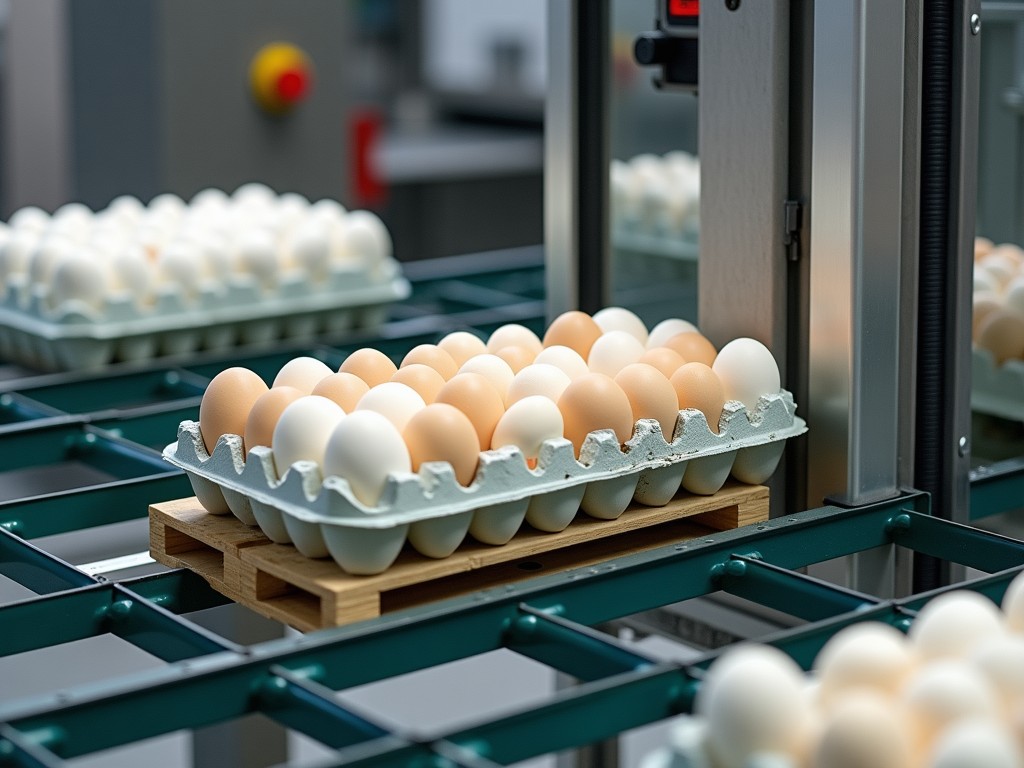
Customized Automatic Palletizing and Loading System
This system integrates robotic handling, conveyor synchronization, and programmable logic to build unit loads directly from production lines onto pallets or into transport containers. The design focuses on repeatable positioning, cycle‑time predictability, and adaptability to varying package dimensions without mechanical re‑tooling.
System Architecture and Operation
A central PLC coordinates a multi‑axis gantry or articulated robot, in‑feed conveyors, and a pallet dispenser. Sensors verify product presence, orientation, and pallet position before each placement cycle. The control software stores multiple layer patterns, allowing quick changeover between SKUs via recipe selection.
Key motion characteristics:
- Maximum payload: 25 kg per pick (adjustable with end‑effector)
- Position repeatability: ±0.5 mm (XY), ±1 mm (Z)
- Cycle time: 4.5 s per layer for standard 600 mm × 400 mm cartons
- Throughput: up to 1,200 cartons/hour depending on layer pattern
- End‑effector types: vacuum grippers, mechanical clamps, or hybrid fixtures for mixed product handling
- Pallet dispenser: magazine‑style (up to 10 pallets) or single‑pallet lift‑and‑place
- In‑feed conveyor configuration: roller, belt, or chain depending on product surface
- Software features: layer‑pattern editor, fault‑diagnostic logs, remote diagnostics via VPN
- Position accuracy verification using laser tracker across the full working envelope
- Cycle‑time consistency test over 500 consecutive layers
- Payload stress test at 120 % of rated capacity for 2 hours
- Safety validation: emergency stop response time < 150 ms, safety‑rated monitoring of guarded zones
Technical Specifications
| Parameter | Typical Value | Notes / Customization |
|---|---|---|
| Robot type | 6‑axis articulated or cartesian gantry | Selected based on payload and envelope |
| Conveyor speed | 0.1–1.5 m/s (variable frequency drive) | Synchronizable to line speed |
| Pallet size compatibility | 800 × 1200 mm, 1000 × 1200 mm, custom | Adjustable pallet guides |
| Power supply | 380 V 3 PH, 50/60 Hz | Optional UPS for backup |
| Control interface | Touchscreen HMI, Ethernet/IP, Modbus TCP | Recipe storage up to 99 patterns |
Industrial Applications
In beverage bottling lines, the system receives filled cases from a case packer and builds stable pallet layers that comply with truck‑load weight distribution, reducing the need for manual repositioning and minimizing product shift during transit.
For pharmaceutical secondary packaging, the precise placement tolerances (±0.5 mm) ensure that cartons with sensitive inserts remain upright, preventing damage to blister packs while maintaining compliance with GMP handling standards.
In e‑commerce fulfillment centers handling mixed‑size parcels, the adaptive layer‑pattern algorithm accommodates varying footprint dimensions, enabling a single station to process both small cartons and larger boxes without manual changeover.
Customization Options
Quality Control and Testing
Each unit undergoes factory acceptance testing (FAT) that includes:
Documentation includes test reports, electrical schematics, and a preventive maintenance schedule based on mean‑time‑between‑failures (MTBF) data gathered from comparable installations.
Frequently Asked Questions
Can the system handle fragile products?
Yes. End‑effector selection and adjustable grip force allow handling of items such as glass containers or blister packs without damage.
What information is required for a quotation?
Product dimensions, weight, orientation requirements, line speed, pallet size, and any environmental constraints (e.g., wash‑down, explosion‑proof).
Is integration with existing MES/ERP possible?
The PLC supports standard industrial protocols (Ethernet/IP, Modbus TCP) and can be configured to exchange production orders and status data with MES systems.
Ready to Discuss Your Project?
Share your line layout and product specifications with our engineering team to receive a conceptual layout and preliminary cycle‑time estimate.
Request Technical Consultation


