Buy Floor Level Automatic Palletizing Machine
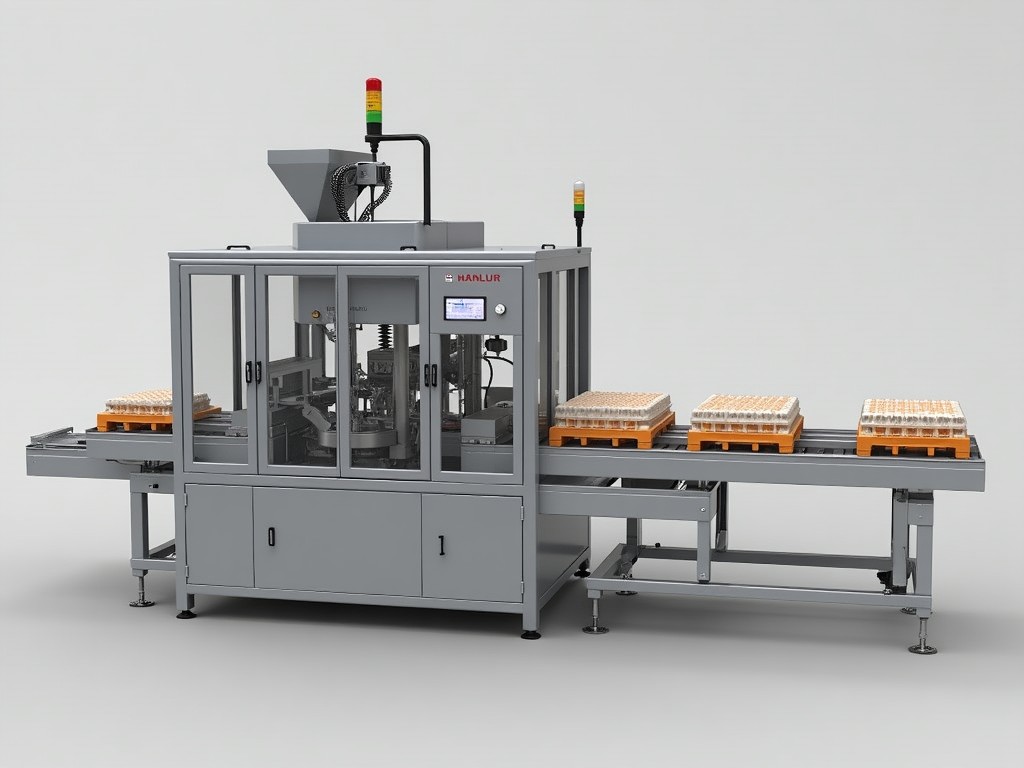
buy floor level automatic palletizing machine
Floor-level automatic palletizing systems represent a strategic shift in warehouse automation, prioritizing footprint efficiency and mechanical flexibility. Unlike elevated systems that require complex conveyor scaffolding, these units operate directly on the factory floor, eliminating the need for heavy structural support and reducing overall installation costs. This configuration is particularly effective for facilities where vertical clearance is limited or where integration with existing ground-level production lines is mandatory.
Technical Specifications of Floor-Level Palletizing
The performance of a floor-level palletizer is dictated by its ability to handle varying loads while maintaining cycle consistency. Engineers must evaluate the center of gravity of the product to ensure the robotic arm or mechanical mechanism maintains stability during high-speed movements.
- Payload Capacity: Typically ranges from 5kg to 500kg per unit, depending on the end-effector design.
- Pallet Height Limit: Standard configurations reach up to 2400mm, with customizable extensions for specialized racking.
- Cycle Time: Averages between 4 to 12 pallets per minute in optimized-speed operation.
- Pallet Dimensions: Compatible with standard ISO (800x1200mm) and GMA (1000x1200mm) formats.
Key Components and Engineering Logic
Reliability in automation stems from the selection of industrial-grade components. High-torque servo motors are utilized to provide precise positioning, allowing for sub-millimeter accuracy during the pallet stacking process. This precision is critical when handling fragile boxes where slight misalignment could lead to stack collapse during transit.
The control architecture typically utilizes a Programmable Logic Controller (PLC) that coordinates the motion between the conveyor and the robotic arm. Vision systems are often integrated to detect box orientation in real-time, allowing the machine to adjust its grip pattern dynamically without manual intervention. Safety is maintained through redundant light curtains and emergency-stop circuits, ensuring that human operators remain protected without interrupting the automated workflow unnecessarily.
Industrial Applications
Floor-level palletizers are deployed in environments where floor hygiene or space constraints are paramount. In the food and beverage industry, the absence of elevated conveyors allows for easier floor cleaning and prevents accumulation of dust in overhead structures.
Heavy manufacturing sectors utilize these machines to stack dense bags or heavy crates that would strain an elevated support system. By keeping the load at ground level, the system minimizes the mechanical stress on the frame, reducing the risk of structural fatigue over long-duty cycles.
Customization and Integration Options
Standardization is rarely sufficient for complex production lines. Software-driven pattern logic allows for the rapid programming of new stacking configurations, such as interlocking patterns that increase the stability of the finished pallet. End-effectors can be customized with vacuum grippers, mechanical clamps, or magnetic attachments to accommodate diverse packaging materials.
Integration with downstream stretch-wrappers and automated conveyors is handled via standardized communication protocols. This ensures that once a pallet is completed, it is seamlessly transitioned to the next stage of the logistics chain, minimizing dwell time and manual handling bottlenecks.
Comparison Analysis
| Feature | Floor-Level Palletizer | Overhead-Level Palletizer |
|---|---|---|
| Installation Cost | Low (No heavy structure needed) | High (Requires scaffolding) |
| Footprint Requirement | Minimal | Moderate |
| Maintenance Accessibility | Easy (Ground level) | Difficult (Requires lifts) |
| Integration Flexibility | Excellent for existing lines | Limited by conveyor height |
Frequently Asked Questions
What information is required before a technical quotation?
To provide an accurate proposal, we require the product dimensions, weight, material type (cardboard, plastic, metal), and desired cycle time. A floor plan of the facility is also necessary for integration planning.
Can the machine be customized for specific pallet types?
Yes, the conveyor system and the end-effector logic are adjustable to accommodate various pallet sizes, including heat-treated wood or plastic reusable pallets.
What is the typical production lead time?
Lead times generally vary from 12 to 24 weeks, depending on the complexity of the software integration and the specific mechanical components required.
Optimizing your palletizing process requires a technical approach to material handling. Our engineering team is available to evaluate your facility and design a tailored solution.
Request a Technical Consultation


