Bulk Robotic Egg Crate Handling Equipment
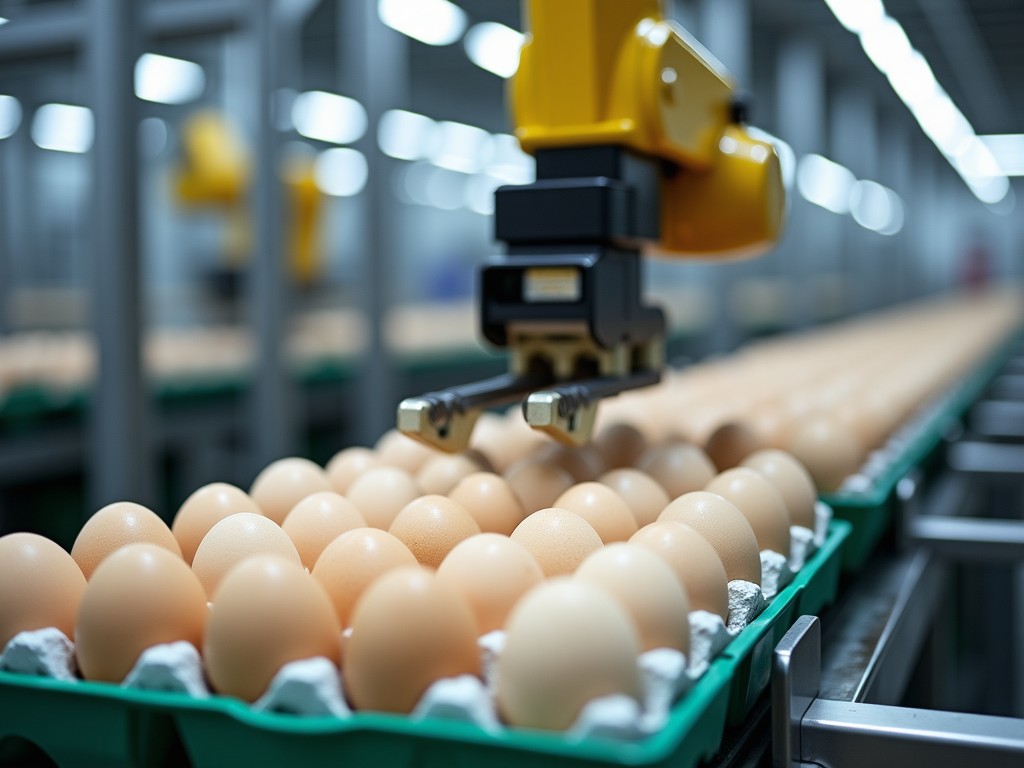
Bulk-Bulk Robotic Egg Crate Handling Equipment
Automating the logistics of egg-grade crates requires a precise balance between high-speed throughput and the structural integrity of the product. Industrial robotic handling systems utilize specialized end-of-arm tooling (EOAT) designed to distribute mechanical pressure evenly across plastic or fiber crates, preventing deformation during high-velocity transit. By replacing manual labor with servo-controlled robotic cells, facilities achieve consistent cycle times while reducing the risk of product breakage in high-volume packing environments.
The engineering of these systems focuses on the integration of multi-axis robotic arms with vision-guided sensors. Most configurations utilize 3D optical sensors to detect crate orientation on moving conveyor belts, ensuring that the palletizing sequence remains perfectly aligned with sub-millimeter accuracy. This precision is critical when dealing with bulk-loaded crates where even slight misalignment can lead to structural instability in the final pallet stack.
Technical Specifications and Performance Metrics
| Feature | Typical Value | Engineering Benefit |
|---|---|---|
| Payload Capacity | 15kg - 50kg per cycle | Allows handling of full-density crates without motor strain. |
| Cycle Speed | 20 - 45 picks per minute | Maximizes throughput during peak harvest seasons. |
| Ingress Protection | IP67 / IP69K | Enables high-pressure chemical washdowns for sanitation. |
| Gripper Type | Pneumatic Mechanical Hybrid | Prevents surface scratching on delicate crate materials. |
Core Engineering Features for Food Safety
Material selection is paramount when equipment operates in food-grade processing environments. Robotic components are typically constructed from 316 stainless steel or high-grade polymers to resist corrosion from aggressive cleaning agents. All moving parts and joints are sealed to utilize FDA-approved lubricants to prevent contamination. Furthermore, the design minimizes "dead zones"—areas where organic matter, like egg dust or moisture, could accumulate.
The software logic layer allows for dynamic adjustment based on crate condition. If a crate is damaged or slightly warped, the vision system recalculates the grip points in real-time to prevent a drop. This adaptive handling ensures that the line remains operational even when raw material quality varies between different batches.
- Servo-Driven Actuation: Provides precise acceleration curves to minimize inertial forces on the egg contents.
- Advanced Vision Systems: Identifies and sorts out empty or broken crates without stopping the line.
- Modular Integration: Seamlessly communicates with existing PLC systems via EtherNet/IP or PROFINET.
Industrial Applications
Robotic egg crate handling is deployed across several stages of the egg supply chain. In the primary packing phase, robots de-stack crates from bulk conveyors and arrange them onto pallets for cold storage. In distribution centers, these same systems perform the reverse process, breaking down pallets into individual crates for retail-ready transport.
Beyond simple palletizing, these systems are integrated into quality control stations. As the robot lifts a crate, integrated scales can weigh the unit to ensure fill accuracy, automatically flagging outliers for inspection. This integration of quality metrics directly into the handling workflow saves both time and labor costs.
Customization and Integration
No two facilities operate with identical footprints or crate specifications. We customize the EOAT to match the specific dimensions and weight profiles of your crates, whether they are standard high-density polyethylene (HDPE) or biodegradable fiber trays. The gripper geometry is engineered to ensure a secure hold without compromising the material.
Integration requires a detailed site survey of existing conveyor heights and overhead clearances. Our engineers design custom mounting structures that allow the robotic cell to fit into current flow, minimizing downtime during the installation phase.
Frequently Asked Questions
Ready to Optimize Your Handling Line?
Provide your crate specifications and throughput requirements to receive a detailed technical proposal and custom quote.
Request Technical Consultation


