Bulk Egg Carton Robotic Packaging Machine Factory
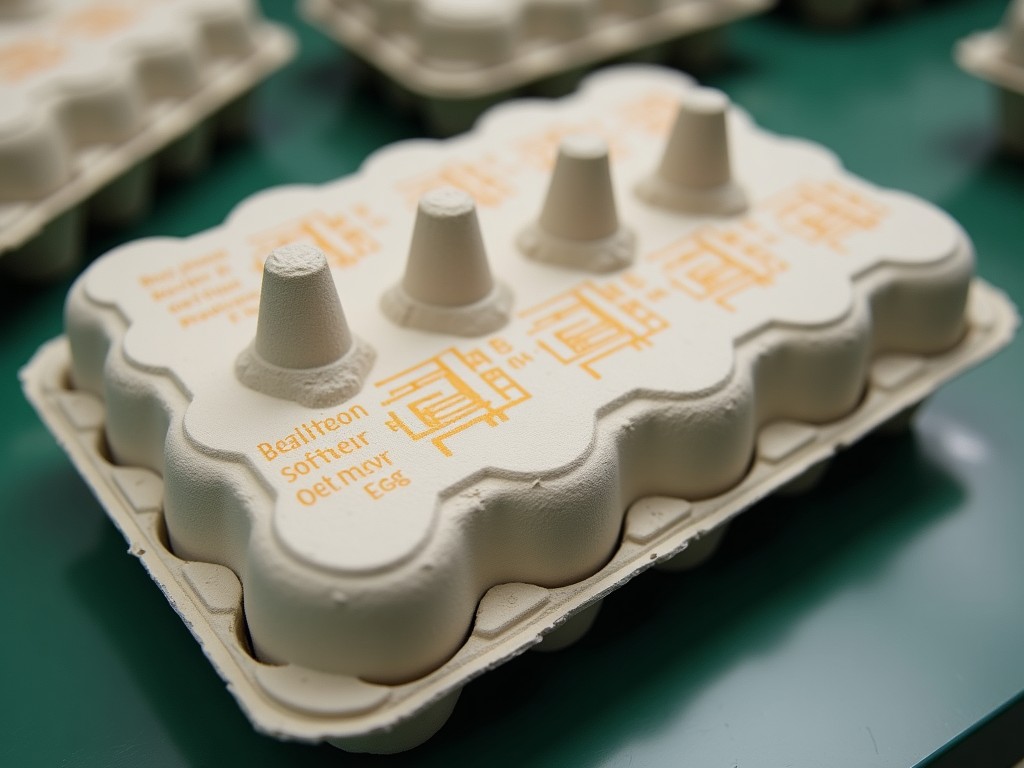
Bulk Egg Carton Robotic Packaging Machine
This system handles the high‑speed insertion of eggs into corrugated or pulp cartons, then seals and stacks the finished packages for palletizing. It replaces manual carton loading with a six‑axis articulated robot guided by vision‑based egg detection, achieving consistent orientation and minimal product damage.
Working Principle
Eggs are conveyed on a sanitized belt to a picking station where a 3D vision system locates each egg’s centroid and orientation. The robot’s end‑effector, equipped with a soft‑grip suction cup, retrieves the egg and places it into a pre‑formed carton cell with a repeatability of ±0.5 mm. After filling, a downstream sealer applies hot‑melt adhesive or tape, and a stacker accumulates cartons for palletizing.
Cycle time is governed by the robot’s reach, payload, and the vision processing latency; typical rates range from 120 to 180 cartons per minute depending on carton size and egg weight.
Technical Specifications
| Parameter | Typical Value / Note |
|---|---|
| Robot Axes | 6‑axis articulated, repeatability ±0.02 mm |
| Payload Capacity | 2 kg (sufficient for egg + gripper) |
| Vision System | 3‑D stereo cameras, 5 MP, processing < 30 ms per egg |
| Carton Size Range | 10 × 10 cm to 30 × 30 cm (length × width), height 5‑12 cm |
| Output Rate | 120‑180 cartons/min (adjustable via conveyor speed) |
| Power Consumption | 3.5 kW average, 480 V 3‑phase |
| Footprint (L × W × H) | 2.4 m × 1.2 m × 2.2 m (incl. safety guarding) |
| Control Interface | PLC‑based HMI, Ethernet/IP, optional OPC UA |
Applications in the Egg Processing Industry
Egg producers face stringent hygiene standards and variable flock output; manual carton filling creates bottlenecks and increases the risk of micro‑cracks from inconsistent handling. By automating the pick‑and‑place operation, the machine reduces labor dependence, maintains a constant fill rate regardless of shift changes, and ensures each egg is positioned with its blunt end up, which improves hatchability for breeding lines and minimizes breakage for table‑egg markets.
The system integrates easily with existing washing, drying, and grading lines because its conveyor height and speed are adjustable, and the robot’s reach can be customized to match line layouts ranging from 1.5 m to 3.0 m between upstream and downstream equipment.
Customization Options
- End‑effector: suction cups with food‑grade silicone, or mechanical grips for specialty cartons
- Vision lighting: interchangeable LED rings for different shell colors (white, brown, speckled)
- Carton sealing: hot‑melt glue, pressure‑sensitive tape, or ultrasonic welding for polymer cartons
- Stacking configuration: single lane, double lane, or right‑angle turn for pallet feeding
- Software: recipe management for up to 50 carton formats, remote diagnostics via cloud gateway
Quality Assurance and Testing
Each machine undergoes a factory acceptance test (FAT) that validates vision accuracy, placement repeatability, and seal integrity under simulated production loads. The test protocol includes 10 000 consecutive cycles with random egg weights (45‑65 g) and measures crack incidence using high‑speed imaging; acceptance criteria require fewer than 0.02 % visible defects.
Before shipment, the equipment is disinfected with food‑grade sanitizers, and all electrical components receive an IP54 rating for protection against dust and moisture typically found in egg processing environments.
Frequently Asked Questions
- Can the machine handle both inline and offline carton feeding?
- Yes. The conveyor height and speed are adjustable, allowing integration with existing inline grading lines or placement as a standalone offline station with a buffer table.
- What information is required for a quotation?
- Carton dimensions (length, width, height), egg weight range, desired output rate, facility power specifications, and any special sealing or stacking preferences.
- Are spare parts readily available?
- Critical wear items such as suction cups, vision lighting modules, and gearbox oil are stocked regionally; lead time for standard spares is typically 5‑7 business days.
- How is the system cleaned between production shifts?
- All contact surfaces are constructed of stainless steel 304 or food‑grade polymers, suitable for CIP (clean‑in‑place) spray down; the robot arm has a sealed joint design to prevent ingress of liquids.
Next Steps
To discuss how this robotic packaging solution can be adapted to your line layout and production targets, please contact our engineering team for a detailed feasibility review and quotation.



