B2B Industrial Automatic Robot Palletizer Machine
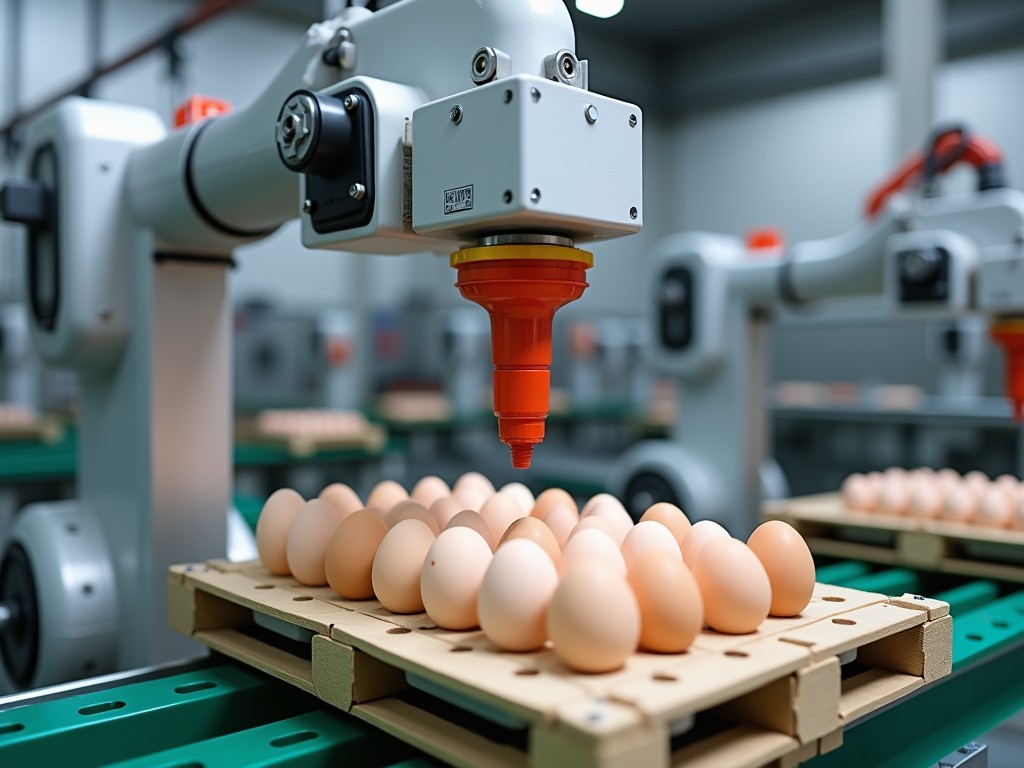
B2B Industrial Automatic Robot Palletizer Machine
Overview
An automatic robot palletizer integrates a six‑axis articulated robot with a dedicated end‑of‑arm tooling (EOAT) system to stack cartons, bags, or containers onto pallets without manual intervention. The machine receives product flow from upstream conveyors, determines optimal placement via vision or programmable logic, and executes repeatable pick‑and‑place cycles at speeds dictated by payload and reach.
Typical configurations support payloads from 5 kg to 20 kg per pick, with cycle times ranging from 1.8 s to 3.5 s depending on layer pattern and pallet size. The system is designed for continuous operation in food‑processing, beverage, pharmaceutical, and consumer‑goods lines where hygiene and precision are critical.
Key Technical Characteristics
- Robot reach: 1.2 m to 2.2 m (customizable)
- Repeatability: ±0.1 mm (ISO 9283)
- End‑effector options: vacuum gripper, mechanical clamp, hybrid fork
- Control platform: IEC 61131‑3 PLC with optional IPC for vision integration
- Safety rating: PLd (EN ISO 13849‑1) with safety‑rated speed monitoring
Typical Specifications Table
| Parameter | Typical Value / Range | Notes |
|---|---|---|
| Payload capacity | 5 kg – 20 kg per pick | Dependent on EOAT and robot model |
| Maximum pallet height | 2.0 m (including pallet) | Adjustable via stack height sensor |
| Cycle time (single pick) | 1.8 s – 3.5 s | Varies with layer pattern and distance |
| Power supply | 380 V ±10 % 3‑phase, 50/60 Hz | Optional UPS for backup |
| Communication | Ethernet/IP, Modbus TCP, Profinet | Configurable per line architecture |
Application Fit
In high‑mix beverage bottling lines, the palletizer must handle varying case dimensions (e.g., 24‑can packs, 12‑bottle cartons) while maintaining a tight pallet pattern to maximize truck load utilization. The robot’s vision system detects case orientation and adjusts grip force to prevent slippage, reducing product damage compared with mechanical push‑type palletizers.
For pharmaceutical blister‑pack cartons, stringent clean‑room requirements demand stainless‑steel construction and IP65‑rated actuators. The machine’s modular frame allows quick changeover of EOATs between vacuum and gripper types, supporting both lightweight pouches and heavier cartons without line stoppage.
Customization Options
The base platform is scalable; customers can select robot reach, payload class, and conveyor integration height. Additional options include layer‑forming devices, slip‑sheet dispensers, and automatic pallet changers. All mechanical components are available in either carbon steel with powder‑coat finish or 304/316 stainless steel for corrosive environments.
- Robot brands: ABB, Fanuc, Yaskawa, Kawasaki (customer‑specified)
- EOAT types: vacuum suction cups (Ø 30‑80 mm), mechanical clamps, hybrid fork
- Vision integration: 2D area scan, 3D laser profilometer
- Pallet magazine: manual load, automatic stacker (up to 10 pallets)
- Software: recipe management, remote diagnostics via OPC UA
Quality Control & Testing
Each unit undergoes factory acceptance testing (FAT) that includes repeatability verification, cycle‑time validation under maximum payload, and emergency‑stop response timing. Vision alignment is checked using a calibrated gauge block, and safety functions are validated per EN ISO 13849‑1. Test reports are supplied with the shipment.
Material traceability is maintained for structural frames; welds are inspected via ultrasonic testing where required. Surface finishes are measured for roughness (Ra ≤ 0.8 µm) in food‑grade zones to facilitate cleaning.
Frequently Asked Questions
Yes. With a vision system and adjustable EOAT, the robot can detect case dimensions in real time and modify placement coordinates, allowing mixed‑size layers without mechanical re‑tooling.
Product type, dimensions, weight, required throughput (cases per hour), pallet size, layout constraints, and any environmental conditions (e.g., wash‑down, explosion‑proof).
Critical spares (motors, drives, EOAT wear items) are stocked regionally; lead times are typically 2‑4 weeks for standard items.
Contact Us
To discuss your specific line configuration or request a detailed technical proposal, please reach out to our engineering team.
Request Technical Consultation


