Automatic Hard Support Packaging And Palletizing Production Line
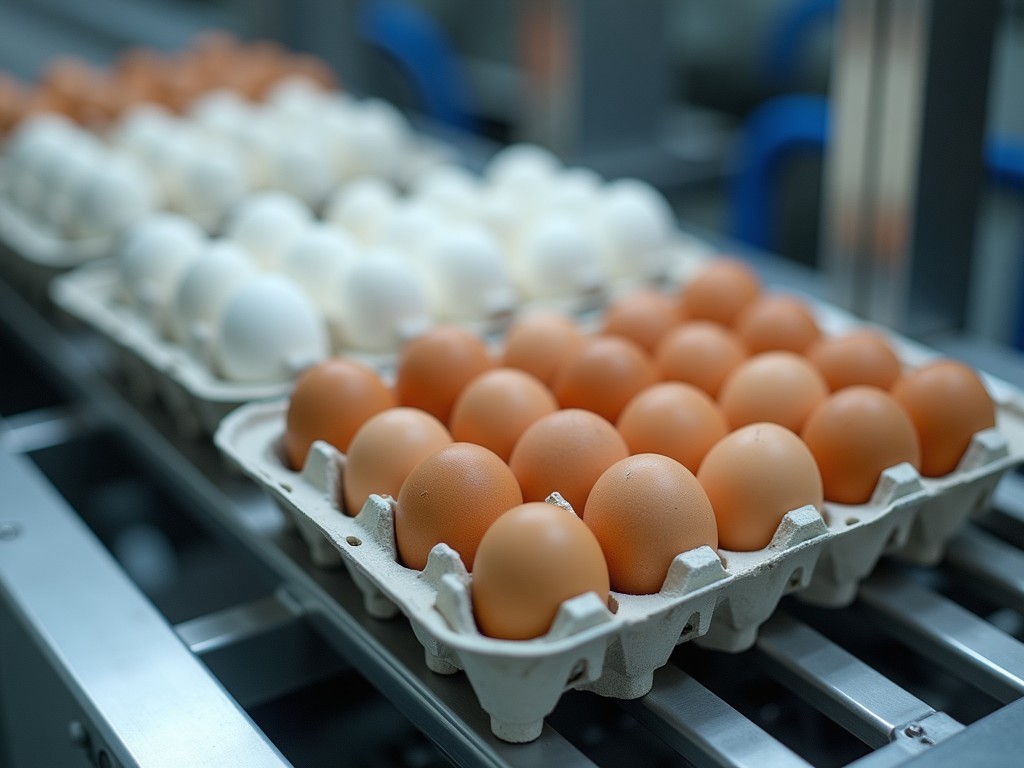
Automatic Hard Support Packaging and Palletizing Production Line
This production line integrates case forming, product loading, case sealing, and palletizing into a continuous automated flow designed for rigid‑wall cartons, trays, and similar hard‑support packages. The system handles packages weighing from 0.5 kg up to 30 kg per unit, with a typical throughput of 30 to 120 cycles per minute depending on product size and stacking pattern.
Core Technical Specifications
| Parameter | Typical Value | Notes |
|---|---|---|
| Maximum package weight | 30 kg | Per unit, adjustable via gripper force |
| Package dimensions (L×W×H) | 100 mm × 80 mm × 50 mm to 400 mm × 300 mm × 250 mm | Adjustable case former rails |
| Throughput | 30–120 cycles/min | Dependent on product weight and pallet pattern |
| Pallet load capacity | Up to 1 500 kg | Standard Euro‑pallet 1200 × 800 mm |
| Power consumption | 5–8 kW (average) | Includes drives, heaters, and controls |
| Control system | PLC with HMI touchscreen | Supports Ethernet/IP, Modbus TCP |
Operating Principle
The line begins with a magazine feeder that presents flat blanks to a case former. Simultaneously, a product infeed conveyor delivers items to a pick‑and‑place robot that loads each case. After loading, a hot‑melt or tape sealer closes the case, and a conveyor transports the sealed case to a robotic palletizer that builds layers according to a pre‑programmed pattern. Sensors monitor case presence, weight, and alignment; a PLC coordinates all motions with cycle‑time synchronization.
Key Performance Parameters
- Throughput range: 30–120 cycles/min, adjustable via speed drives
- Positioning repeatability: ±2 mm for case placement, ±1 mm for pallet placement
- Changeover time: ≤15 min for different case sizes using quick‑release tooling
- Energy efficiency: regenerative braking on conveyors recovers up to 12 % of drive energy
- Noise level: ≤78 dB(A) measured at 1 m perimeter
Applications and Industry Fit
Rigid‑support packaging is common in sectors where product integrity and stack stability are critical, such as bottled beverages, canned foods, dairy cartons, and pharmaceutical blister packs. The line’s ability to maintain precise case dimensions and uniform sealing prevents deformation during high‑speed palletizing, reducing the risk of load shift in transit. Additionally, the modular layout allows integration with upstream filling or downstream stretch‑wrapping stations, supporting end‑of‑line automation for high‑mix, medium‑volume manufacturers.
Customization Options
- Gripper types: vacuum, mechanical finger, or magnetic based on product surface
- Sealing methods: hot‑melt glue, pressure‑sensitive tape, or staple
- Pallet pattern software: user‑definable layer layouts, interlocking, or column stacking
- Conveyor width: adjustable from 400 mm to 800 mm to accommodate different case footprints
- Control interface: optional SCADA integration, remote diagnostics, and recipe management
Quality Assurance and Testing
Each production line undergoes a factory acceptance test (FAT) that validates cycle time, seal strength, and pallet stacking accuracy under simulated production loads. Load cells verify gripper force consistency within ±5 % across the operating range. Vision systems confirm case orientation and seal completeness at a rate of 100 % inspection. After FAT, a site acceptance test (SAT) is performed with customer‑specific products to ensure compatibility with line speed and environmental conditions.
FAQ
Can the line be adapted for different case materials?
Yes. The case former tooling and sealing stations can be configured for corrugated board, solid fiberboard, or plastic trays. Material thickness and stiffness are considered during gripper force calibration.
What information is required before quotation?
We need the typical package dimensions, weight range, desired throughput, sealing preference, and pallet pattern. Facility layout details such as ceiling height and power availability help finalize the conveyor layout.
How is quality inspected during operation?
Inline sensors monitor case presence, seal temperature, and placement deviation. Statistical process control charts track key parameters, and alarms trigger if values exceed preset tolerances.
Contact for Inquiry
To discuss how this automatic hard support packaging and palletizing line can be tailored to your production needs, please send us an inquiry. Our engineering team will review your specifications and provide a detailed technical proposal.



